Редкие болезни: ИИ заменяет дефицитных ученых там, где не справляются люди
Пока все обсуждают чат-ботов, в Катаре на Web Summit биотех-стартапы подняли вопрос выживания. Проблема редких заболеваний всегда упиралась в нехватку кадров: у
AI-processed from TechCrunch; edited by Hamidun News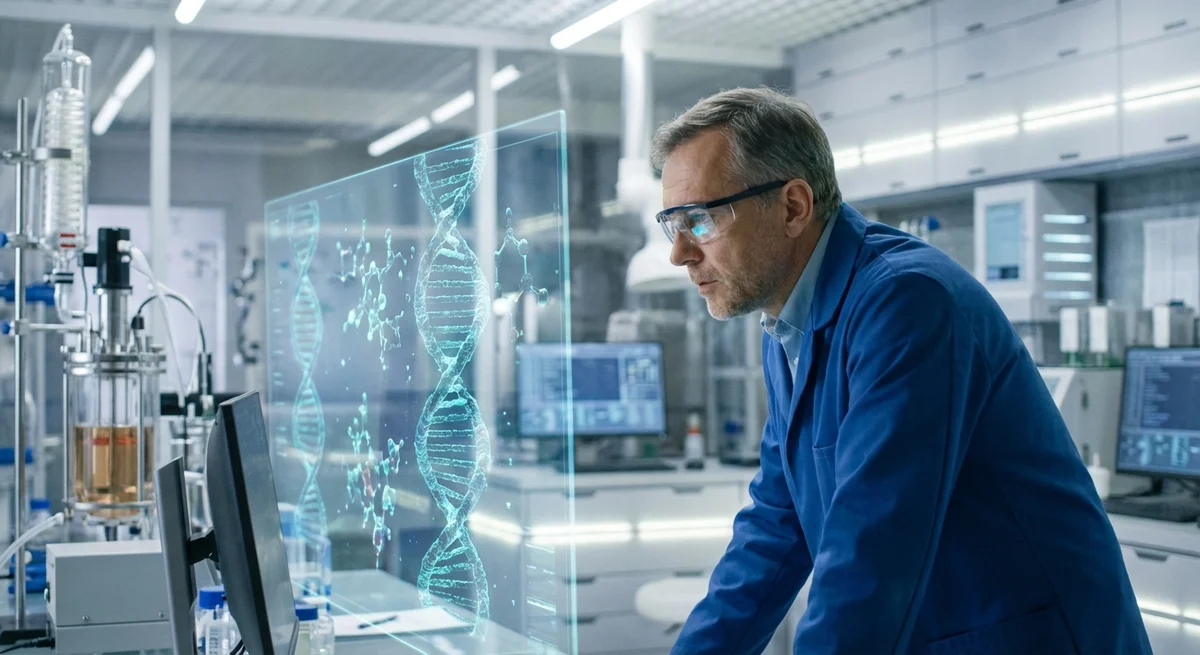
While the world passionately debates whether ChatGPT will replace copywriters and programmers, at the Web Summit in Qatar they discuss something far more vital. The problem of treating rare diseases has run up against the same wall for decades: harsh economics and acute scarcity of human resources. There are billions of us, yet there are catastrophically few scientists capable of spending years searching for a formula for a disease that affects three people per million. And here artificial intelligence stops being a toy for generating pictures and becomes that very "extra pair of hands" that medicine has lacked since its inception.
Let's be honest: traditional pharmacology is insanely expensive and slow. The search for a new drug used to resemble trying to find a specific needle in an endless haystack with your eyes closed. Scientists manually sorted through thousands of molecules, hoping for luck. Today biotech startups demonstrate how algorithms do this in mere weeks. AI doesn't just "think" faster than humans—it automates the routine work that previously required hundreds of lab technicians and millions of hours of labor. This fundamentally changes the rules of the game, especially for so-called "orphan" or rare diseases, which big pharma previously pursued reluctantly due to catastrophic costs.
Particularly noteworthy is the combination of AI and gene-editing technologies like CRISPR. The combination of these tools allows scientists to predict the consequences of DNA changes before they ever touch a real test tube. We are rapidly transitioning from an era of "trial and error" to an era of precise engineering calculation. If previously one research stage consumed years in the life of an entire scientific institute, now one experienced bioinformatician with the right software produces results that are more accurate and faster. This isn't magic—it's pure mathematics that has finally grown up to match the complexity of human biology.
Why is this conversation happening right now? The technological stack has finally matured. We now have computational power, accumulated gigantic datasets of genomes, and importantly, investors have begun to understand: AI in biotech isn't hype—it's the only way to scale medicine. We see small startups beginning to successfully compete with industry giants simply because their primary "workforce" consists of algorithms that don't sleep, don't get tired, and don't make mistakes from inattention.
This shift toward automation is a forced measure. The global shortage of qualified scientific personnel is only growing. The aging world population demands ever more new medicines, while the number of young scientists willing to devote their lives to the laboratory is not increasing proportionally. In this context, AI acts not as a competitor to humans, but as a powerful amplifier. It takes on the most tedious, mechanical, but voluminous part of the work, leaving people the right to make the final decision and achieve scientific breakthroughs. We delegate the exhaustive search to the machine, retaining strategy for ourselves.
Ultimately, we are witnessing the birth of an industry where the term "rare disease" might cease to be a death sentence. If the cost of drug development drops tenfold thanks to total automation, pharmaceutical companies will find it profitable to treat even patients whose diagnoses occur once a decade. This is true humanism, wrapped in software code and server racks. Technologies allow us finally to address the problems of each individual person, not just the averaged majority.
Main point:
The shortage of scientists is no longer an insurmountable barrier to medical progress. AI transforms biomedicine from an elite craft into scalable technology. Whoever first fully automates their laboratory will become the leader in the market for future medicines. Can human intelligence maintain control over the process when discoveries begin to happen faster than we have time to understand them?
Want to stop reading about AI and start using it?
AI News is a curated feed of AI/tech news. Hamidun Academy teaches you to use AI systematically in your work.