Chinese humanoids conquered the world: 80% of the market already in Beijing's hands
Remember how we were mesmerized for years by Boston Dynamics videos where robots did somersaults and gracefully jumped over obstacles? It seemed like a…
AI-processed from CNews AI; edited by Hamidun News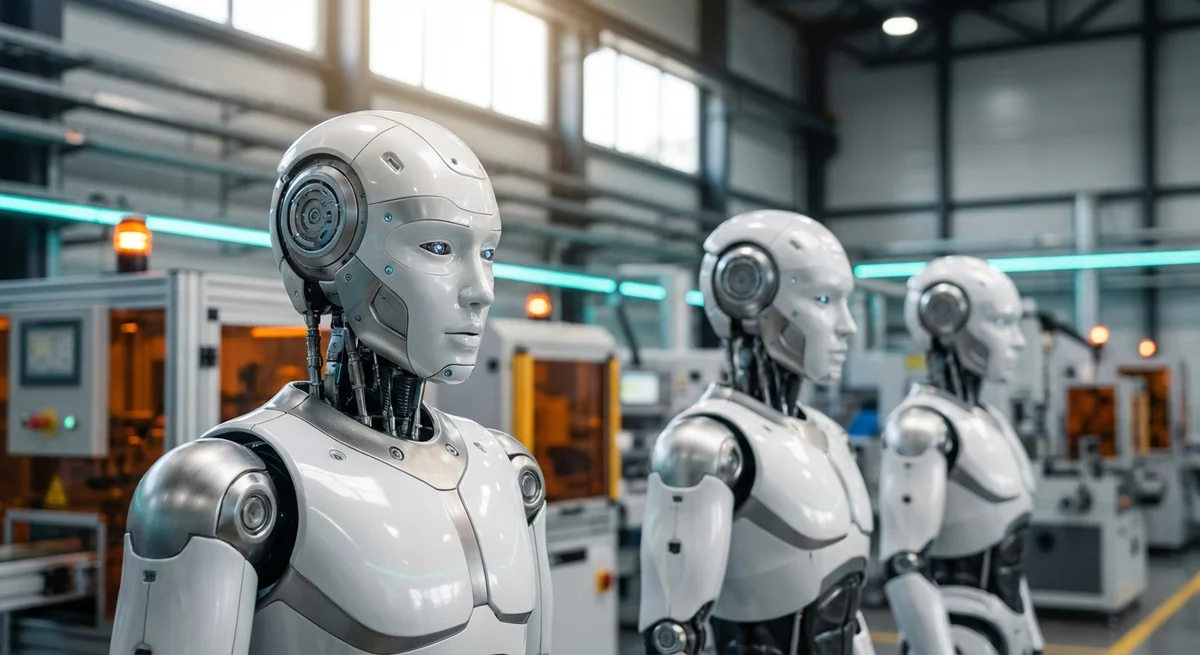
Remember how we were mesmerized for years by Boston Dynamics videos where robots did somersaults and gracefully jumped over obstacles? It seemed like a beautiful technological future was just around the corner. But the reality of 2025 turned out to be much more mundane and pragmatic.
While some were teaching machines to dance, others were teaching them to assemble on conveyor lines and, more importantly, to sell. Chinese manufacturers didn't just join the conversation — they kicked down the door and captured 80% of the global humanoid robot market. Out of 16,000 androids sold worldwide, the lion's share bears the "Made in China" stamp.
These aren't just numbers in a Counterpoint Research report; this is a quiet verdict on Western ambitions in this sector for years to come.
How did leadership slip to the East practically without a fight? The answer lies in a classic Chinese strategy we've already seen in the electric vehicle and solar panel markets. Beijing didn't wait for technology to become perfect. A few years ago, China's Ministry of Industry and Information Technology openly declared: humanoid robots are a strategic priority just like semiconductors. The result was explosive growth. While American startups like Figure or Tesla have spent years polishing software and complaining about component shortages, Chinese companies like Unitree, UBTECH, and Fourier Intelligence simply manufacture hardware at scale. They have everything at hand: from cheap servos to ready-made production lines that can be reconfigured in weeks, not years.
It's important to understand that 16,000 robots sold is only the first wave. These are the "early adopters" who buy androids for warehouse security, simple production line work, or even retail demonstrations. Chinese robots today are like Chinese smartphones a decade ago. They might look slightly less elegant than Western counterparts, their software might sometimes lag, but they cost many times less and are available here and now. While Tesla's Optimus remains an expensive test toy inside Musk's factories, Chinese humanoids are already patrolling shopping centers and assisting in logistics hubs throughout Asia.
The Western model of robotics development has always been driven by the search for a "gold standard." We want robots to be safe, ethical, incredibly smart, and preferably look like science fiction heroes. China took the path of "sufficient functionality." If a robot can carry a box from point A to point B and costs like a used car, businesses will buy it. This pragmatism allowed the Chinese to capture 80% of the market. They created an ecosystem where innovations are implemented at lightning speed and mistakes are corrected during operation. This is a tough, aggressive, and highly effective race in which Beijing is now running with a massive lead.
What does this mean for the rest of the world? We're likely heading into a period of strict protectionism. The US and Europe will hardly want to see thousands of Chinese "eyes and ears" in their factories and streets. However, closing the market doesn't mean winning the technological race. Without its own developed component base and mass production, Western companies risk remaining in a niche of expensive and rare prototypes. China has already created critical mass, and now every robot sold makes their neural networks smarter and production cheaper. The wheel is spinning, and it will be extremely difficult to stop it with simple tariffs.
The main question: Is the West ready to admit that it's already losing the race for the "body" of AI, or can we expect a sudden response from Tesla and Boston Dynamics?
Want to stop reading about AI and start using it?
AI News is a curated feed of AI/tech news. Hamidun Academy teaches you to use AI systematically in your work.