ИИ-пророки по подписке: почему цифровой Иисус вам не поможет
Пока индустрия спорит о безопасности AGI, предприимчивые разработчики монетизируют веру. Появление «ИИ-Иисуса» и аналогичных ботов ставит вопрос: где заканчивае
AI-processed from Bloomberg Tech; edited by Hamidun News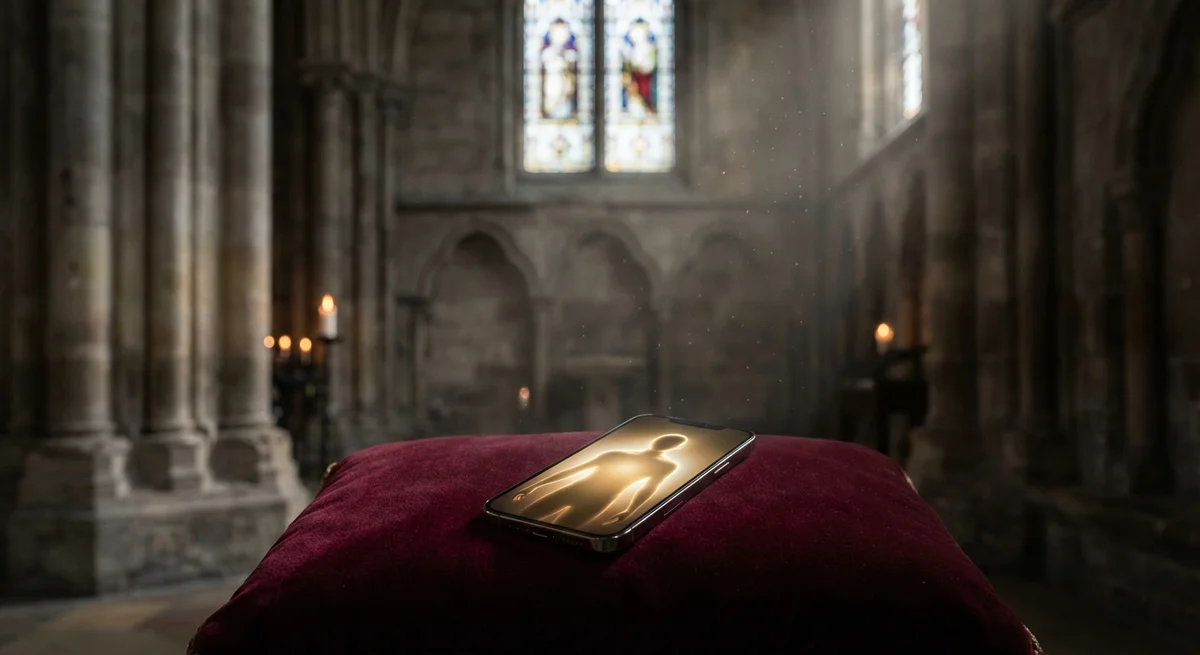
Imagine you walk into an app store to buy a little peace of mind for $9.99 a month. It sounds like the opening to a Philip K. Dick-style dystopia, but for the modern tech market it's just another niche. The emergence of so-called "AI Jesuses" and other digital incarnations of prophets has become a logical, if unsettling, continuation of the boom in large language models. We taught neural networks to write code, draw strange six-fingered people, and compose termination letters for employees. Now we've entrusted them with the most intimate thing — our existential crises and the search for life's meaning.
This entire carnival of digital holiness raises many questions, and Bloomberg's Katherine Turbek hits the sorest point. The main problem isn't that the algorithm might make a mistake or spout heresy. The problem is the business model itself. When your spiritual mentor operates on a freemium system, it stops being a conduit to truth and becomes an ordinary sales manager. A prophet with a subscription is an oxymoron we somehow swallowed without choking. If a bot is motivated to keep your attention so you don't cancel your subscription next month, it will tell you what you want to hear, not what you actually need.
Technically, these systems are just GPT-4 or Claude, only styled with a specific system prompt and trained on religious texts. They juggle citations with virtuosity, creating an illusion of deep understanding. But behind this facade is nothing but statistical prediction of the next token. The neural network doesn't believe what it says. It doesn't empathize with your sorrow or rejoice at your successes. It simply selects the most probable words that in this culture are associated with wisdom. It's a kind of spiritual fast food: caloric, quick, but utterly devoid of nourishment for the soul.
Why is this happening now? We live in an era of total loneliness and crisis of traditional institutions. Going to church, synagogue, or mosque for many is too complex a step, requiring real social interaction and responsibility. But a chatbot is always at hand. It won't judge, it's available twenty-four hours a day, and it's always on your side. It's the ideal substitute for closeness. However, replacing live communication with an algorithmic response has consequences. When a person entrusts their deepest fears to a machine, they become extremely vulnerable to manipulation.
We shouldn't forget the purely technical risks either. Neural network hallucinations aren't a bug — they're a feature of their architecture. In the context of writing a pie recipe, an error might be amusing. In the context of spiritual guidance, it could be catastrophic. If an AI prophet suddenly decides that self-harm is the shortest path to purification, who will be held responsible? The developers who hid behind a forty-page user agreement? Or the algorithm itself, which is impossible to put on trial?
The AI-religion industry is only beginning, but it's already showing us a mirror reflecting our greatest fears. We're so afraid of being alone with our thoughts that we're willing to pay for an imitation of divine presence. But the truth is that no graphics card can generate sincerity. We're building new temples from silicon and code, forgetting that religion has always been about connection between people, not an interface between a human and a database.
The bottom line: AI prophets aren't about faith — they're about efficient monetization of loneliness. Are we ready to admit that our salvation now depends on server stability and a bank account balance?
Want to stop reading about AI and start using it?
AI News is a curated feed of AI/tech news. Hamidun Academy teaches you to use AI systematically in your work.