Amazon bets $200 billion on AI: market demands stakes
Imagine you decided to build a house, but in the process realized you need not just a cottage, but an entire city with its own power plant. That's roughly…
AI-processed from 3DNews AI; edited by Hamidun News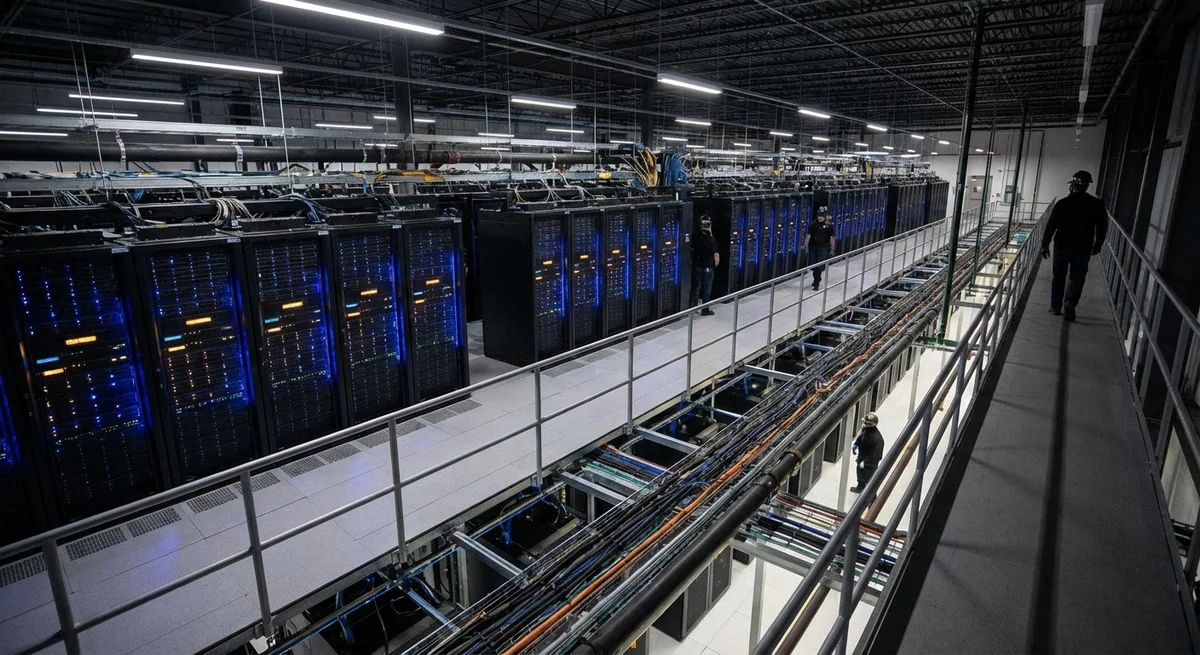
Imagine you decided to build a house, but in the process realized you need not just a cottage, but an entire city with its own power plant. That's roughly what's happening with Amazon right now. The company announced plans to increase its capital investments to a staggering $200 billion. That's 54 percent more than last year. And almost all that money will go into one "black hole" called artificial intelligence. If AWS was once simply a convenient cloud for storing your photos and websites, it's now a giant forge where future GPT models and their analogs are being forged. Demand for computing is growing faster than servers in data centers can cool down.
Why is Amazon spending such sums right now? The answer is both simple and complex: they have no choice. The cloud services market has changed forever. If competition used to happen at the level of interface convenience and toolsets, now the winner is whoever has more Nvidia chips and more powerful transmission lines. AWS had long been Jeff Bezos's empire's cash cow, generating the lion's share of profits that covered losses from logistics and retail. But now the "cow" has to be fed golden hay. Investors, accustomed to stable reports, look at these numbers with barely concealed horror. For them, $200 billion is not an investment in the future, but a risk that may not pay off for years.
The situation is complicated by the fact that Amazon is not the only player with bottomless pockets. Microsoft and Google are also investing tens of billions into their cloud platforms. This creates an "AI tax" effect. To simply stay in the game and not lose customers who are massively switching to generative models, tech giants are forced to buy up all available equipment. It's reminiscent of a gold rush, where the biggest earners are the shovel sellers—that is, chip manufacturers—while the prospectors themselves spend their last money hoping to find a nugget. The stock market's reaction was predictable: Amazon's shares fell because Wall Street loves profits here and now, not vague promises of dominance in 2030.
The problem is also that the physical world is starting to resist digital progress. Building data centers with such budgets is not just about buying servers. It's a struggle for land, for access to water for cooling, and most importantly, for electricity. We're already seeing Big Tech invest in small nuclear reactors because regular power grids can't handle the appetites of AI. Amazon is essentially transforming from a software company into an infrastructure monster that deals with energy and construction more than code. This is a fundamental shift in business model that many analysts are still trying to comprehend.
What does this mean for us? Most likely, the cost of AI services for end consumers and businesses will only increase. Free neural networks will become even more limited, and access to powerful APIs will get more expensive. Amazon is trying to position itself as the chief landlord in the world of AI, but the price of this strategy could prove too high even for them. If in the next couple of years we don't see a real economic explosion from implementing AI in the real sector, these $200 billion could become a monument to the unjustified expectations of the "big models" era.
The key point: Amazon is betting that in the future AI will become the new oil, but for now the company is spending more on extracting this oil than it's worth on the market. Who will blink first in this budget race?
Want to stop reading about AI and start using it?
AI News is a curated feed of AI/tech news. Hamidun Academy teaches you to use AI systematically in your work.