$650 billion arms race: Big Tech bets everything on chips and concrete
When numbers go beyond half a trillion dollars, ordinary math stops working and begins pure geopolitics at corporate scale. Amazon, Microsoft, Google, and…
AI-processed from 3DNews AI; edited by Hamidun News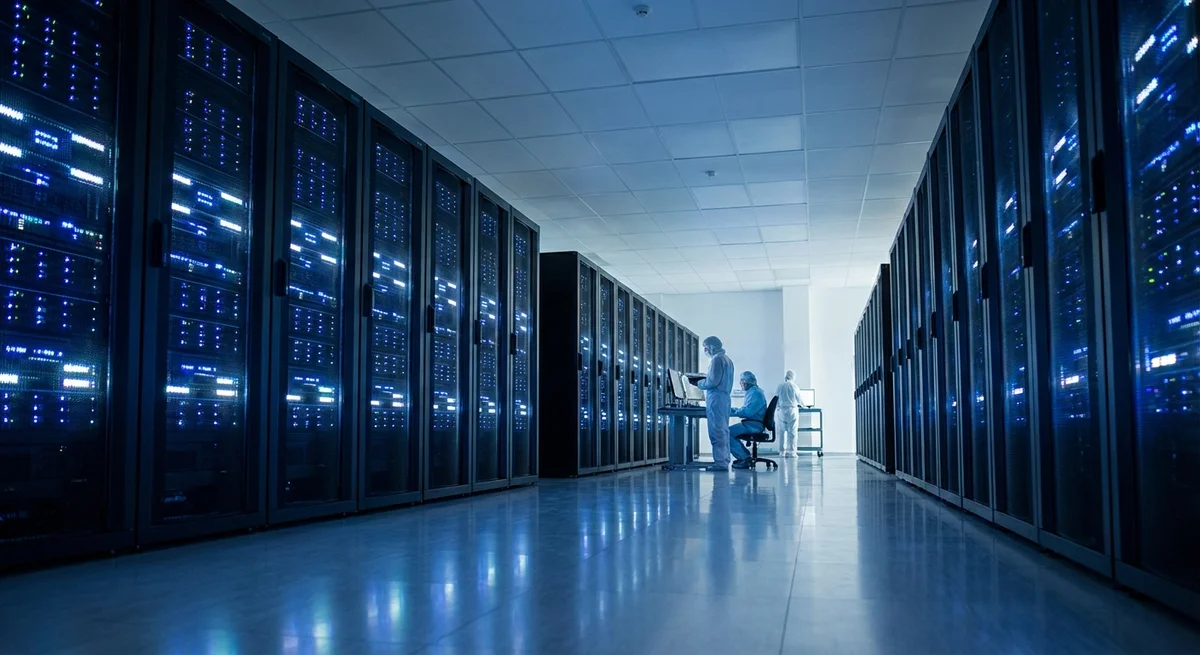
When numbers go beyond half a trillion dollars, ordinary math stops working and begins pure geopolitics at corporate scale. Amazon, Microsoft, Google, and Meta have decided that modesty is not for them and have allocated a combined $650 billion in capital expenditures in their budgets this year. To give you an idea of the scale of what's happening: this sum exceeds the annual GDP of most European countries. This money won't go to developing new interfaces or marketing campaigns. It will go to concrete, copper, and of course silicon. We are witnessing the largest overhaul of the technological infrastructure in human history in real time.
A year ago, the industry was debating whose language model told better jokes or wrote code faster. Today, the discussion has definitively shifted toward the physical world. It turned out that the "magic" of artificial intelligence requires quite tangible and very expensive things: massive warehouses, millions of miles of cables, and enough electricity to power entire cities. If cloud technologies once seemed ethereal and intangible, now it is the heaviest and most resource-intensive industry in the world. Companies are literally burying money in the ground, laying foundations for future neural networks that they hope will justify these investments one day.
It's interesting to observe how dramatically the rhetoric of these giants has changed. If investors were once promised optimization, buybacks, and cost reduction, now they're told directly: we will spend a lot, very much, and you'll have to accept it. Mark Zuckerberg, who not long ago preached "year of efficiency," now enthusiastically talks about purchasing hundreds of thousands of graphics processors. Microsoft and Google are not far behind, understanding that in this race for computational power, second place means oblivion. This is the classic prisoner's dilemma transposed to the level of big tech: if you don't build a data center today, tomorrow your competitor will train a model against which you have no chance.
Amazon through its AWS subsidiary has always been the king of clouds, but now the company is forced to run twice as fast. They are not just building server farms, they are creating their own chips to reduce dependence on external suppliers and Nvidia. This is vertical integration on steroids. When you spend tens of billions per quarter, saving even five percent on hardware costs translates into enormous sums that can be poured into building another facility. The entire hardware market now operates to satisfy the appetites of these four, creating component shortages for everyone else.
However, behind this financial optimism lies a very concrete problem: energy hunger. Building a facility and buying servers is only half the job. They need to be powered consistently and in huge volumes. We're already seeing technology companies buy stakes in nuclear power plants and invest in small modular reactors. The world of AI has suddenly collided with hard physics constraints. It turns out that training the next generation of models is not just a matter of algorithms, but a matter of whether the local power grid in Virginia or Iowa can handle such a load. The environmental agenda has temporarily receded before technological dominance.
Wall Street watches this parade of spending with a mixture of delight and quiet horror. On one hand, reports show growing revenue from cloud services. On the other hand, free cash flow begins to look less attractive when it's almost entirely consumed by capital expenditures. Analysts are asking: when will that moment come when AI services generate as much as companies spend to maintain them? So far, we see only growing resource consumption, while real monetization for mass consumption is still in the experimental and paid subscription stage.
What does this mean for the market as a whole? We'll likely see even tighter monopolization. With an entry threshold in the hundreds of billions of dollars, new players and startups can only hope for the mercy of the giants or try to create something incredibly efficient on small scales. The era of "garage" innovations in large models is definitively giving way to the era of industrial gigantism. We're entering a period when AI success is measured not only by code quality but by terawatt-hours and server rack square footage. The winner will be the one with enough money to finish building the last data center.
Bottom line: Big Tech is transforming the software industry into heavy machinery manufacturing. Will they be able to monetize these costs faster than investors lose patience?
Want to stop reading about AI and start using it?
AI News is a curated feed of AI/tech news. Hamidun Academy teaches you to use AI systematically in your work.