Tokyo Electron: profit miss won't shake AI bubble belief
Tokyo Electron пересмотрела годовой прогноз в сторону повышения, хотя квартальная прибыль не оправдала ожиданий. Это важный сигнал для рынка: производители чипо
AI-processed from Bloomberg Tech; edited by Hamidun News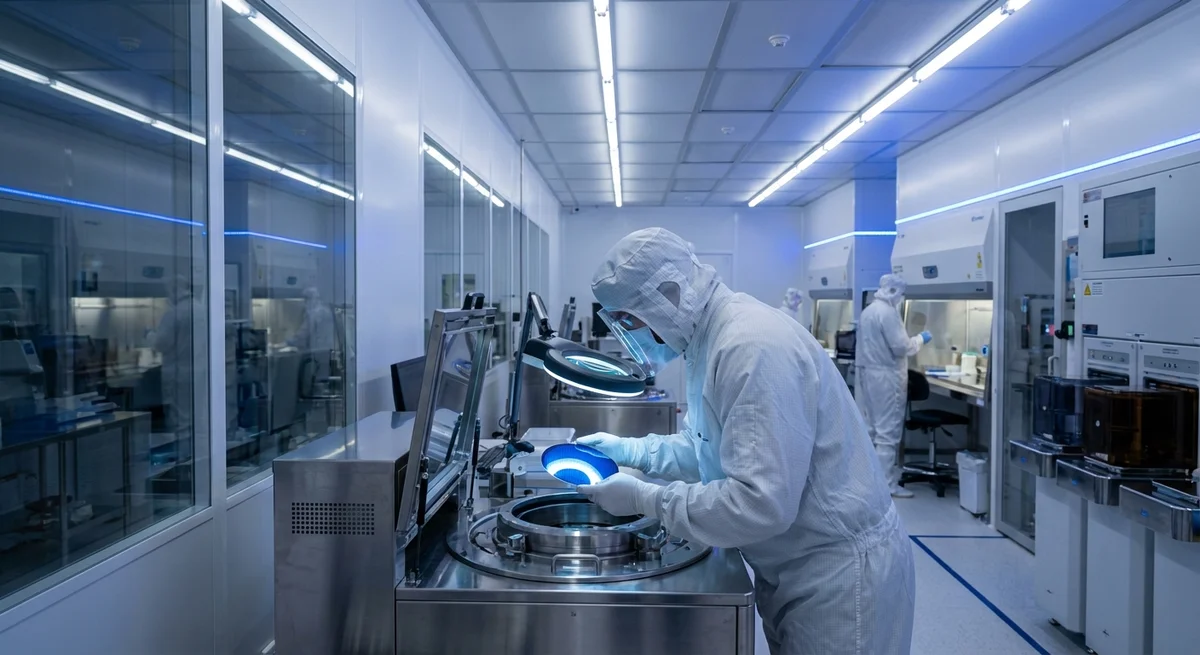
Imagine you're selling shovels during a gold rush. Your sales for the last month fell just short of plan due to logistics, but you see a queue forming at your counter of people with suitcases full of money, demanding the most expensive and durable tools. What would you do?
That's right, you'd tell investors the year will be simply fantastic. That's exactly what's happening now with Japanese giant Tokyo Electron. The company, which is one of the pillars of global semiconductor equipment manufacturing, recently published a report that could have disappointed an inexperienced analyst.
Quarterly profits came in below expectations. In normal times, shares of such a company would have plummeted. But we live in the age of AI, where conventional rules of economics work with a stretch.
Instead of ashes to ashes, Tokyo Electron's leadership raised its annual forecast. And the market believed them.
To understand why this matters, you need to grasp Tokyo Electron's role in the technology supply chain. They don't make chips themselves. They make machines without which giants like TSMC, Intel, or Samsung couldn't etch a single transistor onto silicon. If Tokyo Electron sees a surge in interest, it means the entire industry is preparing for massive capacity expansion. This is a leading indicator that tells us more about the future than any software startup presentations or promises to shove AI into every toaster. While Apple and other electronics manufacturers struggle with fickle smartphone demand, Tokyo's "hardware guys" look at the situation with Olympic calm.
Interestingly, growth was driven not by the mass gadget market — there's still some stagnation there. All the momentum comes from the AI server segment. Memory chip manufacturers desperately need equipment for producing HBM — high-bandwidth memory, which is vital for NVIDIA's graphics processors. Tokyo Electron here acts as the chief supplier of tools for the complex three-dimensional "packaging" of these chips. This is a technological frontier where margins are astronomical and competitors can be counted on one hand. It's this transition from simple microchips to complex multi-layered structures that allows the Japanese to view the future with such optimism.
Many experts outside the industry love to talk about how AI is another bubble about to pop. However, Tokyo Electron's numbers tell a different story. Bubbles are usually built on expectations and aggressive marketing, but here we see real capital investments in physical equipment. Companies are willing to spend billions of dollars on machines that will be paid off over years. This doesn't look like the behavior of people expecting a market crash in six months. Rather, it resembles a large-scale rearmament before a major battle for dominance in digital space. While NVIDIA draws revenue charts, Tokyo Electron is building the foundation these charts stand on.
Moreover, one should consider the geopolitical context. Japan is now actively trying to regain its status as a semiconductor superpower, pouring massive subsidies into new factories. Tokyo Electron finds itself at the center of this national revival.
Even harsh export restrictions toward China couldn't knock the company off course, because demand from the rest of the world for specialized "AI hardware" more than makes up for any losses. Ultimately, the situation confirms an old truth: in any technological revolution, those who supply the infrastructure earn the most and earn it first. While LLM developers compete for user attention, Japanese engineers simply keep shipping the most complex equipment.
And judging by their forecasts, the pace of this race will only accelerate.
Main point: If a chip equipment supplier raises forecasts despite weak current profits, it means the industry is preparing for an even larger phase of AI infrastructure building. Are we ready for a world where computational power will be many times greater than it is now?
Want to stop reading about AI and start using it?
AI News is a curated feed of AI/tech news. Hamidun Academy teaches you to use AI systematically in your work.