Trumpf: German lasers make AI possible (and generate billions)
Every time you ask a neural network to generate an image or write code, somewhere in the depths of a data center, a silicon chip created using technologies…
AI-processed from Bloomberg Tech; edited by Hamidun News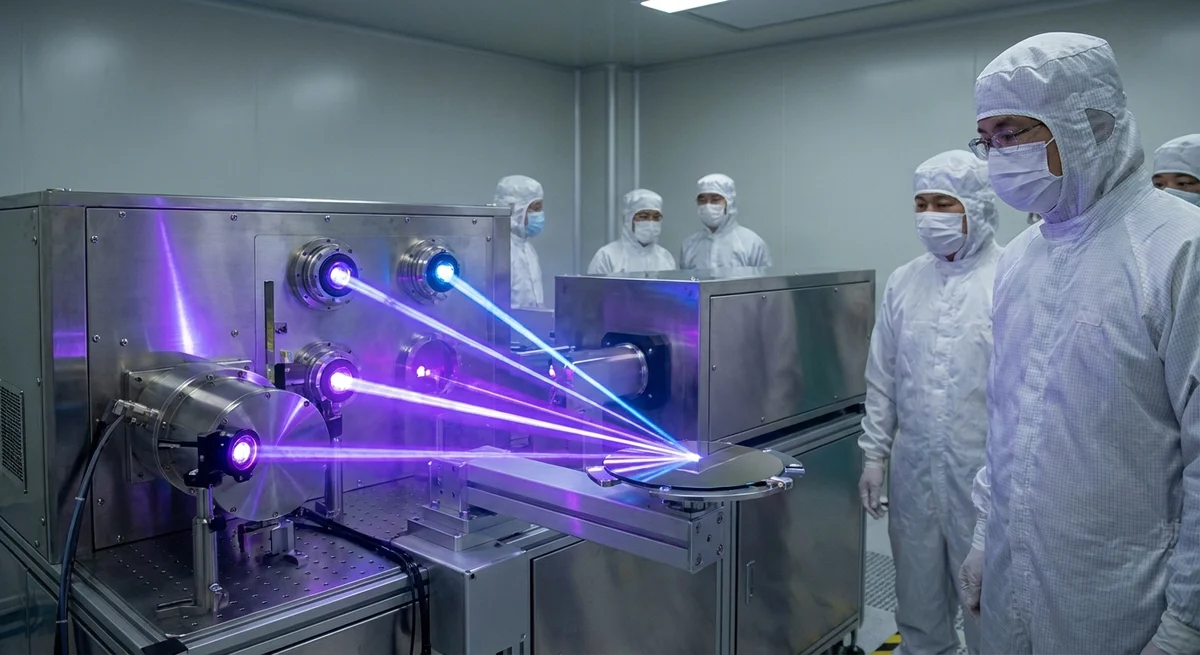
Every time you ask a neural network to generate an image or write code, somewhere in the depths of a data center, a silicon chip created using technologies that seem like magic comes to life. But this magic has quite a concrete address. While Silicon Valley fights for talent and investment, the German company Trumpf from the small town of Ditzingen near Stuttgart has confidently set its course for recovery. And it does this not through marketing, but through the fact that without their lasers, the modern AI revolution would simply stall.
To understand why Trumpf is on top right now, you need to look at the structure of global chip manufacturing. At the center of this universe stands the Dutch ASML — the world's only manufacturer of extreme ultraviolet (EUV) lithography machines. These machines cost hundreds of millions of dollars and allow "printing" transistors just a few nanometers in size. But here's the irony: ASML itself doesn't make the heart of this machine — the light source. Trumpf does. Their laser system shoots a droplet of molten tin 50,000 times per second, turning it into plasma that emits the very light needed.
After a period of lull in orders caused by general market instability, Trumpf is again recording growth. The global arms race in semiconductors between the USA, China, and Europe has created a situation where demand for ASML equipment is virtually unlimited. This means that production lines near Stuttgart will be busy for years to come. Trumpf has effectively become the "bottleneck" of the entire industry: if they run into problems, chip production for the next generation iPhone or new Nvidia accelerators will simply stop.
It's interesting to observe how a traditional German family business, founded over a hundred years ago, has become the foundation for the most futuristic technologies of our time. This is a great example of how in the AI value chain, the most sustainable positions are often held not by those who write code, but by those who own unique physical technologies. While software companies burn billions training models, Trumpf monetizes the physics of the process, remaining an irreplaceable link in the supply chain.
Trumpf's success today is not simply a stroke of luck, but the result of decades of R&D investment that finally aligned with market needs. When the world realized that data is the new oil, it turned out that the drilling rigs for this oil are made right here, in Swabia. And while geopolitical pressure on ASML and its suppliers grows due to export restrictions to China, fundamental demand for computing power outweighs any political risks.
Ultimately, Trumpf's story reminds us of the importance of the real sector. In a world where everyone discusses model parameters and AI hallucinations, someone has to ensure precision at the atomic level. And while competitors try to catch up with ASML, and ASML relies on Trumpf, German engineers can look to the future with confidence. Their lasers shine brightly enough to dispel any clouds over the company's financial reports.
The point: Global AI dependence on one German company is both enormous strength and the industry's main vulnerability. Is the world ready for the fact that the key to progress lies in the hands of a private family business from Germany?
Want to stop reading about AI and start using it?
AI News is a curated feed of AI/tech news. Hamidun Academy teaches you to use AI systematically in your work.