GPT-5 в белом халате: как OpenAI уронила цены на синтез белков на 40%
OpenAI нашла для GPT-5 применение поважнее ответов на глупые вопросы. Автономная лаборатория под управлением новой модели снизила стоимость синтеза белков на 40
AI-processed from Jiqizhixin (机器之心); edited by Hamidun News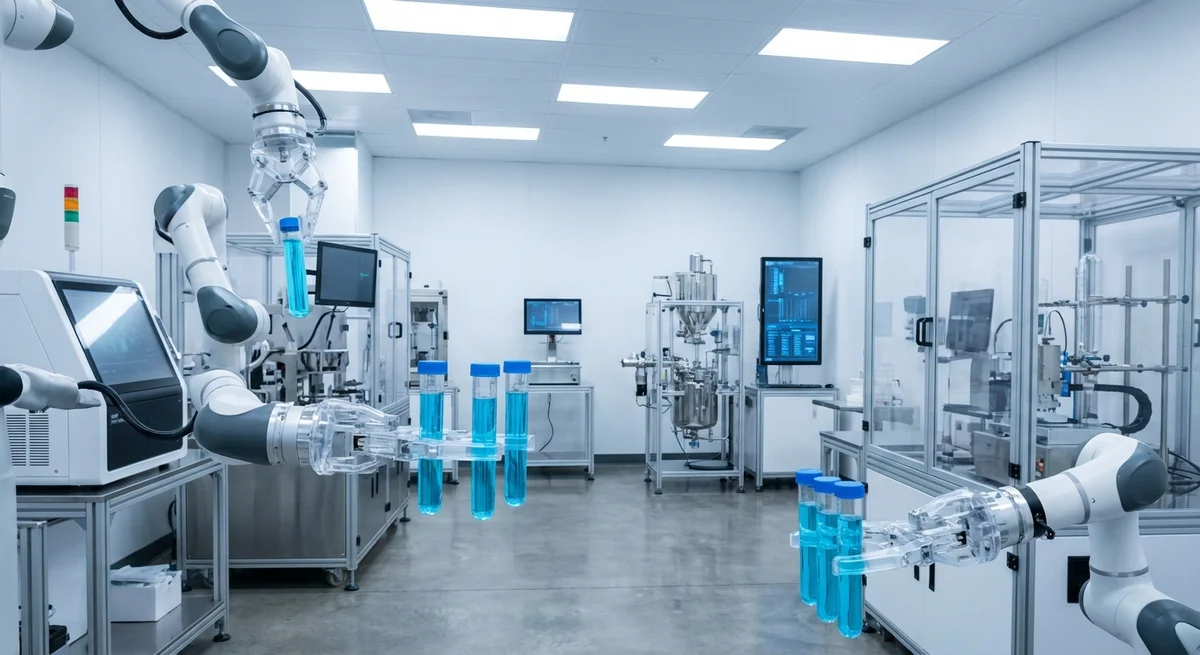
While we lazy folks were arguing in the comments about when Sam Altman would deign to release GPT-5 for the masses, the OpenAI team found a far more serious purpose for their new model. They sent the neural network into a "wet" laboratory. The result made biotech giants nervously recalculate their budgets: the cost of protein synthesis fell by an impressive 40%.
And this isn't because AI simply became faster at calculations. It began to truly manage the process. The problem of protein synthesis has always boiled down to two things: monstrous complexity and even more monstrous cost.
Traditionally, this looked like an endless series of trial and error, where each iteration required the participation of expensive specialists and the use of even more expensive reagents. An error in one link — and weeks of work fly into the trash along with tens of thousands of dollars. OpenAI decided that human intuition here hindered more than it helped, and handed the reins of an autonomous laboratory to the management of its most powerful model.
GPT-5 in this scenario acts not as a reference, but as the operating system of the entire scientific process. It plans experiments, analyzes intermediate data, and most importantly, corrects robot actions on the fly. This makes it possible to avoid those very dead ends that human scientists might spend months on.
The model understands the chemistry of processes at such a level that it can predict side reactions before they ruin the entire batch. This very predictive accuracy gave that 40% saving through a sharp reduction in waste and equipment operating time. Why does OpenAI need this?
The answer is simple: money and data. The biotechnology and drug development market is measured in trillions, and if you can make the entry ticket to this business twice as cheap, you become its master. Besides, working with the physical world is the best way for AI to escape the "text prison."
When a neural network learns to control a manipulator in a laboratory, it acquires an understanding of physics and cause-and-effect relationships that cannot be extracted from simply reading the internet. Of course, the question of safety arises. Autonomous protein synthesis is not only a cure for cancer, but also potentially dangerous pathogens.
But, apparently, OpenAI is currently more concerned with proving the superiority of its architecture over competitors. While Google boasts about AlphaFold's successes in predicting structures, OpenAI is taking the next step — it physically creates these structures, and does so faster and cheaper than anyone on the planet. This case clearly shows that the era of "just chatbots" is coming to an end.
We are entering a phase where AI becomes a physical force capable of changing the material world. Today it's protein synthesis, tomorrow — new materials for batteries or superconductors. The irony is that while we wait for GPT-5 to be better at telling jokes, it's already actively changing the foundation of modern medicine, without asking our opinion.
Main point: OpenAI is turning GPT-5 into a universal scientific brain. Will classical pharmaceutical companies be able to compete with a software giant that simply "hacked" their economics?
Want to stop reading about AI and start using it?
AI News is a curated feed of AI/tech news. Hamidun Academy teaches you to use AI systematically in your work.