Meta Vibes: Цукерберг строит свой TikTok из галлюцинаций нейросетей
Meta (Meta) официально подтвердила тестирование Vibes — самостоятельного приложения для создания и просмотра коротких видео, полностью сгенерированных искусстве
AI-processed from 36Kr (36氪); edited by Hamidun News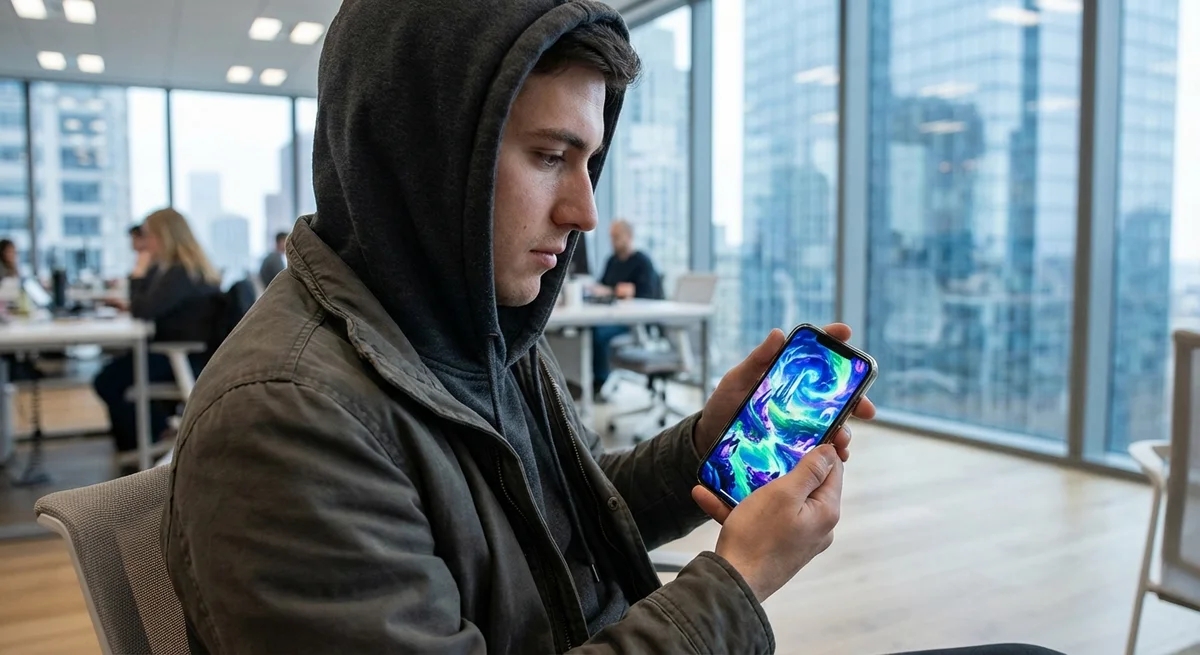
Imagine a social network where there's not a single live video shot on a smartphone camera. Mark Zuckerberg apparently decided that endless scrolling in Instagram isn't enough for us, and is now preparing something far more strange and ambitious. Meta officially confirmed that it is testing Vibes — a separate application entirely dedicated to generative video. This is no longer just a funny button in a messenger, but a full-fledged attempt to create a platform where content is born in the depths of graphics cards rather than in blogger studios.
To understand why this is happening right now, you need to look back at the past six months in the industry. While the entire world held its breath waiting for OpenAI's full Sora release, Zuckerberg is doing what he does best — getting ahead of the game in terms of distribution. While Sora is positioned as a powerful tool for professional creators and visionaries, Vibes targets the mass consumer. Meta doesn't need complex prompts spanning three paragraphs; it needs fun, quick, and slightly insane entertainment that can be created with one button tap and immediately sent to the feed.
The story of Vibes began back in September of last year, when Meta presented its first developments in video generation. Back then it looked like a modest addition to the Meta AI ecosystem, lost among other features. But explosive interest in neural networks and the success of the short video format forced the company to reconsider its strategy. Spinning Vibes off into a separate application is an acknowledgment that generative content is no longer a "side dish" to the main course of friends' photos and memes. It is becoming its own genre, requiring its own home.
For Meta, this is not just another experiment, but a critically important strategic necessity. The company has waged an exhausting battle for years for the attention of young people, who increasingly choose TikTok. But instead of simply copying the competitor's mechanics once again, Zuckerberg is trying to change the very nature of consumed content. If in Reels you're still dependent on the charisma and creativity of real people, then in Vibes the limiting factor is merely the power of server farms. This is an ideal closed ecosystem: users generate videos using Meta's tools, consume them within Meta's platform, and the company's algorithms learn from these interactions to make the next videos even more addictive.
However, there is a serious philosophical challenge lurking here. Researchers have long discussed the theory of the "dead internet," where bots communicate with bots, and neural networks generate content for other neural networks. Vibes is essentially the first attempt by a major corporation to legalize and monetize this concept on a planetary scale. How long will the human brain be able to maintain interest in an image that isn't backed by a personality, real experience, or even physical reality? Meta is betting that aesthetics and "vibe" matter more to modern users than authenticity.
On the technical side, Vibes relies on the developments of the Emu family of models and deep integration with Llama language models. This allows creating visual images literally in seconds, bypassing complex rendering stages. While OpenAI polishes Sora, trying to achieve flawless photorealism and compliance with the laws of physics, Meta chooses the path of "good enough" quality accessible to everyone here and now. This is a classic battle of two approaches: elite quality versus mass accessibility. And, as the history of social networks shows, mass scale and ease of entry usually win.
Bottom line: Meta is building a "dream factory" on autopilot, trying to seize the initiative from OpenAI in the fight for the video market. Will an algorithmic surrogate replace live creativity, or will Vibes become a digital graveyard of bright but empty hallucinations?
Want to stop reading about AI and start using it?
AI News is a curated feed of AI/tech news. Hamidun Academy teaches you to use AI systematically in your work.