Дата-центры на орбите: Илон Маск строит облако в буквальном смысле
Илон Маск переходит к реализации плана по созданию орбитальных вычислительных кластеров для ИИ. Идея объединяет ресурсы SpaceX и аппетиты xAI: вместо того чтобы
AI-processed from TechCrunch; edited by Hamidun News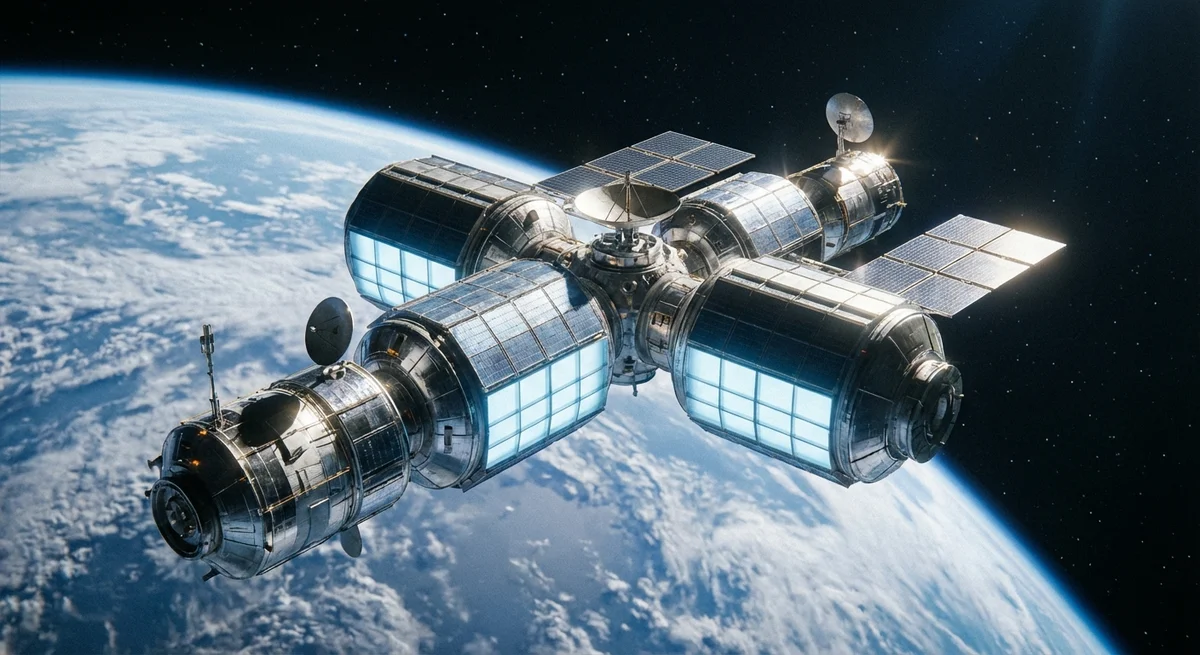
If you thought that the hundred thousand Nvidia H100 GPUs in Elon Musk's Colossus supercomputer represent the limit of his ambitions, then you clearly underestimated his passion for vertical integration. While competitors from OpenAI and Microsoft are pleading with governments for permission to build nuclear reactors to power their farms, Musk decided to take the proven path and simply leave the bounds of Earth's atmosphere. The idea of orbital data centers stopped being a topic for science fiction novels and became a concrete business plan, where SpaceX acts as a transportation provider, and xAI as the primary tenant.
Why is this happening right now? Everything comes down to an energy gridlock. Modern AI models require so much electricity that old municipal power grids simply cannot deliver without risking leaving an entire state without power. In space, there are no outlet problems: solar energy is available practically around the clock, and its density there is significantly higher. Musk already owns the world's largest satellite constellation, and turning Starlink from a simple communication system into a distributed supercomputer looks like the most logical upgrade in the history of technology.
Of course, you cannot deceive physics, and here is where the main difficulties begin. In a vacuum, there is no air that can be pushed through radiators, so cooling servers becomes an engineering nightmare. Heat dissipation is only possible through radiation, which requires enormous areas of heat exchangers. Additionally, Nvidia's highly sensitive electronics does not tolerate cosmic radiation well. Musk will either have to build heavy shielding, which increases launch costs, or accept that the lifespan of a single GPU in orbit will be bright but short. However, knowing his approach to iterative design, we are more likely to see hundreds of cheap, disposable computing satellites rather than a single protected flagship.
Why does the industry need this? Beyond energy, there is the matter of data sovereignty and latency. For training models, signal latency of a few milliseconds is not critical, but the ability to train a neural network outside the jurisdiction of any state provides certain political freedom. This is an ideal hedge against regulators who could tomorrow ban the use of certain datasets or demand limiting the power of computing centers due to environmental concerns. In space, there are no environmental activists or local officials demanding accountability for every liter of water spent on cooling.
Ultimately, this project is yet another attempt by Musk to close the loop within his own companies. SpaceX launches, Starlink connects, and xAI computes. If this scheme works, the cost of training the next generation of Grok could drop many times over simply due to the absence of electricity bills and land rent. While Sam Altman is searching for trillions of dollars for chip manufacturing plants, Musk is building infrastructure that is literally impossible to reach from the ground. This is bold, this is expensive, and this is in his style.
The key question: Will an orbital computing cluster be the key to victory in the race for AGI, or will radiation burn out the chips faster than Grok-3 can finish learning?
Want to stop reading about AI and start using it?
AI News is a curated feed of AI/tech news. Hamidun Academy teaches you to use AI systematically in your work.