Грязная работа для «чистого» интеллекта: как индийские женщины платят психикой за безопасность ваших нейросетей
Пока мы восторгаемся тем, насколько вежливыми стали нейросети, за кулисами разворачивается гуманитарная катастрофа. В сельских районах Индии тысячи женщин работ
AI-processed from Guardian; edited by Hamidun News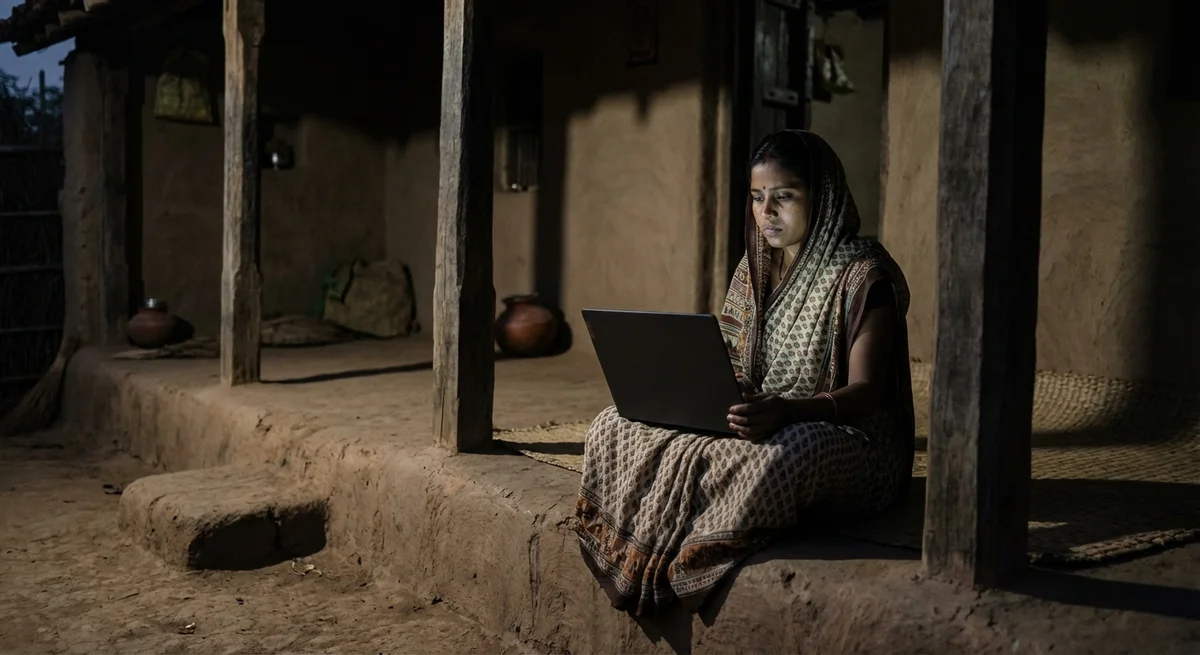
Imagine a typical Indian village: the sound of pots and pans, children's cries, the smell of spices. And amid this pastoral scene sits a young woman with a laptop on a clay ledge. She is not writing code for the future or creating digital art. On her screen is a scene of brutal violence, captured by the camera in all its details. She must watch it to the end to apply the correct tag. This is not a cyberpunk dystopian scenario, but the everyday reality of those who make your AI "safe." While OpenAI, Google and Anthropic compete over the ethics of their models, the dirty work is done by people whose names will never appear in the credits.
The artificial intelligence industry today is obsessed with the concept of "alignment." We want neural networks to not provide napalm recipes, not promote hatred, and not be rude to users. But to achieve this, algorithms first need to be shown what exactly is "bad." Millions of hours of video footage containing violence, torture and exploitation must be labeled manually. Ironically, to create an artificial intelligence that doesn't hurt the feelings of a Western user, you end up inflicting very real and deep psychological trauma on residents of the Global South. This is a kind of digital colonialism: we export ethical purity, leaving toxic waste in the form of destroyed psyches of workers.
Companies like Scale AI, Appen or Sama hire tens of thousands of workers in India, Kenya and the Philippines. For women in rural India, like Monsumi Murmu, this is often the only chance to earn money without leaving home and abandoning their families. But the price turns out to be exorbitant. After ten hours of watching scenes of sexualized violence or murders, the psyche simply "switches off." Workers describe this state as "emptiness" or "white space." They return to their families, to their children, but cannot feel joy or closeness. This is not just hard work, it is a systematic export of post-traumatic stress disorder on an industrial scale.
The problem is made worse by the fact that technology giants maximize their distance from this supply chain. They buy already "clean" datasets from contractors, who in turn economize on everything, including psychological support. Contracts often spell out performance requirements, but almost never spell out mental health protections. As a result, we have a classic scheme: raw material (data) is extracted under harsh conditions, cleaned for pennies in the poorest regions and sold as an elite, "innovative" product in San Francisco. Without this living shield made of human psyches, no GPT-4 would last a day without a major scandal.
The saddest thing about this situation is the lack of alternatives. Automating this process is not yet possible: to teach AI to recognize violence, you need a person to say what violence is. We have fallen into a trap where the humanism of one part of humanity is built on the dehumanization of another. While Silicon Valley discusses the risks of robot uprisings, women in Indian villages lose the ability to feel, just so your chatbot doesn't say something out of line. This is a fundamental flaw in the modern tech industry, one that is customarily hidden away shamefully behind presentations about "benefit to humanity."
Key point: AI safety today is not just elegant mathematical formulas, but thousands of broken lives on the other side of the planet. Will the industry create automatic filters for training filters, or will "human meat" remain the cheapest component of neural networks?
Want to stop reading about AI and start using it?
AI News is a curated feed of AI/tech news. Hamidun Academy teaches you to use AI systematically in your work.