Google идет ва-банк: почему 180 миллиардов на ИИ — это только начало
Alphabet (материнская компания Google) представила финансовый отчет, который заставил аналитиков Wedbush и других инвестдомов схватиться за голову. Вместо прогн
AI-processed from Bloomberg Tech; edited by Hamidun News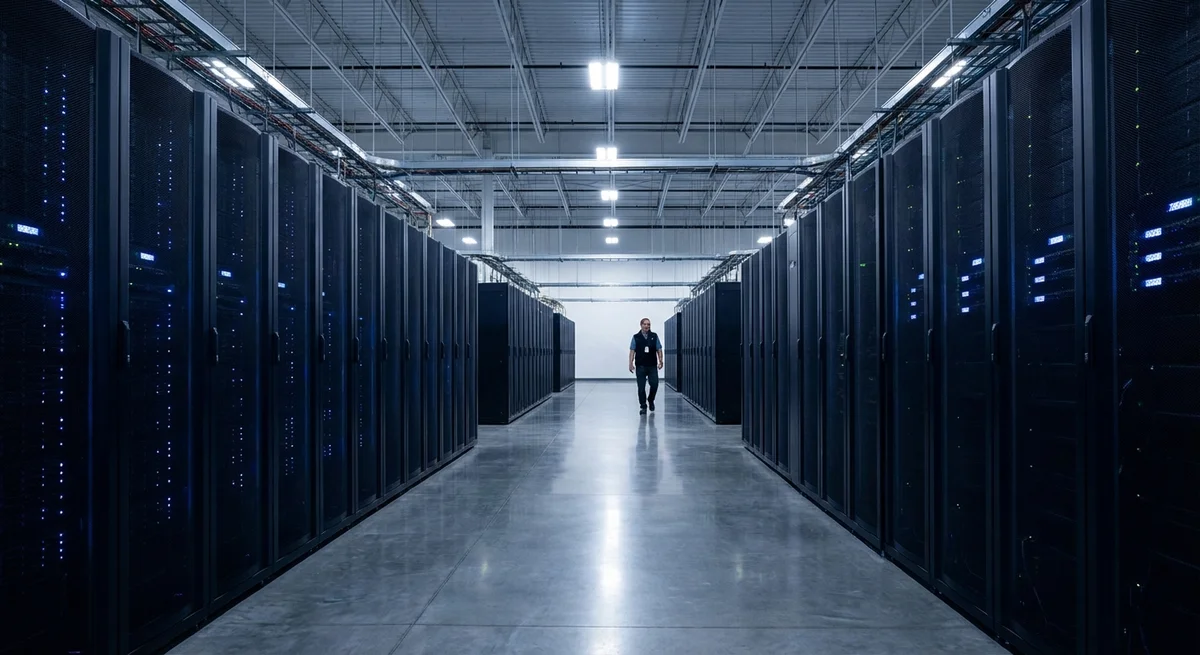
When financial report figures diverge from analyst forecasts by tens of billions of dollars, silence typically descends on Wall Street corridors. Alphabet just pulled off exactly that kind of performance. While experts from Wedbush and other agencies politely predicted the company would spend around $120 billion this year, Google's leadership decided modesty wasn't for them. The new benchmark: $175 to $185 billion. To put the scale in perspective: this exceeds the GDP of many European countries, and all of it will go toward purchasing "silicon" and building concrete boxes with powerful cooling systems.
Why is this happening right now? Over the past two years, Google has been in a catch-up position. After ChatGPT's triumph, the company desperately tried to prove that its neural networks were no worse and its ecosystem more reliable. But AI is not just elegant code—it is primarily electricity and transistors. Every query to Gemini costs several times more than a regular Google search. To maintain search dominance while not losing ground in Microsoft and Amazon's cloud services, the company needs infrastructure capacity that previously seemed excessive. Alphabet is essentially acknowledging: the era of cheap software has ended; the era of ultra-expensive hardware has begun.
Analyst Scott Dewitt from Wedbush, commenting on these figures, points out an important nuance: the market wasn't ready for such aggressiveness. Investors love AI when it generates profit, but they start getting nervous when capital expenditures (Capex) grow exponentially. However, Google simply has no choice. If they don't build these data centers today, tomorrow they'll have to rent capacity from competitors or watch users migrate to faster and smarter services. This is a classic "founder's trap": you either spend all the money you made from advertising on new technologies, or you slowly transform into a technology museum.
Interestingly, against this backdrop, Amazon's results also look intriguing. All of Big Tech is currently caught in an arms race, where Nvidia is the chief weapons supplier. But Google is trying to play it smarter, developing its own TPUs (Tensor Processing Units). Part of these crazy billions will go specifically into developing its own hardware, to somehow reduce dependence on the fickle chip market. This is a long-term strategy that could either make Google an absolute monopolist in terms of computational efficiency, or become the most expensive mistake in the corporation's history.
Ultimately, we're witnessing the end of the "diet" that technology giants announced last year. A year of efficiency has given way to a year of wholesale buying. Google understands that in the world of generative AI, size matters—cluster size, number of parameters, and available memory volume. If it takes $185 billion to achieve this, they'll spend it, even if it makes analysts reach for the sedatives. The only question is how quickly these investments will turn into real products that users will want to pay for.
Bottom line: the entry ticket to the club of top AI creators has increased by fifty percent. Will anyone besides the Google-Microsoft-Amazon trio be able to afford such stakes?
Want to stop reading about AI and start using it?
AI News is a curated feed of AI/tech news. Hamidun Academy teaches you to use AI systematically in your work.