Gemini 3 Flash: Google учит нейросети не гадать, а всматриваться
Долгое время мультимодальные модели работали как ленивый студент: глянул на картинку один раз и выдал ответ. Если на фото микросхемы не видно серийный номер, не
AI-processed from MarkTechPost; edited by Hamidun News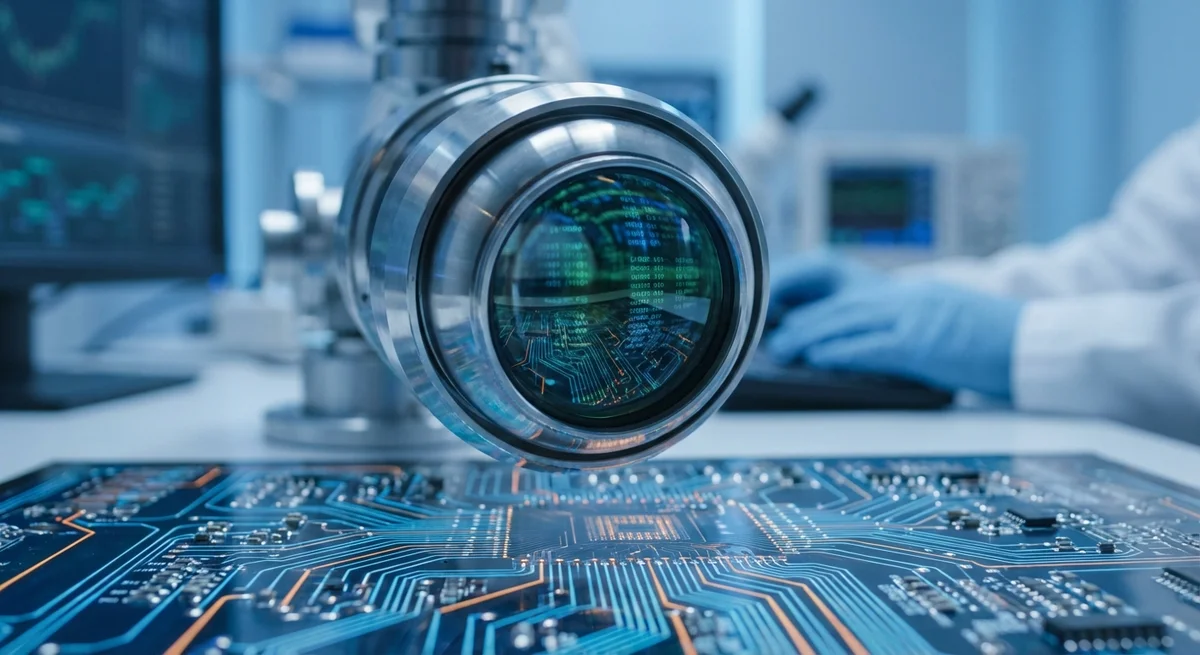
Have you ever noticed how modern neural networks behave when analyzing complex images? It's like a nearsighted person trying to make out a bus number from far away: if they can't see the digits clearly, they simply make them up based on context. Until now, even the most advanced multimodal models have operated on a single-pass principle. They received an image, ran it through their weights, and produced a result. If a tiny symbol got lost in a building blueprint or the chip marking was illegible on a motherboard, the model didn't admit defeat. It hallucinated.
Google decided it was time to end this visual recklessness. The new Agentic Vision technology, which they implemented in Gemini 3 Flash, transforms vision from passive observation into active search. This is a fundamental shift in how AI interacts with the surrounding world. Instead of simply 'looking', the model now knows how to 'examine closely'. It understands the limits of its perception and, if there is insufficient data for an accurate answer, it initiates a refinement cycle using the tools available to it.
The context here is more important than it first appears. We're accustomed to Gemini or GPT-4o being able to describe a landscape or find a cat in a photo. But try forcing them to analyze a complex technical diagram or a multi-page legal document with small print. The error rate there is off the charts precisely because of the architectural limitation of a 'single glance'. Google realized that for real-world sectors—engineering, medicine, logistics—90% accuracy isn't just useless, it's dangerous. That's why Agentic Vision introduces the concept of an 'active cycle', where the model itself decides which part of an image needs to be enlarged or virtually recaptured to confirm its hypothesis.
How does this work in practice? Imagine you give Gemini 3 Flash a photo of a huge warehouse shelf. Previously, the model could make a mistake counting boxes or miss a damaged package in the corner. Now, when it detects uncertainty, the agent inside the model issues a command: 'I need more details in sector B-4'. It focuses on that fragment, double-checks the data, and only then issues its verdict. This transforms AI from a simple classifier into a full-fledged inspector who is responsible for what it says.
Why is this happening specifically in Gemini 3 Flash? It's a strategic move. Flash is the fastest and cheapest model in Google's lineup. By implementing such complex features in the 'light' version, the company hints that agentic behavior will soon become an industry standard, not an elite feature for heavy models. It's a direct challenge to Anthropic and OpenAI, which are still betting on increasing parameters rather than changing the logic of how they process visual input.
The market consequences will be far-reaching. If neural networks learn to reliably read fine details, it will open doors to automating quality control on production lines, where previously only the human eye was needed. It's also a step toward creating truly autonomous agents that can navigate the physical world without getting lost when encountering unfamiliar objects or unclear signs. Google is essentially giving its models the ability to doubt themselves, which is the first sign of genuine intelligence.
The key question: Will 'active vision' become a standard for all models in 2025, or will we continue to trust neural network hallucinations in mission-critical tasks?
Want to stop reading about AI and start using it?
AI News is a curated feed of AI/tech news. Hamidun Academy teaches you to use AI systematically in your work.