Ibiden invests 5 trillion yen in foundation for AI chips
When we discuss NVIDIA's triumph or AMD's latest records, we typically focus on teraflops and transistor counts. But behind the gleam of silicon wafers lies…
AI-processed from 36Kr (36氪); edited by Hamidun News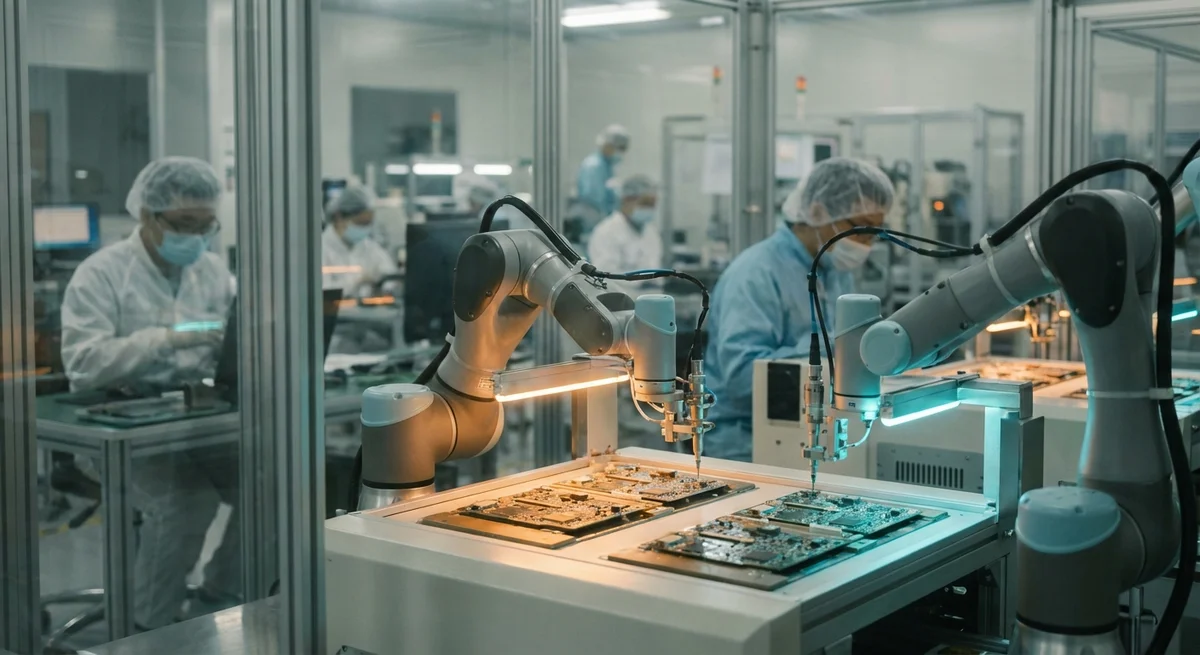
When we discuss NVIDIA's triumph or AMD's latest records, we typically focus on teraflops and transistor counts. But behind the gleam of silicon wafers lies an industry that appears mundane at first glance, yet is critically important — substrate manufacturing. Without it, even the most advanced graphics processor would remain a useless piece of stone.
Japanese giant Ibiden, which has dominated this market for decades in the best sense, has decided that the world's current capacity simply won't suffice. The company has officially approved an investment plan for an impressive 5000 billion yen (approximately 22.2 billion yuan or 3.
4 billion dollars). The investment cycle is planned for the 2026–2028 fiscal years. This is not a spontaneous purchase of a couple of new machines, but a large-scale restructuring of business to meet the needs of AI servers and high-performance computing.
If you thought the chip shortage was a thing of the past, Ibiden reminds us: the infrastructure for future AI is still being built. The Japanese plan to significantly increase the output of high-performance IC substrates, which serve as a bridge between the microscopic contacts of the chip and the server's printed circuit board. The complexity of these components is growing exponentially along with the power of the processors themselves.
Why is this happening right now? The answer lies in the architecture of modern accelerators. Chips are becoming larger, more complex, and require far more efficient heat dissipation.
They need multilayered substrates with incredible precision that can withstand colossal loads and ensure flawless signal transmission at high frequencies. Ibiden has long worked closely with the "big three" — NVIDIA, Intel, and AMD. In essence, the success of the next generation of Blackwell or upcoming solutions from Lisa Su directly depends on whether Ibiden can launch its new lines on time.
The current market situation is such that manufacturing the chips themselves is only half the battle. The bottleneck often emerges at the packaging and substrate creation stage. We've already seen how TSMC's CoWoS capacity shortage hampered H100 deliveries.
Ibiden, as a leader in its segment, understands that if it doesn't invest in expansion now, the company simply won't be able to satisfy the appetites of hyperscalers like Google or Microsoft in a couple of years. This is a game of getting ahead, where the stake is leadership in the foundation of all global computing technology. The high-performance server market has definitively transitioned from the stage of experimental hype to the stage of severe industrial scaling.
Ibiden sees this before others because orders for such components are placed years before the finished server reaches the data center. The fact that a conservative Japanese corporation is willing to invest billions of dollars in production expansion speaks to iron-clad confidence that demand for AI computing won't burst like a bubble in the next three to four years. This is not speculative capital, but real concrete, steel, and cleanrooms.
It's interesting to observe how Japanese technology leaders, often accused of sluggishness and excessive conservatism, are aggressively seizing key nodes in the AI supply chain. While software giants of Silicon Valley burn billions training models that may never find monetization, Ibiden is building real factories. They will generate profit no matter what, regardless of whose neural network turns out to be smarter or whose chatbot learns to make jokes first.
Substrates will be needed by absolutely all players, and Ibiden is ready to become their primary supplier. The bottom line: Ibiden effectively confirms that the infrastructure deficit for AI is serious and long-term. Are other players ready for such a capital expenditure race, or will the Japanese remain monopolists in the foundation of the AI revolution?
Want to stop reading about AI and start using it?
AI News is a curated feed of AI/tech news. Hamidun Academy teaches you to use AI systematically in your work.