Google в январе: поиск в кружке и конец школьной геометрии
Январь стал для Google месяцем реабилитации. После скомканного запуска Gemini компания выкатила Circle to Search, превратив экран смартфона в одну большую поиск
AI-processed from Google AI Blog; edited by Hamidun News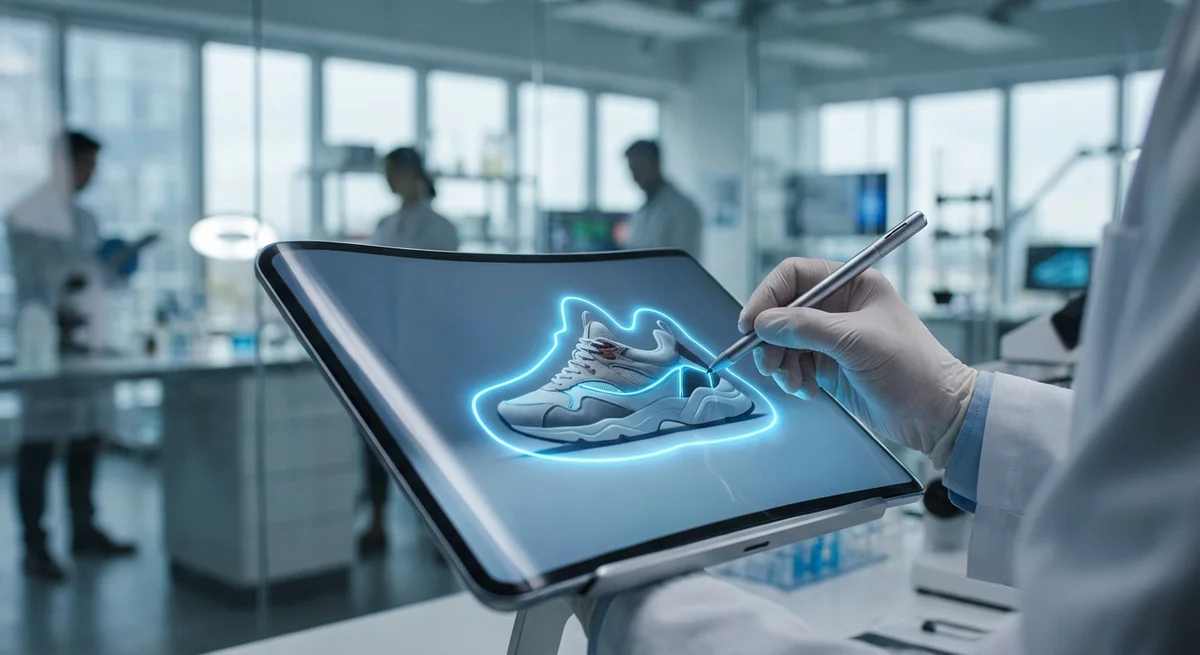
While everyone was waiting for Google to finally wake up and give a worthy answer to OpenAI, the company decided to simply overwhelm us with updates throughout one month. January was marked by "catch up and overtake," and we must admit that the search giant is beginning to pull it off. If last year Google spent in justification mode for raw releases, now we see an attempt to integrate AI where it really matters — into our smartphones and everyday tasks.
They started with the most painful — search. The Circle to Search function, which they launched together with the Samsung Galaxy S24 line, looks like a confession: we've become too lazy to switch between applications. Now you don't need to copy text or take a screenshot to find sneakers from an Instagram video. You just circle the object with your finger right on the screen, and Google's magic delivers the result. This is an important UX shift, because search stops being a separate action and becomes part of the system's interface. Google understands that if search isn't instant, chatbots will take its place.
But the real action started in research labs. Google DeepMind presented AlphaGeometry — a system that solves the most complex problems from school geometry olympiads at the level of gold medalists. Why does this matter? Because regular language models like GPT-4 are catastrophically bad at strict logic and spatial reasoning. They just guess the next word. AlphaGeometry, on the other hand, combines neural network intuition with strict symbolic engine logic. This is a huge step toward AGI, where the machine doesn't just imitate human speech, but actually understands the rules of the physical and mathematical world.
They didn't forget about creativity either. While the internet was buzzing about Sora's capabilities, Google quietly showed Lumiere. This is a video generation model that solves the industry's main problem — jerky pictures and lack of coherence. Thanks to the new Space-Time U-Net architecture, the neural network creates all video frames simultaneously rather than sequentially. As a result, we get smooth motion and physics that doesn't fall apart before our eyes. For now, this is just a research project, but it clearly shows: startups won't have a monopoly on quality video content.
All this January activity says one thing: Google has moved from panic to systematic work. They're no longer just trying to make "their own ChatGPT." They're embedding AI into Android, Chrome, and their cloud services, making it invisible but ubiquitous. The integration of Gemini Pro into Samsung smartphones is just the beginning of a big game to capture the mobile AI-functions market. Google owns the operating system, and that's their main trump card, which neither Microsoft nor OpenAI has.
The bottom line: Google is no longer a catch-up player, but an aggressive player ready to change user habits to maintain its lead. Will Apple be able to offer something comparable at June's WWDC?
Want to stop reading about AI and start using it?
AI News is a curated feed of AI/tech news. Hamidun Academy teaches you to use AI systematically in your work.