Cerebras raised a billion: can the 'largest chip' dethrone Nvidia?
Imagine you're trying to build a supercar by gluing together hundreds of lawnmower engines. That's roughly how Cerebras Systems engineers view modern server…
AI-processed from Bloomberg Tech; edited by Hamidun News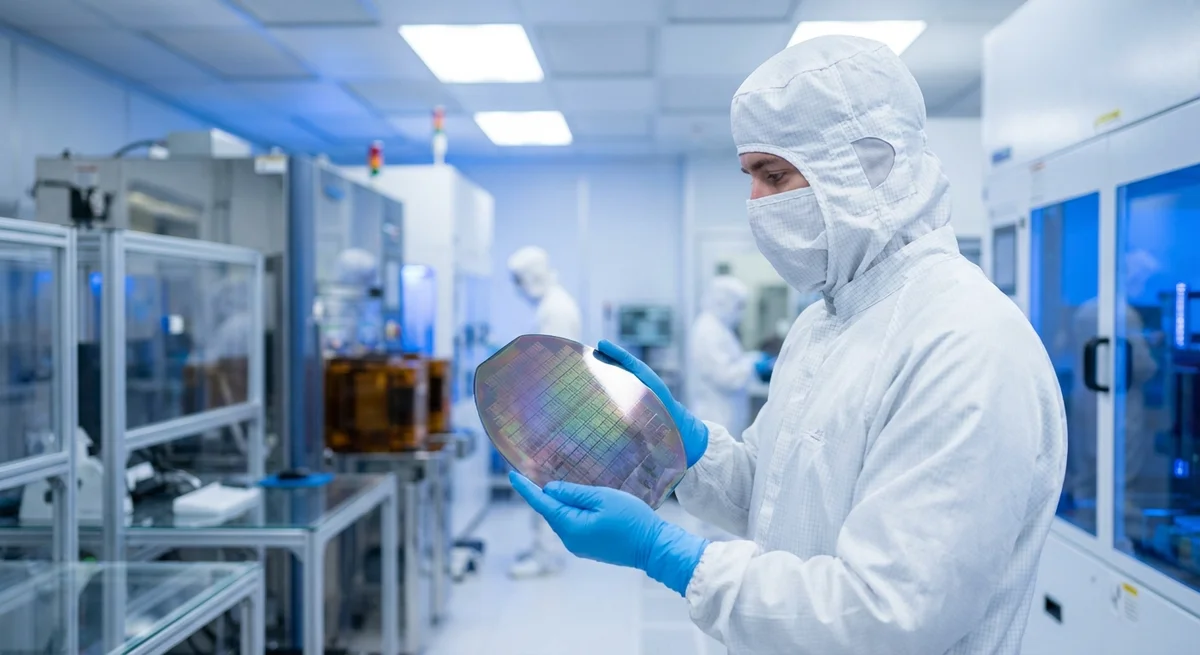
Imagine you're trying to build a supercar by gluing together hundreds of lawnmower engines. That's roughly how Cerebras Systems engineers view modern server racks stuffed with Nvidia graphics processors. While Jensen Huang celebrates yet another quarter of dominance, a small California company has just raised a billion dollars to prove: in the world of artificial intelligence, size really does matter. The new valuation of 23 billion dollars isn't just a pretty number for a press release—it's a direct challenge to a monopoly that seemed unshakeable.
Cerebras has long been known for its "waffle-scale" approach. Instead of painstakingly cutting silicon wafers into hundreds of tiny chips that then need to be connected with miles of wires, they use the entire wafer as one piece. The result is a single giant processor the size of a dinner plate. It's an elegant and absurdly expensive solution to the main problem of modern computing—data transmission delays. When information moves between conventional GPUs, it loses time at the "customs" of interfaces. In Cerebras chips, data moves instantaneously because it never leaves the crystal. This technological advantage was long considered exotic, but in the era of training giant language models, it has become a matter of survival.
Investor interest in this round is simple to explain: the market desperately needs an alternative. Dependence on Nvidia has become dangerous for tech giants and startups alike. When equipment delivery times are measured in months and one person in a leather jacket dictates prices, any strong competitor is perceived as a savior. Cerebras has already demonstrated that their systems can train models several times faster than traditional clusters while consuming less energy. However, a billion dollars is just the entry ticket to the major leagues, where the rules are set not just by hardware but also by software.
The main barrier to the throne isn't the number of transistors, but the CUDA ecosystem. Programmers have spent years optimizing code for Nvidia, and forcing them to relearn Cerebras proprietary tools is a task of almost biblical proportions. Nevertheless, fresh capital will allow the company to hire engineers more aggressively and, more importantly, subsidize its own cloud capacity. If you can't convince a client to buy a "plate" for millions of dollars, you can rent it to them, showing results in action. This is the scenario the funds that invested in this round are betting on.
It's also worth considering the geopolitical context. Cerebras actively collaborates with G42 from the UAE, building supercomputers that are meant to become the foundation of the Arab AI industry. This gives the company a steady stream of orders and a testing ground that other startups can only dream of. While Nvidia tries to navigate between export restrictions and regulator demands, Cerebras is methodically building an alternative infrastructure. Perhaps in a couple of years we'll remember the era of GPU dominance as a strange time when we tried to build the future from parts of the past.
The main point: Will Cerebras become a real competitor or remain an expensive toy for those who couldn't get enough H100 quotas?
Want to stop reading about AI and start using it?
AI News is a curated feed of AI/tech news. Hamidun Academy teaches you to use AI systematically in your work.