Нейросети-переводчики 2026: как DeepL и GPT-5.2 окончательно похоронили словари
Эпоха смешных ошибок в машинном переводе официально закончена. Сегодняшние нейросети вроде DeepL и GPT-5.2 понимают нюансы языка лучше, чем многие переводчики-л
AI-processed from Habr AI; edited by Hamidun News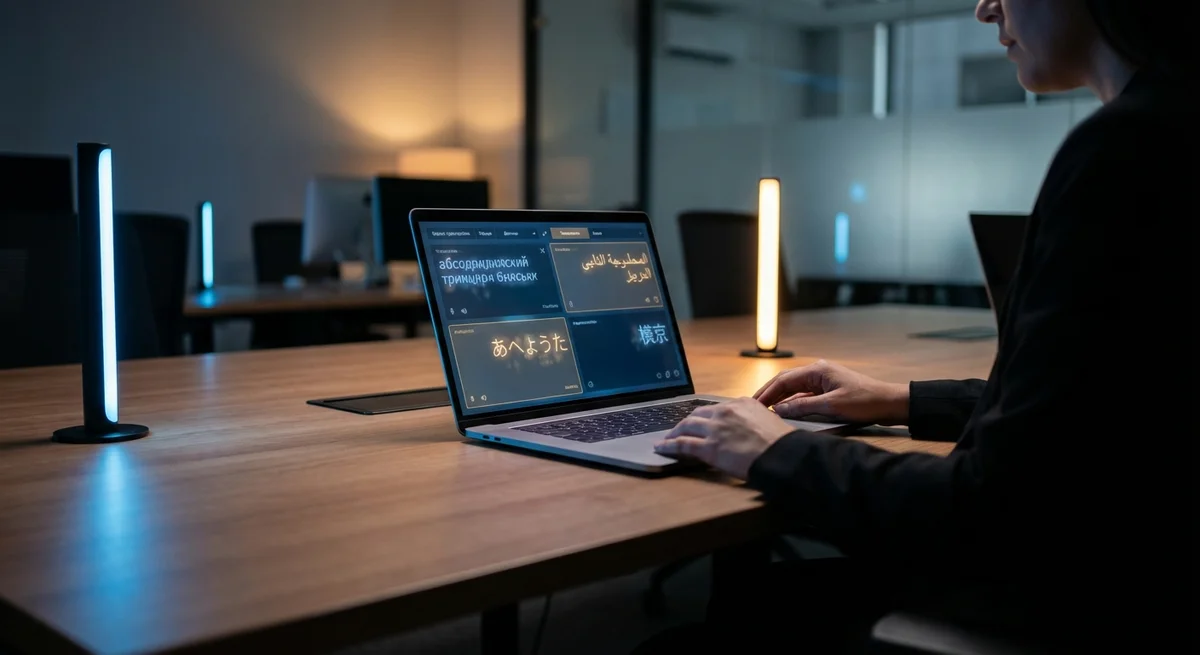
Remember those glorious times when machine translation was the main supplier of memes for IT professionals? Instructions for Chinese gadgets advised to "stroke the cat against the fur to turn on," and the legendary "cool story, bro" became an eternal classic of broken localization. In 2026, these memories seem as distant as floppy disks or slow internet.
We seamlessly transitioned from the era of "guess what the robot meant to say" into an age where AI understands context, cultural codes, and even your specific sarcasm better than the average linguistics graduate. Today's neural networks are not just dictionaries on steroids, but full-fledged cultural intermediaries that have learned to feel the difference between a business letter in Tokyo and a friendly chat in Berlin.
The translator market this year has finally split into two camps. On one side are specialized tools like DeepL, which still holds the crown thanks to surgical precision and the ability to work with narrow-field terminology. If you need to translate a legal contract or technical documentation for a nuclear reactor, DeepL remains the number one choice.
It doesn't try to show off, it simply makes the text impeccable. On the other side are advancing multimodal giants like GPT-5.2.
These models don't just translate, they rethink. You can ask GPT to translate your TikTok script so it sounds like slang from Bronx teenagers, and it will handle it brilliantly, preserving the rhythm and humor that usually gets lost in dry translation.
And don't count out local players. Yandex in 2026 rolled out the fourth version of its translator, which understands Russian realities and slang as if it grew up in a Moscow suburb. This is critically important for marketing and media, where global models often stumble over local cultural context. Google Gemini Enterprise is also keeping pace, offering seamless integration into all workflows. Now you don't need to copy and paste text — cloud documents are translated on the fly, preserving formatting and even the author's tone. This turns international communication into something natural, where the language barrier becomes not a wall, but a transparent screen.
It's interesting to observe how the role of humans is changing in this process. The profession of translator in the classical sense — as someone who simply transforms words from one language to another — has practically disappeared. Now they are editors of meaning. We no longer spend hours searching for the right idiom equivalent, we simply check whether the neural network "hallucinated" too much in trying to be original. Technologies like Claude 4 Opus in translation mode allow you to adjust the level of creativity, making them ideal assistants for writers and journalists. You set the tone, and the AI provides the colors.
For business, this means only one thing: entering the global market has stopped being an expensive adventure. If previously localizing a product into five languages required a team of linguists and months of work, now it's a matter of a few hours and a quality prompt. Even Meta with its SeamlessM4T v3 model has proven that instant real-time voice translation is no longer science fiction from "Star Trek," but a reality for any owner of modern headphones. We're standing on the threshold of a world where everyone speaks their own language, but everyone understands each other without distortion.
The bottom line: The language barrier is officially dead, and with it goes an entire era of translation difficulties. Only one question remains: what will we talk about with the world when words are no longer a problem?
Want to stop reading about AI and start using it?
AI News is a curated feed of AI/tech news. Hamidun Academy teaches you to use AI systematically in your work.