Google Gemini: your smartphone now officially belongs to the neural network
Remember that feeling when you asked Google Assistant to set a timer, but instead it opened a search for the phrase "set a timer"? It seems the era of this…
AI-processed from 3DNews AI; edited by Hamidun News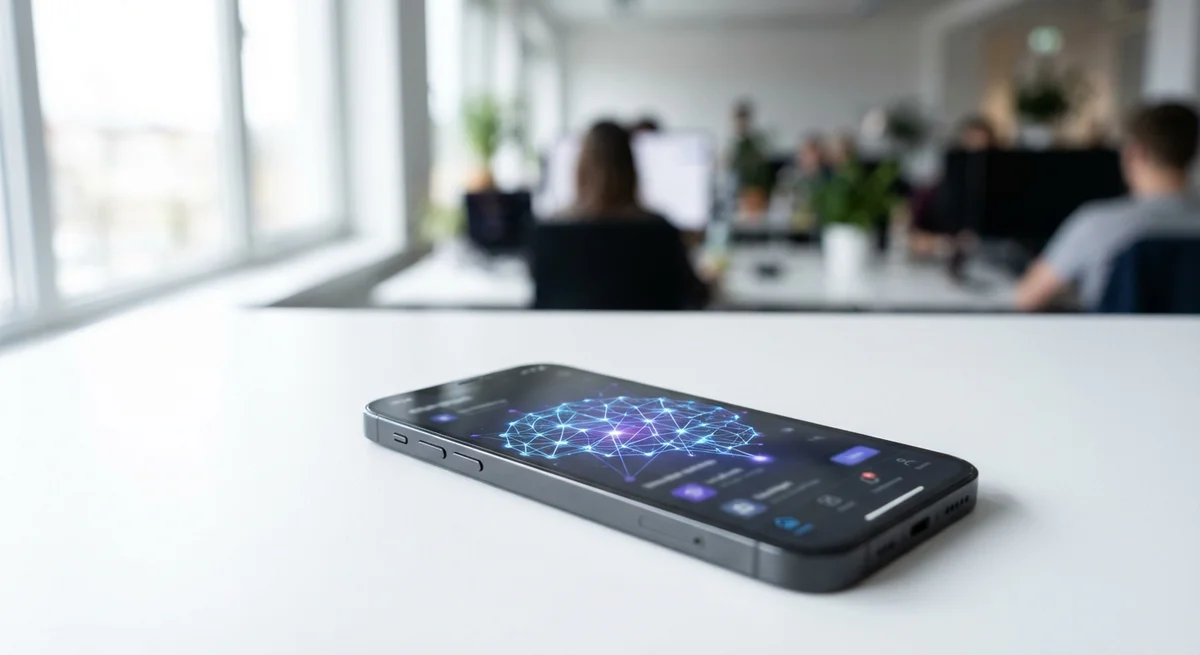
Remember that feeling when you asked Google Assistant to set a timer, but instead it opened a search for the phrase "set a timer"? It seems the era of this charming helplessness is coming to an end. While we debated whether ChatGPT could reason about the meaning of life, work was brewing in the depths of Google on something far more mundane and simultaneously terrifying. We're talking about Project Astra, traces of which were recently discovered in the code of fresh Google updates. In short: your smartphone stops being just a collection of icons and becomes an executive organ for Gemini.
Let's recall the context. At the last I/O conference, we were shown a demo where AI, through camera glasses, saw the world, recognized code on a whiteboard, and remembered where the user left the glasses. It looked like magic, but the main question remained off-screen: would this thing be able to press the "buy" or "book" button on its own? Recent findings in the code confirm that Google plans to give Gemini administrator rights over your user interface. This is a logical step in the evolution from LLM (large language models) to LAM (action models). We've spent years teaching neural networks to speak; now it's time to teach them to work.
Why is this happening right now? Google is in a position of catching up in terms of "pure" model intelligence, but the company has a trump card that neither OpenAI nor Anthropic have. It's Android. With deep access to system APIs, Google can allow Gemini to see what's happening on the screen in any application and simulate key presses. While Apple is only promising something similar with its Intelligence, Google is already laying the foundation for your phone to independently plan an evening: from booking a restaurant table to ordering a taxi at the right time, bypassing the stage of your personal participation in scrolling through menus.
Technically, this is implemented through analysis of the visual stream. Gemini doesn't just read text; she understands the hierarchy of interface elements. She knows that the small shopping cart in the corner is the transition to checkout, and that this X is closing an ad. This removes a huge burden from the user, but at the same time opens a Pandora's box in terms of security. Imagine an AI agent that by mistake or due to hallucination confirmed a money transfer or deleted an important work chat. This is why Google is implementing these features carefully, hiding them behind layers of code until the system becomes reliable enough.
The industry is now on the verge of an "agent revolution." We've already seen attempts to create separate devices for this, like Rabbit R1 or Humane Pin, but they failed precisely because they tried to replace the smartphone. Google is being smarter: the company is turning the brick already in your pocket into an autonomous assistant. This changes the very paradigm of gadget use. A smartphone stops being a device you look at for hours and becomes a background processor executing your tasks. If this works, the very concept of an "app" could become a thing of the past—why would you need to open the Uber interface if Gemini did everything through an API or screen capture?
In the end, this is a battle for our time. Google understands that if they don't make Gemini a full operator of Android, someone else will through workarounds and extensions. Right now we're seeing the first tentative steps of a system that will soon know the structure of your apps better than you do. We can only hope that Gemini doesn't decide that your presence in the pizza-choosing process is also excessive noise that should be optimized away.
The key point: Will Gemini become a full "autopilot" for Android already this year, or are we in for another series of endless beta tests?
Want to stop reading about AI and start using it?
AI News is a curated feed of AI/tech news. Hamidun Academy teaches you to use AI systematically in your work.