Your Own ASR: How to Stop Feeding the Cloud and Reclaim Privacy
When we talk about speech recognition, the first thought usually becomes an API from Google or OpenAI. It seems that it's simpler to pay a couple of cents…
AI-processed from Habr AI; edited by Hamidun News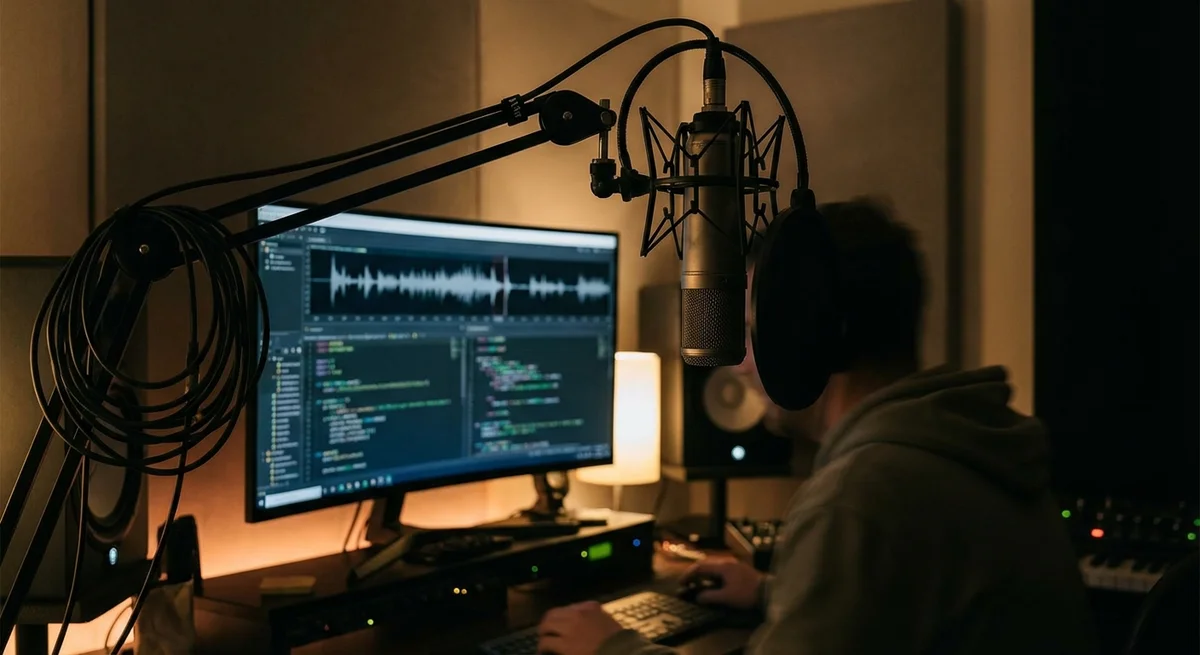
When we talk about speech recognition, the first thought usually becomes an API from Google or OpenAI. It seems that it's simpler to pay a couple of cents per minute and forever forget about codec problems, noise, and load. But let's be honest: in 2024, sending records of confidential conversations to someone else's cloud is at the very least naive, and at worst — dangerous for business. And this isn't just about paranoia. Every time your audio stream flies to a third-party server, you lose control over your most valuable asset — your data.
Creating your own ASR (Automatic Speech Recognition) system used to resemble an attempt to assemble a hadron collider in a garage. You had to tinker with monstrous libraries like Kaldi, which required a PhD in linguistics and endless patience. Today, the situation has changed beyond recognition. The emergence of powerful open models, such as Whisper, has turned the development of your own tool into an exciting Python quest that you can realistically complete in a few evenings. We've moved from an era of pain to an era when high-quality speech recognition is accessible to anyone with a mid-range graphics card.
Why get involved at all if clouds work stably? First, it's a matter of deep customization. Any cloud service is a black box.
You don't know why the model made an error on a specific term, and you can't fine-tune it for your narrow domain, whether it's medical diagnoses, specific legal jargon, or radio amateur slang. Your own system allows not just translating sound into text, but implementing advanced diarization. This is the very process when a neural network understands who exactly is speaking at any given moment, separating the voices of a doctor and patient or a manager and client.
For quality analysis of customer service operations, this is a critically important function that providers often charge double or triple for.
Another important aspect is real-time operation. If your task is to monitor a broadcast or help a specialist fill out a form right during a consultation, cloud API delays can be fatal. Network lags, authorization issues, or sudden updates to terms of service can paralyze operations. A local Python solution allows processing a data stream instantly, without waiting for a response from a server on the other side of the ocean. And here we return again to privacy. In medicine or law, patient or client data is sacred. Using local ASR guarantees that not a single byte of information will leave your secure internal perimeter.
The industry is clearly moving toward the decentralization of AI. We see companies beginning to realize the value of their own computing power. Yes, deploying your own system requires initial investment in hardware and some expertise, but in the long term it pays back many times over. You stop depending on price changes in the price lists of tech giants and sudden restrictions. Moreover, you get a tool that works all the time, even if tomorrow the entire world decides to turn off the internet. This is true technological independence, which is worth striving for.
Ultimately, the choice between cloud and local solution is a choice between short-term convenience and long-term strategy. If you're building a product where data matters, the answer is obvious. Modern frameworks allow you to do this elegantly and efficiently, without turning development into an endless process of maintaining obsolete software. It's time to take your data back and teach your servers to listen and understand.
The key takeaway: The era of total dependence on cloud ASR is coming to an end. Today, building your own speech recognition tool is not a geek's whim, but a sensible step for any business that values security and wants flexibility. Will cloud providers be able to offer something other than a simple interface to keep customers from mass migration to local solutions?
Want to stop reading about AI and start using it?
AI News is a curated feed of AI/tech news. Hamidun Academy teaches you to use AI systematically in your work.