Holo2 from H Company: interfaces will finally stop scaring users
Interface localization has always been that "final boss" for developers that eats budgets and nerves. You can hire the best translator, but they won't see…
AI-processed from Hugging Face Blog; edited by Hamidun News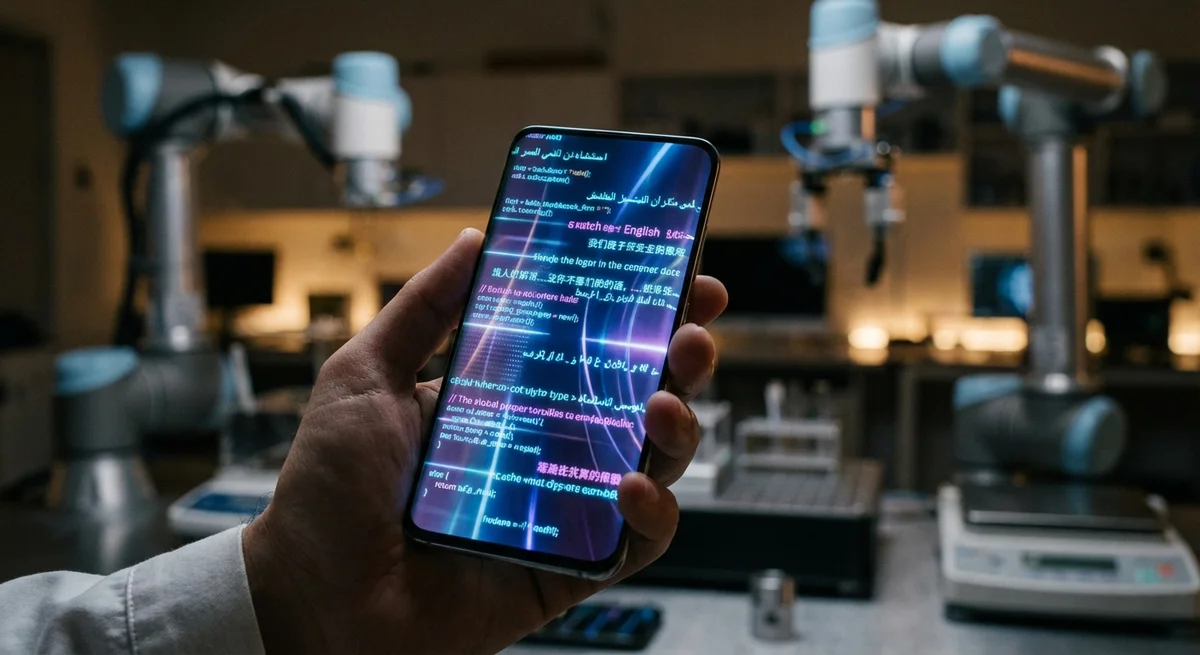
Interface localization has always been that "final boss" for developers that eats budgets and nerves. You can hire the best translator, but they won't see that the word "Book" should be the verb "to book," not the noun "book," until they look at the button itself. And when you try to squeeze a thirty-letter German word into a neat English design, the layout just "explodes." Even advanced models like GPT-4 have dealt with this poorly because they don't understand spatial context. French startup H Company, which was recently called Holistic AI, decided that enough is enough. Their new Holo2 model was created specifically to solve this problem once and for all.
To understand why this matters right now, you need to look at the company's background. H Company is made up of Google DeepMind alumni who raised 220 million dollars in investments before they even had a decent landing page. The entire market was waiting for their "GPT killer," but the team went a different way.
Instead of creating another huge chatbot that knows everything about Ancient Rome, they focused on agentic models and specific business tasks. Holo2 is the result of this strategy. The model was trained not just on text, but on interface structure, DOM trees, and user paths.
It understands that text on a button is not just a string, but a call to action that is strictly limited by pixel boundaries.
What exactly changed with Holo2's release? First, accuracy. Traditional LLMs often hallucinate or choose overly long synonyms. Holo2 works like an experienced editor and designer in one. It analyzes surrounding elements and picks a translation that preserves meaning and doesn't break the interface. Second, implementation speed. Now companies don't need to maintain a staff of hundreds of localizers to support an application in 40 languages. It's enough to run the interface through Holo2, and the output is a product that looks native to users anywhere in the world. This is especially critical for rapidly evolving SaaS platforms where updates roll out weekly.
Why does this matter for the industry as a whole? We're witnessing an important shift: the era of "universal combines" is giving way to highly specialized tools. While Microsoft and Google try to embed AI everywhere—from email to spreadsheets—smaller players like H Company are capturing specific, financially lucrative niches. Localization is a market worth tens of billions of dollars, and if Holo2 becomes the standard there, H Company will ensure its own comfortable existence without needing to compete with OpenAI on the number of model parameters. This is a smart move that shows the future of AI lies in deep understanding of specific contexts, not abstract erudition.
Main point: Holo2 proves that narrow AI specialization works better now than attempts to create a "god from the machine." Are you ready to trust your product interface to a neural network completely, or is manual checking of "broken" buttons a ritual you can't abandon?
Want to stop reading about AI and start using it?
AI News is a curated feed of AI/tech news. Hamidun Academy teaches you to use AI systematically in your work.