Musk's Empire: why SpaceX wants to acquire xAI and Tesla
Elon Musk has never played by classical corporate governance rules. While other CEOs try to separate their assets to avoid scaring investors with conflicts…
AI-processed from The Verge; edited by Hamidun News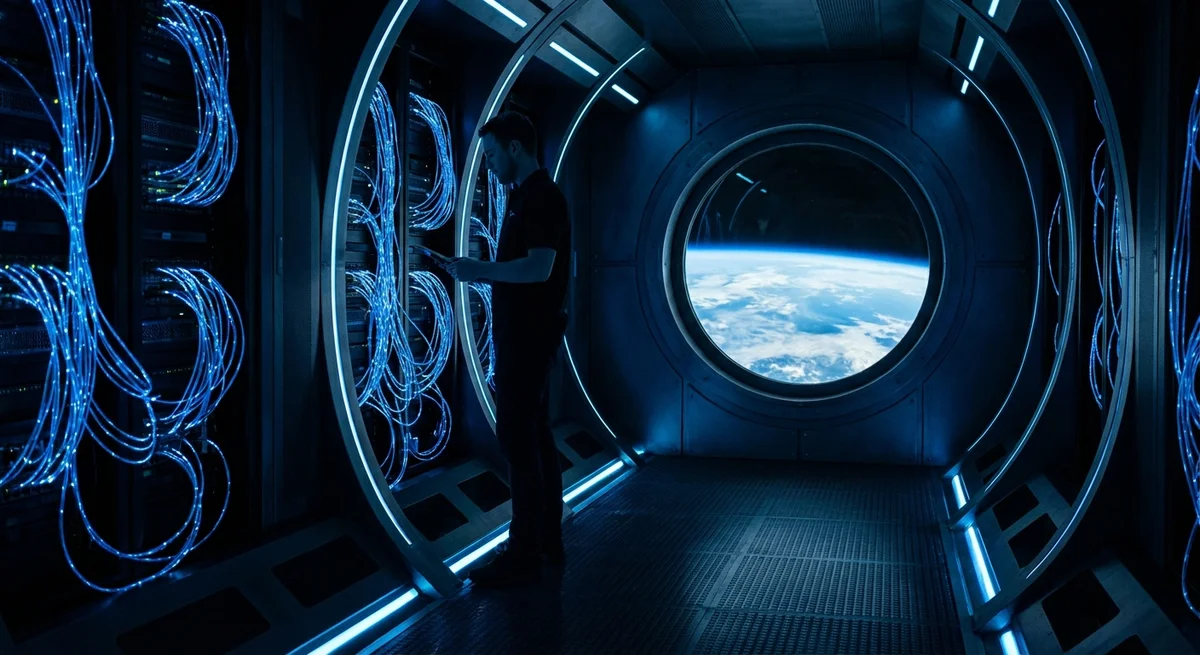
Elon Musk has never played by classical corporate governance rules. While other CEOs try to separate their assets to avoid scaring investors with conflicts of interest, Musk seems to have decided to go all-in. Rumors of a possible merger between SpaceX and xAI, and potentially Tesla down the line, are not just a financial shuffle. This is an attempt to create a unified technological organism where rockets, electric cars, and neural networks work toward a common goal. We are witnessing how the billionaire's scattered "toys" are transforming into a monolithic structure capable of dominating not just on Earth, but also in orbit.
Why does SpaceX need xAI right now? The answer lies in ambitions to create orbital data centers. We're used to thinking of Starlink as simply internet for remote regions and military use. But Musk sees something bigger: ideal infrastructure for distributed computing. If server capabilities are moved to orbit, it solves the eternal problems of cooling and the cost of land for data center construction. However, such data centers need a "brain" capable of managing them under conditions of signal delays and the specific space environment. And here xAI enters the stage with its algorithms, which could become the operating system for the entire satellite constellation.
The history of mergers in Musk's empire has always been painful for lawyers and shareholders. Remember Tesla's acquisition of SolarCity — Elon was accused of saving his own failing business at the expense of the public company's funds. The SpaceX situation is fundamentally different. It's a private company that is currently at the peak of its power and is only preparing for its IPO. A merger with xAI before going public could be a brilliant move: investors would be buying not just a "space taxi service," but the primary AI infrastructure of the future. This dramatically raises the stakes and the company's valuation, making it practically invulnerable to competitors from the traditional aerospace sector.
Tesla in this scheme appears as the most controversial, yet logical element. On one hand, the company has enormous computational power from its Dojo supercomputer and vast experience in robotics. On the other — Tesla is public, and any merger with SpaceX would cause a storm of indignation from regulators and stock markets. However, Musk has repeatedly proven that he cares little about Wall Street's opinion if "accelerating the future" is at stake. If Tesla becomes part of this mega-structure, we would have a corporation that controls everything: from chip and software production to logistics and orbital energy. This is the creation of a vertically integrated giant unlike any in history.
It's interesting how competitors like Microsoft and Google will react. While they're building terrestrial server farms consuming gigawatts of energy, Musk could literally rise above these problems. Integrating xAI into SpaceX systems would allow automating launches and managing satellite constellations at a level inaccessible to traditional software. This transforms SpaceX from a transportation company into a global IT player. The irony is that Musk has always criticized OpenAI for its closedness and monopolism, yet at the same time he's building what may be the most closed and powerful technological ecosystem in human history.
Ultimately, all this talk of mergers is a market signal that the era of narrow specialization is ending. Musk understands that AI without a physical body and infrastructure is just a chatbot, and rockets without AI are just pieces of metal. By uniting these worlds, he creates something that's hard to even classify. If the merger happens, SpaceX's June IPO will be the loudest event of the decade, and the boundaries between space and artificial intelligence will be completely erased.
The key point: Musk has finally stopped hiding that all his companies are parts of one global project. If the merger happens, SpaceX will go public not as a rocket startup, but as a monopolist of space computing. Are investors ready for such a concentration of power in one man's hands?
Want to stop reading about AI and start using it?
AI News is a curated feed of AI/tech news. Hamidun Academy teaches you to use AI systematically in your work.