Physical Intelligence: почему ветеран Stripe решил, что роботы наконец-то поумнеют
Стартап Physical Intelligence (PI) собрал дрим-тим из Google DeepMind и ведущих университетов, чтобы решить главную проблему робототехники — отсутствие «общего
AI-processed from TechCrunch; edited by Hamidun News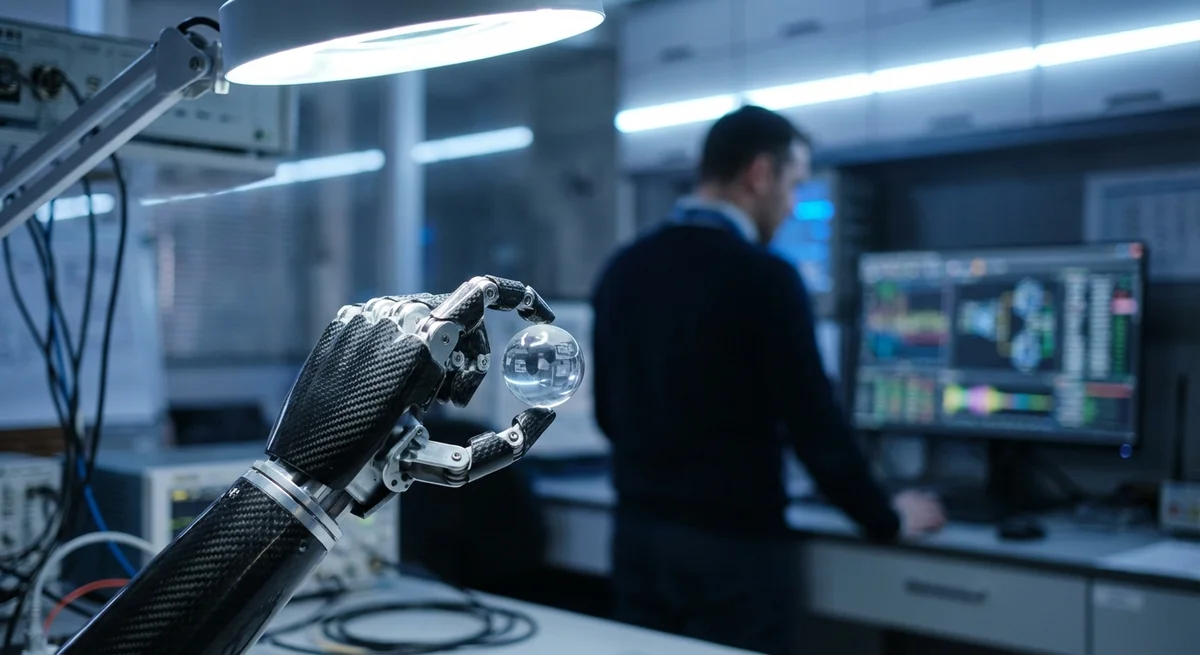
Have you ever wondered why neural networks can already write code and compose sonnets, but still can't properly fold a shirt or neatly unload a dishwasher? For years we've been watching anthropomorphic robots clumsily stumble at exhibitions, evoking a mixture of pity and irony from viewers. The problem was never in the "hardware"—servos and sensors reached the necessary level long ago. The trouble was in the brains. Or rather, their absence. Each robot had to be programmed for a specific narrow task, and any deviation turned an expensive machine into scrap metal. But Lachi Groom, the man who helped transform Stripe into a financial giant, believes that this dead-end is in the past.
Physical Intelligence didn't emerge from nowhere. It's not just another attempt to make a "smart hand." It's the ambition to create what the industry calls foundation models, but for the physical world.
If GPT is a model that understands language structure, then PI is building a model that understands the physics of movement. And to achieve this, Groom gathered real rock stars of academia around him. Sergey Levine from Berkeley, Chelsea Finn from Stanford, Karol Hausman from Google DeepMind—these people have spent decades trying to teach machines to learn from their own experience.
Before, they lacked computing power and data, but the success of large language models (LLMs) demonstrated: if you feed an algorithm enough information, quantity inevitably transforms into quality.
Why is this important right now? We're at an inflection point. For a long time, robotics lived in isolation from breakthroughs in AI.
Engineers built robots, programmers wrote control algorithms, and these two groups rarely understood each other. Lachi Groom and his team decided to tear down this wall. They approach robotics as a data processing problem.
Their goal is to assemble the world's largest library of physical interactions. How does a hand squeeze a cup? What force does it take to open a door?
How do you compensate for a slippery surface? All these small things we do without thinking are complex equations for a robot. PI plans to solve them once and for all by creating universal "software" that can be deployed into any mechanism.
Of course, skeptics will immediately recall Elon Musk's Optimus or the folks from Figure AI. But there's a fundamental difference here. While competitors try to build the perfect body, Physical Intelligence focuses on the intelligence that controls that body. Lachi Groom is playing the long game: he understands that the market for "robot brains" is potentially much larger than the market for the robots themselves. It's like an operating system—whoever captures this standard will control the entire automation industry in the next decade. And judging by how eagerly Silicon Valley investors are writing checks to this startup, they believe that Groom's Stripe-forged grip will help turn theoretical science into commercial triumph.
What does all this mean for us? Most likely, we'll see the end of the era of specialized robots. We won't need separate machines for warehouses, kitchens, or hospitals. A class of devices will emerge that learn on the fly, simply by observing human actions or receiving instructions in natural language. This sounds like science fiction, but the foundation is being laid today. Lachi Groom is not just building a company; he's trying to prove that the physical world is just as malleable for algorithms as the world of digits and text. If he's right, in five years we'll remember today's "dumb" robots with the same smile we now look at dial telephones.
The main point: Physical Intelligence is betting that robotics lacked not engineers, but scalable intelligence. Can PI's "brain" become the Windows for the world of robots?
Want to stop reading about AI and start using it?
AI News is a curated feed of AI/tech news. Hamidun Academy teaches you to use AI systematically in your work.