The End of the SaaS Era: Why Asian Investors Started Dumping Developer Shares
Remember how just a couple of years ago, buying shares in any software company seemed like a ticket to a secure retirement? The SaaS model (software as a…
AI-processed from Bloomberg Tech; edited by Hamidun News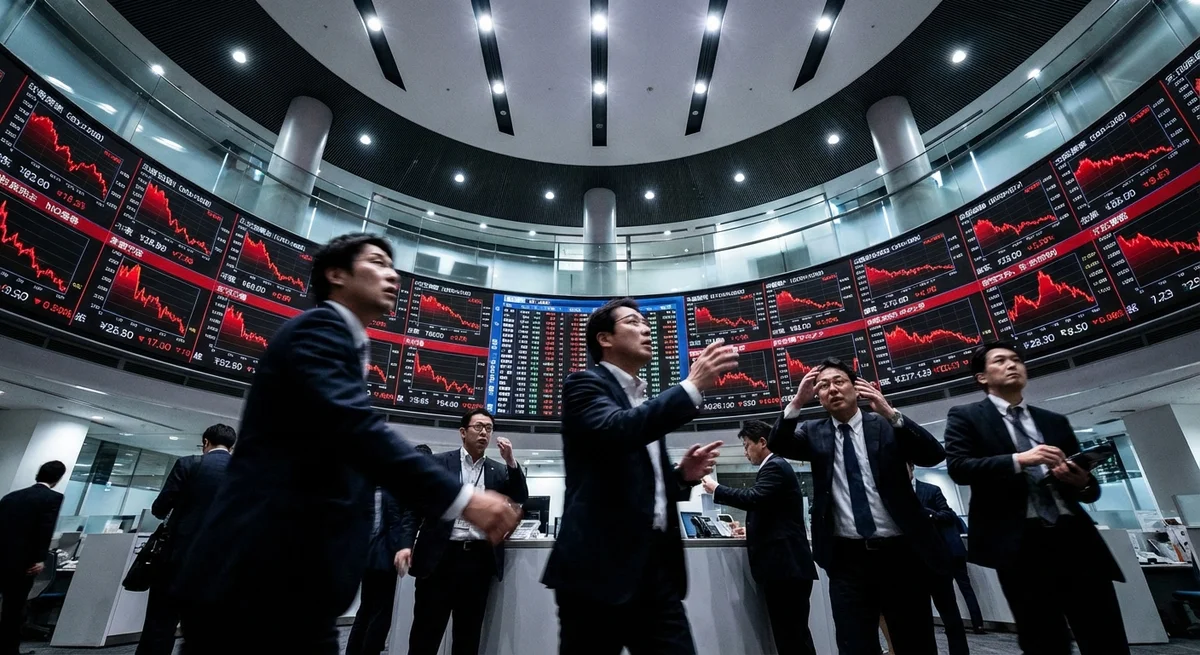
Remember how just a couple of years ago, buying shares in any software company seemed like a ticket to a secure retirement? The SaaS model (software as a service) looked invulnerable: subscriptions flowed in, users grew accustomed to the interface, and margins skyrocketed. But then generative AI entered the stage, and the rules of the game suddenly changed. What was supposed to become new fuel for the industry suddenly became a giant shredder for the market capitalization of those who failed to adapt. The irony is that AI no longer helps sell software—it makes it obsolete.
This week, Asian trading platforms became an arena of quiet panic. Traders began massively offloading shares of software developers. And this is not simply a technical correction or seasonal profit-taking. We are witnessing a fundamental shift in investor sentiment. According to the latest data, conviction is building in Asian markets that artificial intelligence will not merely complement existing software—it will consume it. Investors have begun to divest from companies whose business model is built on selling access to tools that AI can now imitate or replace entirely.
For a long time, AI was marketed as the primary growth driver for the entire tech sector. But investors are pragmatic people, and they began asking uncomfortable questions. Why should corporations pay enormous sums for a complex project management system or a heavyweight graphics editor, if a neural network agent can communicate directly with a database and deliver results without the intermediary of an interface? Software has always been the layer between humans and tasks. Now that layer is becoming too thick, too slow, and, most importantly, too expensive. Traders in Tokyo and Hong Kong were the first to sense this chill.
In Asia, this trend manifested particularly sharply, as local markets often serve as a litmus test for global sentiment, reacting to changes faster and more harshly. The fear of 'creative destruction' now outweighs any belief in a bright future. Traders see that company spending on AI implementation is growing while revenue from their legacy products begins to stagnate. This is a classic efficiency trap: software makes work faster, but because of that, less of it is needed, and it must cost less. The market simply does not understand how software giants will maintain their previous growth rates.
The core problem that terrifies capital is the destruction of the per-seat pricing model. Most software giants survive because companies buy licenses for each employee. But if AI enables one person to do the work of ten, the number of required licenses drops proportionally. For investors, this looks like a mathematical nightmare. If previously we valued software companies by their ability to scale sales, now we must assess their chances of survival in a world where code is no longer scarce, and human labor channeled through an interface is being replaced by an API call.
We have seen something similar before, when mobile apps killed desktop software, or when the cloud buried on-premises servers. But the scale of today's shift is far more serious. AI is not merely a new platform; it is a new form of computation. Asian investors appear to be the first to grasp that many modern IT giants are simply beautiful wrappers around processes that will soon become automated. And if a company cannot clearly explain how it will earn money in a world where AI can do everything, its shares are tossed into the bin without sentiment.
What does this mean for us? Most likely, we stand on the brink of a great reckoning. The market is overheated with expectations, and now comes a phase of painful sobering up. Asia has merely given the signal, but the wave will inevitably reach Wall Street. The old guard of developers will either have to completely reinvent themselves or become history, yielding place to new players who build their products from the ground up around AI agents rather than around buttons, menus, and monthly subscription bills.
The bottom line: The era of safe investments in 'just software' is over. Now the market will be looking not for those who implement AI for appearances, but for those who are capable of not being consumed by it.
Want to stop reading about AI and start using it?
AI News is a curated feed of AI/tech news. Hamidun Academy teaches you to use AI systematically in your work.