Прогнозы MIT на 2026 год: эпоха чат-ботов закончилась, начинается время действий
Журнал MIT Technology Review представил свой юбилейный, 25-й список прорывных технологий. В 2026 году акцент сместился с чисто софтверных решений на «воплощенны
AI-processed from Habr AI; edited by Hamidun News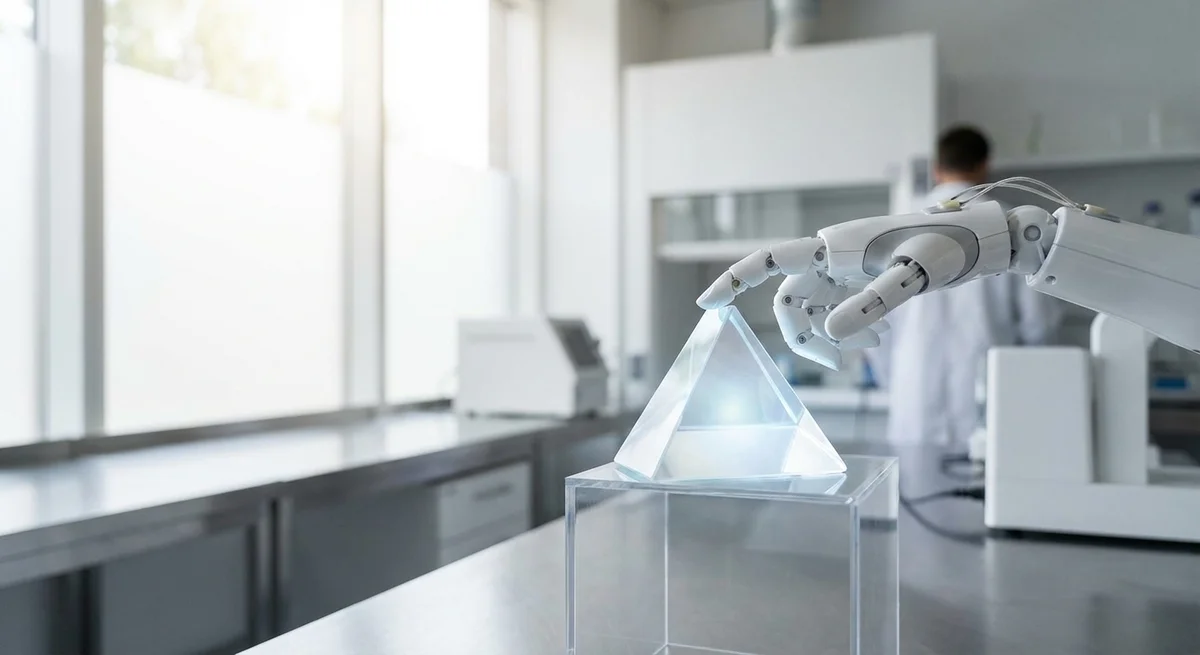
Every year at the MIT Technology Review headquarters, the same thing happens: a group of very smart people lock themselves in a room to decide what we'll invest in and argue about in a couple of years. This year's list is a milestone—the twenty-fifth one. Over a quarter century, these guys have seen everything—from the dot-com bubble to the triumphal march of LLMs. But if the last three years we've lived in the paradigm of "AI is a very smart conversationalist," the 2026 list officially closes this chapter. The time has come when algorithms finally get hands, legs, and access to our biological chains.
Let's be honest: we're all a little tired of neural networks simply generating text and pictures. MIT's editorial team feels this. The main leitmotif of the new predictions is artificial intelligence's exit from the digital ghetto into the physical world. If in 2024 we were amazed at how ChatGPT writes poetry, then in 2026 the focus shifts to Large Action Models (LAM). These are the very agents that don't just advise you to buy vacation tickets, but themselves go to websites, book hotels, sort out layovers, and argue with airline support. We're moving from "ask me" to "do it for me," and this is a fundamental shift in the service economy.
The second big block is anthropomorphic robots that have stopped being heroes of Boston Dynamics videos and have started providing real value. MIT is betting that by 2026, a breakthrough in reinforcement learning will allow robots to understand the physics of the world at the level of intuition. No more programmed movements—only adaptive behavior. This means that warehouse and manufacturing automation will reach a level where human intervention becomes the exception rather than the rule. Add to this success in creating new batteries, and you get an army of autonomous assistants that don't run out of charge after forty minutes.
They didn't overlook biology either, which in recent years has turned into a programming industry. The editorial board highlights personalized medicine based on generative protein models. We no longer search for drugs by trial and error. AI designs molecules tailored to specific genetic profiles in hours, not decades. This sounds like science fiction, but this is exactly where Silicon Valley's biggest money is concentrating right now. If before we treated symptoms in the average patient, now we're starting to treat the cause in a specific person.
Of course, there is a flip side. MIT Technology Review has always been known for its ability to highlight uncomfortable questions. Enormous computational power requires a colossal amount of energy. That's why small modular nuclear reactors and new data center cooling systems occupy a special place in the 2026 list. We're literally building new energy infrastructure just to feed the appetites of neural networks. It's a closed loop: AI helps find new ways to generate the energy it consumes itself.
The authors of the list ironically note that predictions are a thankless thing. In the journal's archives, you can find unfulfilled dreams about flying cars and underestimated social networks. However, the value of these lists is not in one hundred percent accuracy, but in the direction of development. In 2026, this vector is directed at the merger of silicon and carbon. We stop perceiving technology as an addition to life and begin to see in it the foundation of our physical existence. Whether it's a robot courier or a drug for a rare disease generated by a neural network—the line between "made by humans" and "made by code" is finally erased.
The main point: 2026 will be the moment of truth for "embodied AI." Can algorithms manage reality as efficiently as they manage pixels on a screen? If yes, then we're in for the most massive restructuring of the labor market and everyday life since the industrial revolution.
Want to stop reading about AI and start using it?
AI News is a curated feed of AI/tech news. Hamidun Academy teaches you to use AI systematically in your work.