SpaceX и xAI: Маск отправляет нейросети в космос за $1,25 триллиона
Илон Маск в очередной раз переписывает правила игры, объединяя SpaceX и xAI в мегасделку стоимостью $1,25 триллиона. Цель амбициозна: перенести вычисления ИИ с
AI-processed from The Verge; edited by Hamidun News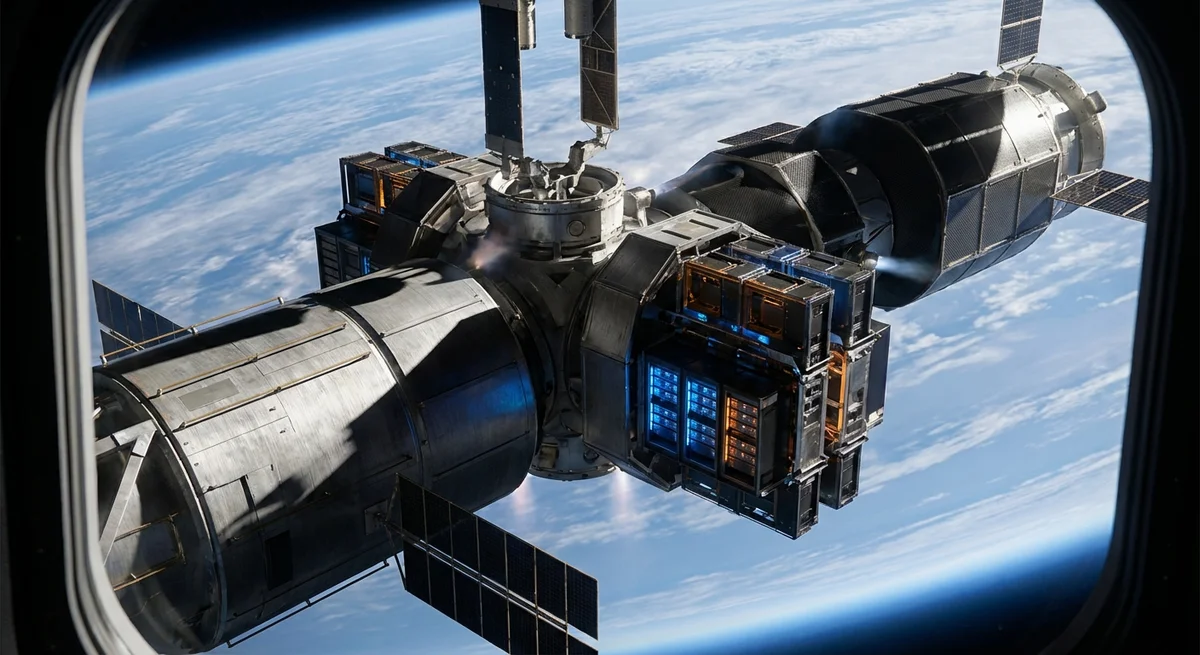
Elon Musk has decided that Earth has become too cramped and hot for his ambitions in artificial intelligence. The merger of SpaceX and xAI into a structure valued at $1.25 trillion is not simply a shuffling of shares from one pocket to another. It is a bold statement that the future of silicon-based intelligence lies far beyond Earth's atmosphere. While the industry debates supplies of H100 GPUs, Musk plans to launch them into orbit, transforming his rockets into delivery trucks for computational power into the vacuum.
The problem Musk is trying to solve is obvious to anyone following the electricity bills of major tech giants. Modern language models demand enormous volumes of energy and water for cooling. Ground-based data centers are rapidly becoming a political and environmental issue. City residents increasingly oppose the construction of giant warehouses that consume resources from entire regions. Musk, who has spent years building Falcon 9 and Starship for Mars colonization, has found a use for his technologies much closer than the Red Planet, proposing to relocate the "brains" of AI to a place where there are no neighbors and it is always cold.
Why is this happening right now? First, xAI needs to catch up with OpenAI and Anthropic, and for that it needs computational power that is becoming scarce on Earth due to electrical grid constraints. Second, SpaceX already possesses the Starlink constellation, which provides global connectivity. Adding server nodes directly to satellites looks like a logical evolution of the infrastructure. If data doesn't need to be brought down to Earth for intermediate processing, latency could decrease and overall system efficiency could increase. Of course, the question of cosmic radiation and maintaining electronics in a vacuum remains open, but when have such trivialities stopped Elon on his path to trillion-dollar valuations?
Musk is not alone in his cosmic fantasies, though his scale, as always, is astounding. Google has been developing the Suncatcher project for some time, exploring the possibilities of using solar energy in space for the same purposes. However, the $1.25 trillion valuation of the deal suggests that Musk intends to monopolize this market before it officially exists. This is a classic move by a serial entrepreneur: create a problem in the form of computational power shortage on Earth and immediately offer the only possible, albeit seemingly crazy, solution.
For the entire AI industry, this signals the beginning of a new arms race, where physics and logistics matter more than clean code. If companies once measured themselves by the number of parameters in their models, soon they will be comparing orbital altitudes and the area of solar panels on their satellite farms. It also challenges cloud giants like AWS or Microsoft Azure. Why rent a server from a ground-based provider if you can send a request directly to xAI's orbital cluster, which runs on free solar energy and pays no land taxes?
Of course, skeptics are already pointing out that cooling in a vacuum is not an easy task due to the lack of convection, and launching every kilogram of cargo into orbit still costs enormous sums of money. But given that Starship promises to radically reduce delivery costs, Musk's math could work out. If this plan succeeds, we will witness the birth of the first truly extraterrestrial intelligence, whose existence will not depend on Earth's resources.
The key question: will space be salvation for AI, or is this yet another attempt by Musk to inflate the capitalization bubble of his companies by merging them into one opaque mega-structure?
Want to stop reading about AI and start using it?
AI News is a curated feed of AI/tech news. Hamidun Academy teaches you to use AI systematically in your work.