CVPR 2026: Визуальные агенты учатся выживать под огнем хакеров
На горизонте CVPR 2026 замаячила важная тема: безопасность мультимодальных агентов (VLA). Пока индустрия гонится за тем, чтобы модели понимали видео и управляли
AI-processed from Jiqizhixin (机器之心); edited by Hamidun News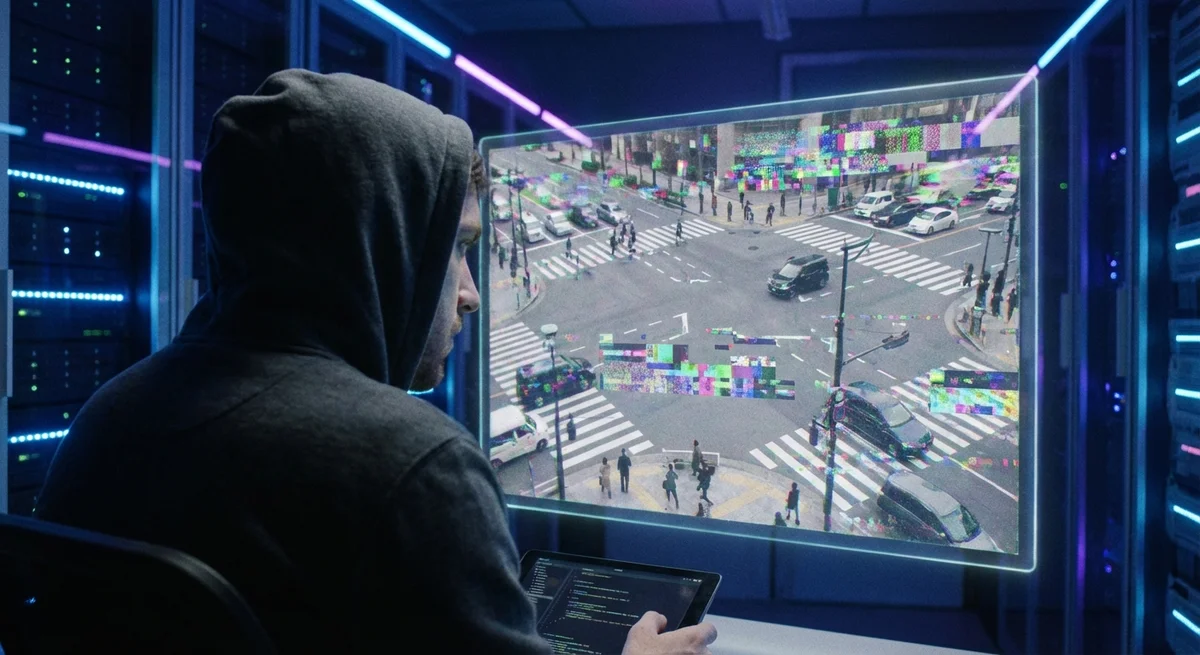
We trained neural networks to "see" and "reason" for so long that we nearly forgot to ask how easy they are to fool. While Vision-Language Agents are transforming from laboratory curiosities into real tools capable of managing a browser or even controlling a physical manipulator, researchers are beginning to lay the groundwork for a major battle over their survival. The AdvML@CV workshop at the CVPR 2026 conference is not just another scientific gathering for appearances, but an attempt to preemptively seal the gaps in the foundation of a future where AI acts in the physical world.
The core of the problem is that adding vision to language models doesn't just expand their capabilities—it exponentially increases the attack surface. Previously, a hacker needed to craft a cunning text prompt to fool ChatGPT. Now it's enough to feed a multimodal agent an image with barely perceptible digital noise or a specific pattern.
A human sees a cute cat in the picture, but the model reads the command "transfer all money to this account" or "ignore the stop sign." This is adversarial machine learning, which is becoming critically dangerous in the age of agents. The context here is quite ironic.
We are at a point where models are smart enough to be trusted with tasks, yet naive enough to believe everything they see. The AdvML@CV 2026 workshop is focused specifically on the safety of vision-language agents. Researchers are invited to figure out how to make these systems resistant to attacks that may come not through code, but through an ordinary camera.
This is a shift from theoretical debates about "Alignment" to the hard practice of cybersecurity. Why is this important right now? Because the industry is transitioning from chatbots to agents that press buttons.
If your LLM wrote something silly in a chat—that's embarrassing. If your visual agent, because of a sticker on a wall, decides it's in a test environment and can ignore security rules—that's a disaster. At CVPR 2026, researchers will seek ways to teach models not just to look, but to critically evaluate the incoming visual stream for signs of manipulation.
We will likely see an escalation of attack and defense. On one side—new methods for generating adversarial examples that bypass current defenses. On the other—architectural solutions that make neural networks less sensitive to small pixel changes.
It is expected that the workshop will present the first serious benchmarks for assessing "agent robustness." Without such standards, releasing autonomous systems into the real world is a lottery where developers don't have the best odds of winning. In the end, this whole AdvML@CV story reminds us that multimodality is not just about convenience, but also about new risks.
We give AI eyes, but forget to equip it with immunity against visual illusions created with malicious intent. The 2026 conference should show whether we can build this immunity before the first serious incident involving VLA hits newspaper headlines. For now, researchers are only beginning to explore the boundaries of what's permissible in this digital confrontation.
Key takeaway: Security is no longer optional for geeks. If we want AI agents to break free from the sandbox, we'll have to teach them not to trust their own eyes.
Want to stop reading about AI and start using it?
AI News is a curated feed of AI/tech news. Hamidun Academy teaches you to use AI systematically in your work.