Nvidia и OpenAI: миллиардная дружба без лишних драм
Дженсен Хуанг лично опроверг слухи о конфликте с OpenAI. Глава Nvidia назвал сообщения о своем недовольстве «чушью» и подтвердил планы на крупные инвестиции. Пр
AI-processed from The Verge; edited by Hamidun News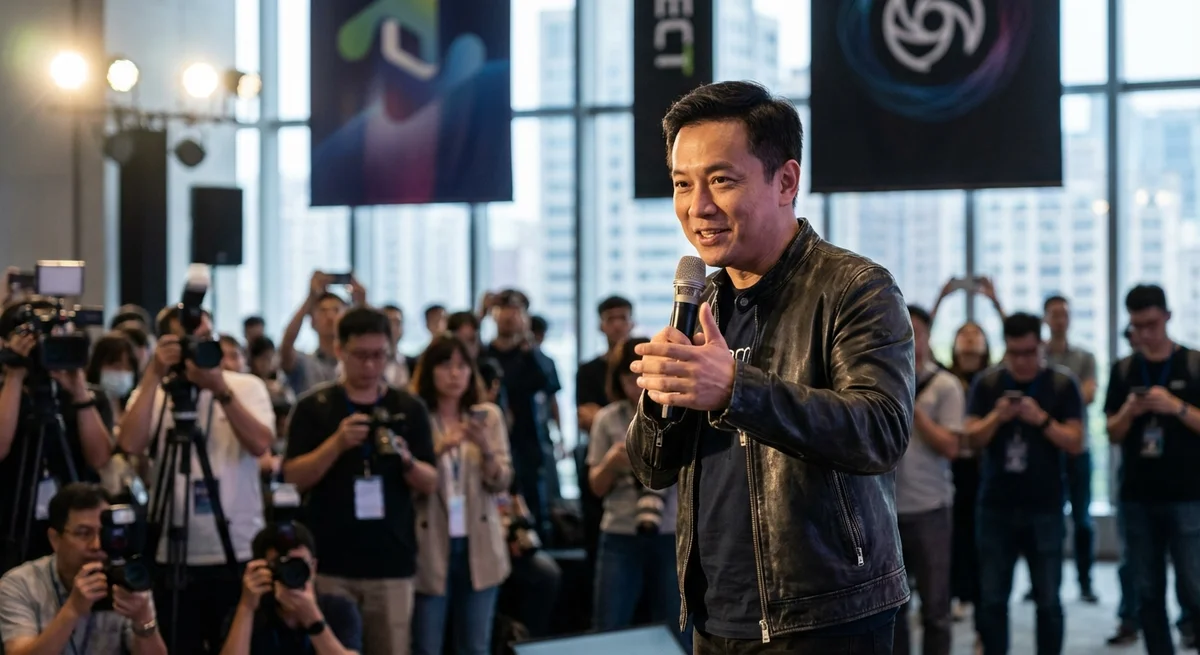
In the world of big tech, rumors spread faster than weights update in a neural network. In recent weeks, the industry has been whispering that a rift has appeared between Nvidia and OpenAI. Allegedly, Jensen Huang is unhappy with how Sam Altman manages resources, or perhaps harbors resentment over OpenAI's attempts to develop its own chips. However, in Taipei, Huang decided to set the record straight, calling such rumors complete nonsense. The head of the "green giant" confirmed that Nvidia still believes in Altman's project and plans to invest serious money in it.
The context of this story runs much deeper than just a question of who has lunch with whom. Nvidia and OpenAI are perhaps the most important symbiosis in the modern history of computing. OpenAI creates demand that makes the entire world line up for H100 chips, while Nvidia provides the "hardware" foundation without which ChatGPT would have remained just a curious chatbot from academic papers. When talk emerged that Nvidia might withdraw from the deal for a new funding round, the market tensed. Investors began to speculate: could Huang have seen signs of decline at OpenAI, or did he think competitors like Anthropic would be more profitable partners?
What made this presentation most interesting was the matter of numbers. Earlier in the press, an astronomical figure of $100 billion had surfaced. To put the scale in perspective: this is more than the market capitalization of many companies on the S&P 500 list.
When asked directly whether Nvidia was ready to write such a check, Huang answered no. And that's quite logical. Even for a company currently valued at three trillion dollars, investing a hundred billion in a single customer is not an investment but a mad gamble.
Nevertheless, Huang emphasized that the investment would be "enormous." Probably we're talking about hundreds of millions or a couple of billion dollars as part of the overall round, which still makes Nvidia one of the key stakeholders.
Why is Huang even justifying himself? The answer lies in Nvidia's strategy. The company long ago ceased to be just a video card manufacturer. Today it is a full-fledged platform. By investing in its largest clients, Nvidia creates a kind of closed ecosystem. They give OpenAI money, which it spends on buying chips from the same Nvidia. This looks like a perpetual engine of AI-era capitalism. If OpenAI continues to lead, Nvidia guarantees itself a market for its most expensive and profitable products for years to come. Any rumors of discord hurt both sides' stocks, so it was critical for Huang to deliver a "peacemaking" speech precisely now, against the backdrop of OpenAI preparing for the next scaling phase.
Analyzing the situation, it's worth understanding that the relationship between these giants is not a love match, but cold calculation. OpenAI is actively seeking ways to reduce its dependence on Nvidia, hiring engineers to develop its own hardware. Huang, for his part, sees this clearly and understands that maintaining a 90% market share forever won't work. But as long as Blackwell is the best thing on the market and GPT-5 requires unprecedented computing power, they'll have to stick together. All this talk about "dissatisfaction" is likely just noise against the backdrop of complex negotiations over quotas for new accelerator shipments.
The bottom line: Nvidia remains in the game and continues to support OpenAI financially, but without fanaticism and fantastic sums of $100 billion. Will Sam Altman be able to maintain Huang's loyalty when his own chips move beyond the design phase?
Want to stop reading about AI and start using it?
AI News is a curated feed of AI/tech news. Hamidun Academy teaches you to use AI systematically in your work.