Роботы наступают: промышленность заваливает деньгами специалистов по железу
Промышленность окончательно признала: без автоматизации выжить не получится. В 2025 году количество вакансий для специалистов по робототехнике подскочило на 32%
AI-processed from CNews AI; edited by Hamidun News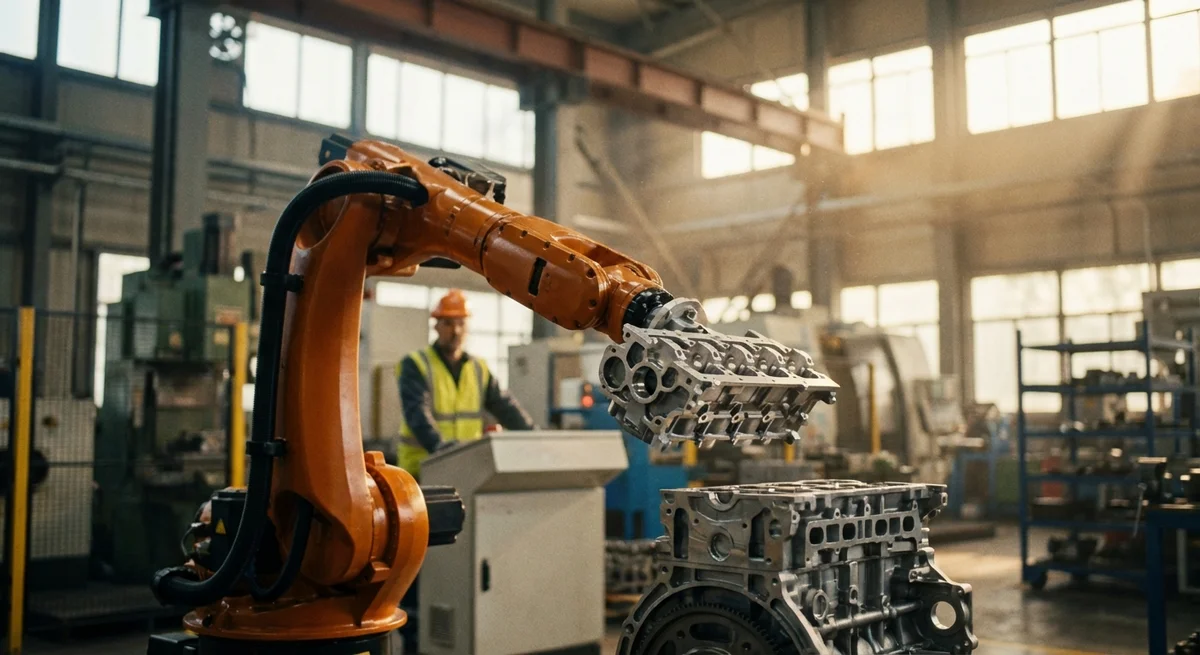
Let's be honest: the dream of a purely digital economy, where everyone does nothing but write code for mobile apps, has officially shattered against reality. While we were enthusiastically debating whether GPT-5 would replace copywriters and designers, the real world—that very one that smells of machine oil and hot steel—has faced a harsh challenge. It turned out that hands capable of holding a wrench or operating a machine are catastrophically lacking. This is where this impressive 32% jump in demand for roboticists comes from. This is not a fleeting trend or a fashionable fad, but the very survival instinct of the industrial sector.
For the last ten years, robotics in manufacturing has resembled a hobby for the rich. Large corporations would buy a couple of Fanuc or Kuka manipulators, put them behind glass, and proudly show them to investors. It was innovation for PR, a demonstration of status, but by no means a foundation for business processes. However, 2025 changed the rules of the game. The cost of sensors has fallen, software has become intuitive, and most importantly—the labor market has hit a wall. Today, a factory owner is no longer asking if the robot looks cool. He cares about only one thing: how quickly can this iron hand replace three missing workers on the night shift.
Interestingly, this growth is not locked within capital city technoparks. We see large-scale geographic expansion. Medium and even small enterprises across the country suddenly realized that a cobot—a collaborative robot—pays for itself in one and a half to two years. This creates a huge vacuum in the labor market. Companies no longer need just theorists with engineering diplomas. They require universalists capable of servicing, reprogramming, and, most importantly, integrating new machines into already existing, often outdated production lines. The 2025 roboticist specialist is a hybrid of a mechanic, developer, and systems analyst in one person.
What does this mean for the industry as a whole? We are entering the era of universal automation. We have passed the stage when a robot could perform only one operation for decades. With the integration of machine vision systems and foundational AI models, these machines become flexible. But this flexibility requires human oversight of a completely different level. The irony of the situation is that to solve the problem of simple worker shortage, companies have to search for even rarer and more expensive specialists. It's a race against time. If the educational system doesn't stop churning out abstract managers and switch to automation architects, the current growth in vacancies will turn into a chronic headache for the economy.
Looking a bit further ahead, we are awaiting the merger of large language models and physical movement. Research centers are already thoroughly testing systems where a robot understands commands in natural language. Imagine that instead of writing five hundred lines of code, you simply tell the machine: rearrange the pallets for the morning shipment.
This would radically lower the barrier to entry into the profession, but we're not there yet. For now, a person who knows how to calibrate an industrial manipulator and make friends with it on the conveyor belt remains king of the labor market. Industry is ready to pay; the question is only whether there will be those willing to swap the cozy coworking space for a noisy shop floor where the future has already arrived.
The main point: Labor shortage has become the most powerful driver of progress that was only dreamed of before. Either an enterprise automates today, or tomorrow it becomes a museum of a bygone era. Are you ready to become the one who will configure this new world?
Want to stop reading about AI and start using it?
AI News is a curated feed of AI/tech news. Hamidun Academy teaches you to use AI systematically in your work.