Jonathan Nolan: AI Will Feed Newcomers and Leave Blockbusters Soulless
Jonathan Nolan has long explored machine uprising in "Westworld," and now he observes it in reality from a producer's chair. While his colleagues sign…
AI-processed from Wired; edited by Hamidun News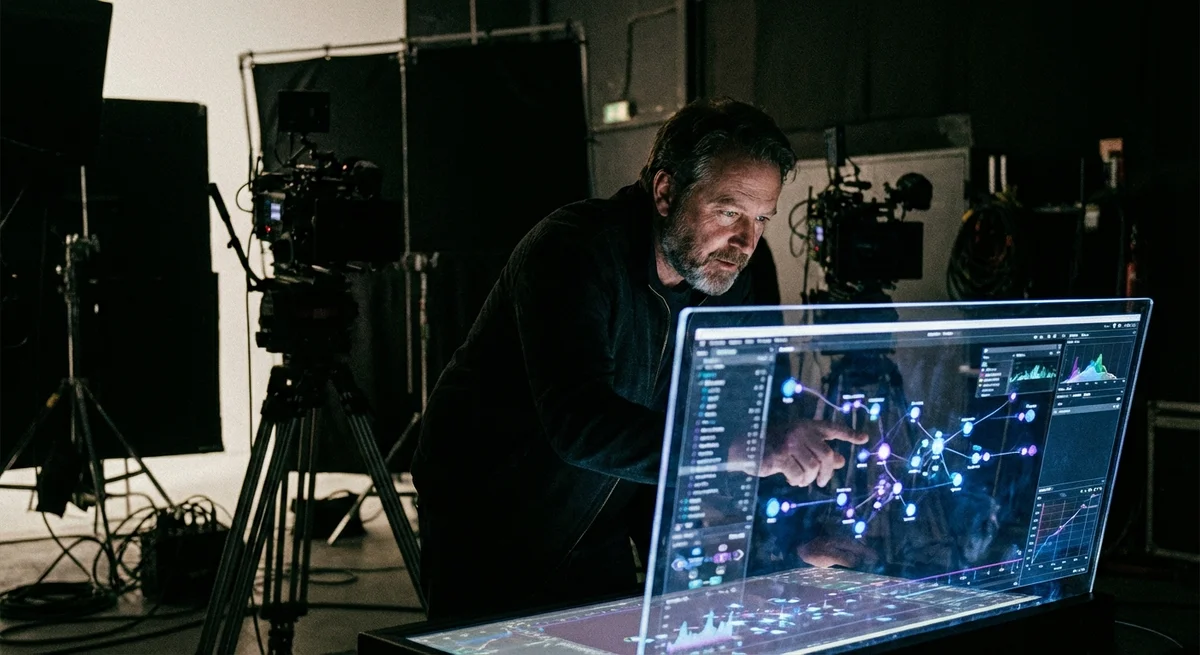
Jonathan Nolan has long explored machine uprising in "Westworld," and now he observes it in reality from a producer's chair. While his colleagues sign petitions against neural networks, Nolan keeps a cool head. He characterizes the current state of the industry as a "foamy moment." It's an excellent metaphor: there's plenty of bubbles and noise on top, but not so much substantial content beneath. We're used to Hollywood either fearing AI or trying to save money with it, but Nolan suggests looking at the situation from a different angle.
Let's recall the context of recent years. The 2023 strikes by screenwriters and actors turned AI into the industry's main villain. Studios wanted to digitize extras, and authors feared they'd be replaced by endless GPT-based scripts. Nolan, however, doesn't see a threat to true creativity in this. He believes we've become too fixated on defending old production models instead of seeing opportunities for new ones. In his view, AI is primarily a democratization tool that will hit the wallets of giants, not talents.
Nolan's main point is simple and somewhat ironic: neural networks will help those without money but unlikely save those with too much. For a beginner director dreaming of shooting epic science fiction in his bedroom, generative models will be salvation. What once required tens of millions of dollars and hundreds of graphics specialists can now be done with a few powerful video cards and the right prompts. This breaks down barriers that majors like Disney or Warner Bros. have built for decades.
At the same time, Nolan is skeptical that AI can replace blockbuster production. Big cinema isn't just about visuals—it's a complex process of human interaction, intuition, and risky decisions that resist algorithmization. Blockbusters today suffer from unoriginality not from lack of technology, but from a crisis of ideas. AI, trained on old data, will only exacerbate this problem, turning cinema into an endless remix of the past. Therefore, for studio giants, neural networks can become a trap that makes their content even more sterile.
It's interesting how Nolan connects this to his experience working on "Fallout." The series managed to maintain a balance between practical effects and graphics, and it was precisely this human factor that made the show alive. He's confident that audiences will always feel the absence of "soul" or authorial voice, even if the image is perfect. Technologies can imitate style, but they can't imitate intention. This is the main weakness of the current "foamy" hype around AI in creative industries.
Ultimately, we're witnessing an amusing paradox. A tool that was supposed to help corporations optimize costs and lay off people could become a weapon in the hands of independent creators who will bury these very corporations. If any talented teenager can produce visuals at "Avatar" level, why do we need bloated studio budgets? Nolan clearly hints that the rules of the game are changing, and old Hollywood guard needs to stop fearing actor replacement and start fearing competition from those they previously overlooked.
The bottom line: AI won't replace a blockbuster director, but it will ensure that blockbusters are no longer the prerogative of wealthy studios. Is Hollywood ready for a world where budget ceases to be a competitive advantage?
Want to stop reading about AI and start using it?
AI News is a curated feed of AI/tech news. Hamidun Academy teaches you to use AI systematically in your work.