Китайский АПК на стероидах: почему Пекин пересаживает фермеров на ИИ
Власти Китая представили стратегию развития деревни, где главная роль отведена искусственному интеллекту. В рамках концепции «новых производительных сил» Пекин
AI-processed from 36Kr (36氪); edited by Hamidun News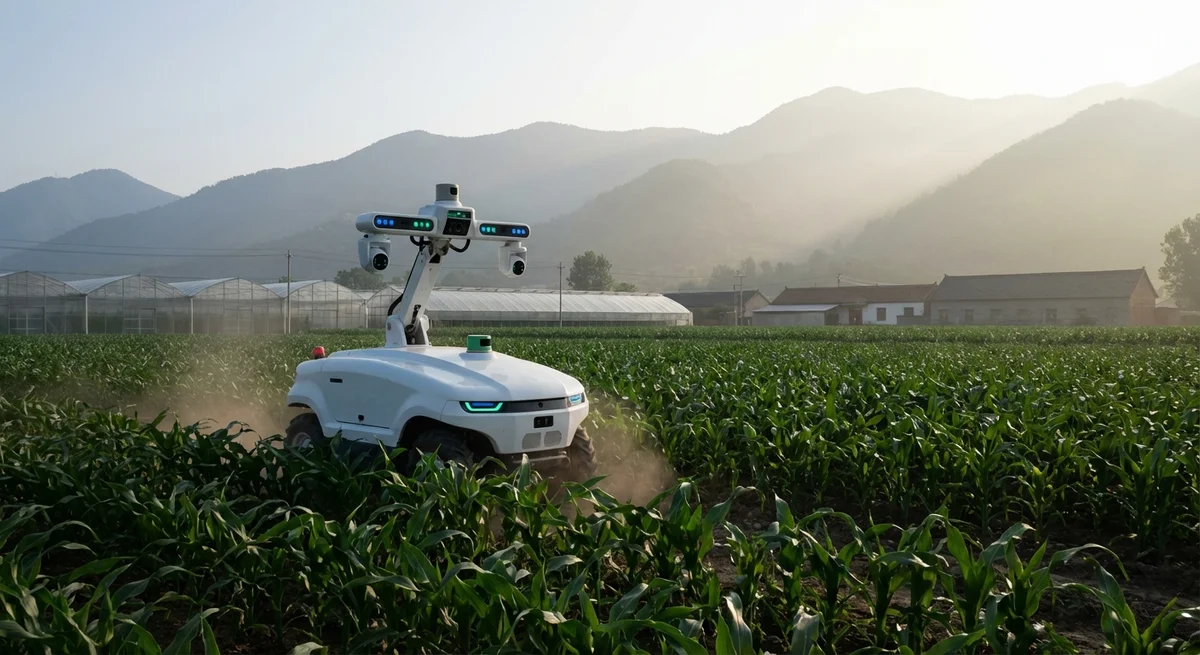
Every year at the beginning of the production cycle, Beijing issues the so-called "Central Document No. 1". This is, in a sense, sacred scripture for the Chinese economy, determining development priorities for rural regions.
In 2026, the document reads like a screenplay for a science fiction film: the party has ordered the integration of artificial intelligence with soil and plow. Where China previously simply attempted to feed a billion people, it now wants to do so using algorithms and minimal human participation. The roots of these changes lie in the concept of "new productive forces."
This term, which has been heard from every Chinese quarter lately, implies a departure from extensive growth in favor of deep high-tech. In agriculture, this means that traditional methods no longer count. Beijing is betting on drones, the Internet of Things, and robots, which are to replace the aging rural population.
The problem of labor shortage in China's countryside is more acute than it appears, and AI here is not a luxury but the only way for the agricultural sector to survive. Special attention in the document is given to biological production and breeding. China intends to accelerate the creation of "breakthrough seed varieties" using AI to model genetic combinations.
This is a direct challenge to Western agribusiness giants. Beijing clearly does not want to depend on imported technologies in matters of food, so a key direction will be the development of equipment for complex landscapes — hilly and mountainous areas, where ordinary tractors are useless but smart, maneuverable robots are exactly right. But technologies do not work without people, so the government is initiating a large-scale reform of agricultural universities.
The concept of a "new agronomist" now includes programming skills and the ability to manage complex data systems. The state plans to train specialists "to order," so graduates are immediately sent to implement AI in specific farms. This is a systematic approach: from changing plant DNA to rewriting university curricula.
Why is this important right now? Global logistics are unstable, and trade wars force China to seek internal reserves. Agricultural automation is a way to insure against any external shocks.
When your fields are processed by swarms of drones, and yield is predicted by a neural network based on data from thousands of sensors, you become much less vulnerable to sanctions or fluctuations in world market prices. China is building a digital fortress, where high-tech food serves as the foundation. The bottom line: Beijing has definitively transferred agriculture from the category of "tradition" to the category of "high technology."
For the global market, this is a signal — demand for agritech solutions in China will grow exponentially, and Chinese autonomous farms will soon become an export product. Will neural networks manage to overcome the laws of nature on such a scale?
Want to stop reading about AI and start using it?
AI News is a curated feed of AI/tech news. Hamidun Academy teaches you to use AI systematically in your work.