Tencent против всех: китайские инвесторы ставят на ИИ-гиганта
На гонконгской бирже произошла масштабная перестановка сил. Пока фонд Tracker Fund of Hong Kong теряет миллиарды, инвесторы из материкового Китая активно скупаю
AI-processed from 36Kr (36氪); edited by Hamidun News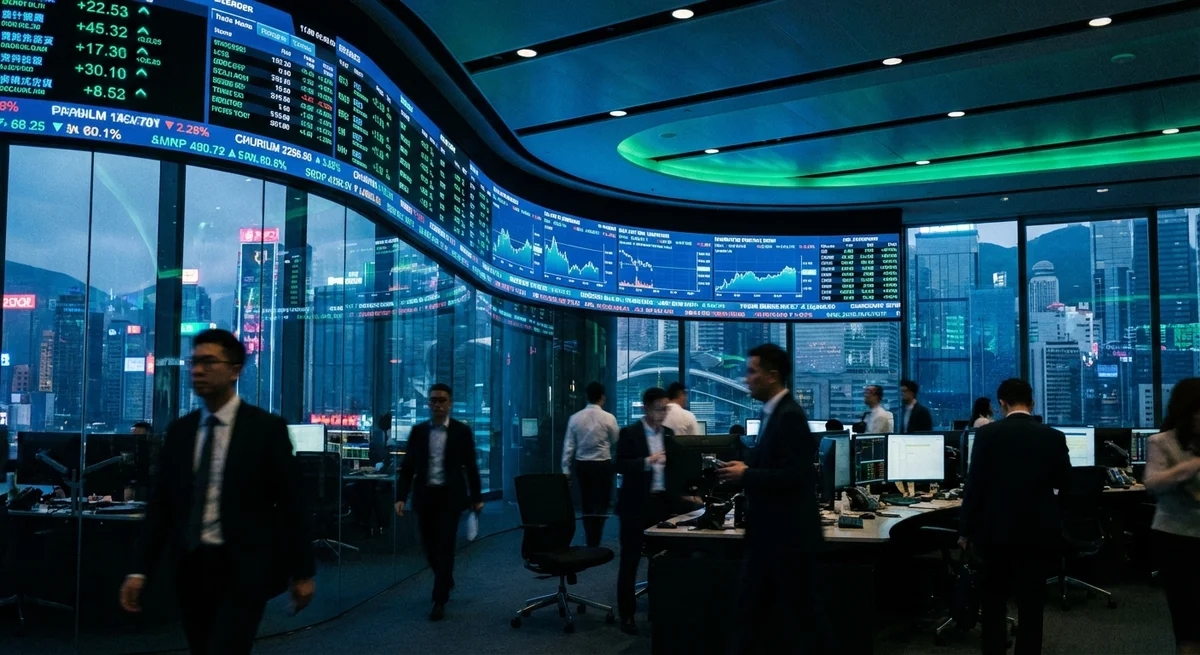
Hong Kong's stock market now resembles a battlefield where old strategies are dying before our eyes. While index funds like the Tracker Fund are recording massive capital outflows, smart money from mainland China—the so-called "southern flow"—is beginning a targeted hunt for those who will define tomorrow's technological landscape. The situation is ironic: overall market sentiment remains cautious, but when it comes to specific names, greed suddenly conquers fear.
The main beneficiary of this attraction of unprecedented generosity has been Tencent, which received almost two billion Hong Kong dollars in a single session. Why does this matter right now? We are used to thinking that under conditions of sanctions and trade wars, China will support its chip manufacturers at any cost.
However, the figures tell a different story. SMIC, the national champion in semiconductor manufacturing, faced net selling of more than one and a half billion. It seems investors are beginning to realize that "iron" sovereignty is a long and expensive game where profits may be waited for for decades.
At the same time, Tencent, with its ecosystem and deep integration of neural networks into cloud services and games, offers results here and now. This is not just buying stocks, it's a vote in favor of software dominance over hardware in the current cycle. The fate of Alibaba-W is equally interesting.
The company, which was once synonymous with Chinese technological miracle, now finds itself in the shadow of its main competitor. Net outflow of 1.19 billion Hong Kong dollars hints that the market has revised its expectations.
While Alibaba tries to restructure its numerous divisions and catch up with the generative AI wave, investors prefer the more understandable and stable trajectory of Tencent. This is a classic example of how internal efficiency and clear strategy for AI product development triumph over cumbersome corporate transformations. It's also worth noting the inflow of funds into the Southern Hang Seng Tech fund.
This signals that professional players haven't become disappointed in the technology sector as such. They have simply become more selective. Instead of blindly believing in overall market growth, they are choosing narrow niches related to high-tech software and communications.
China Mobile also came out ahead, which confirms the thesis: infrastructure for data transmission remains the foundation on which the entire modern digital economy is built. Without stable 5G and clouds, no AI will simply take off. What does all this mean for the global market?
Chinese capital is becoming increasingly pragmatic. The era when you could "pour" money into any company with the "tech" prefix is over. Now we are witnessing natural selection in action.
Investors are fleeing from general funds that copy the index and moving into those who actually show progress in the field of applied artificial intelligence and cloud computing. This is a harsh, but fair lesson for all industry players: either you show real value in your algorithms, or the market will write you off, no matter how loudly you shout about technological breakthroughs. The main point: the market is betting on software giants and is willing to temporarily sacrifice hardware manufacturers.
Does this mean the era of chip shortages and belief in silicon kings is officially over?
Want to stop reading about AI and start using it?
AI News is a curated feed of AI/tech news. Hamidun Academy teaches you to use AI systematically in your work.