Moore Threads: китайское «железо» наконец-то научилось писать код
Китайская компания Moore Threads представила AI Coding Plan — среду для разработки, которая работает исключительно на отечественных технологиях. В основе лежат
AI-processed from 36Kr (36氪); edited by Hamidun News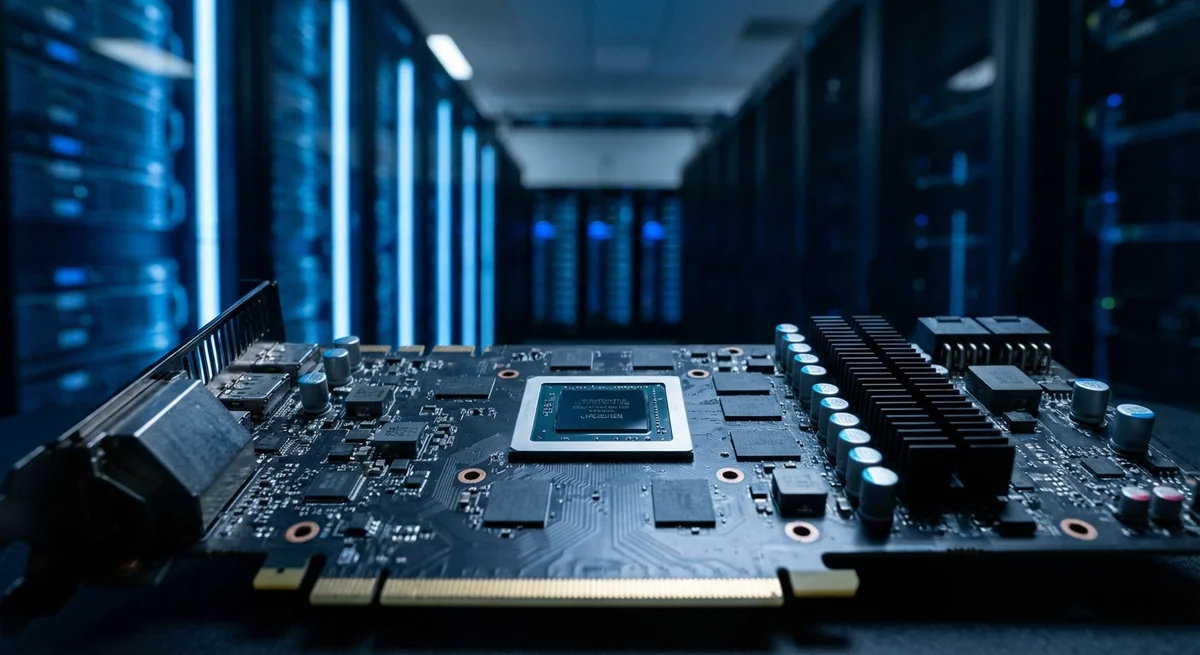
While the world watches NVIDIA's latest quarterly earnings report, something more down-to-earth but critically important for the industry is happening in China. Moore Threads has launched its AI Coding Plan project. This is not just an attempt to create 'our own Copilot'—it's a full-fledged vertical integration where software literally 'caters to' the hardware created in the same region. At a time when access to Western chips is cut off faster than you can update your drivers, such news becomes a matter of survival rather than just a marketing move. Let's figure out what's under the hood.
The foundation of the system rests on MTT S5000 graphics cards. This is Moore Threads' flagship solution, which the company positions as a response to sanctions restrictions. But hardware without software is just an expensive space heater for a server room. That's why developers paired their chips with the GLM-4.7 model, which is currently considered one of the best in China for working with code. To prevent everything from slowing down, they added the SiliconFlow acceleration engine. The result is something of a technological sandwich, where each layer is made in China.
Why is this needed? In the past, Chinese startups often took Western developments, wrapped them in attractive packaging, and called them 'domestic products'. With AI Coding Plan, the situation is different. Moore Threads is trying to prove that their GPU architecture is capable of complex real-time computations. Writing code with neural networks is not just about logic but also about enormous stress on memory and computational blocks. The fact that they decided to launch the service specifically for developers suggests high confidence in the stability of their chips.
Looking at the bigger picture, we see the formation of two parallel realities in the IT world. In one—Microsoft, GitHub, and Azure clouds. In the other—Moore Threads, local models like GLM, and proprietary frameworks. This division no longer seems like a temporary glitch; it's becoming the new normal. For an ordinary programmer in Shanghai or Beijing, it means they now have a tool that won't be blocked with a snap of fingers from Washington. The irony is that sanctions, intended to slow progress, forced the Chinese to teach their hardware to understand Python and C++ in record time.
Of course, it's still too early to say that MTT S5000 will 'kill' solutions from the 'green giant'. Optimizing software for a new architecture is a painful and lengthy process. But Moore Threads achieved the main thing: they created a precedent for a working 'chip—model—service' stack. This is an important signal for the entire market: the era of total dependence on one company is coming to an end, even if the path to alternatives is fraught with bugs and configuration challenges.
Key takeaway: China has officially launched the first fully domestically-sourced coding service for programmers. Will Moore Threads succeed in convincing developers to switch from familiar tools to 'homegrown' ones?
Want to stop reading about AI and start using it?
AI News is a curated feed of AI/tech news. Hamidun Academy teaches you to use AI systematically in your work.