GE Aerospace и сингапурский гамбит: $300 млн на то, чтобы ИИ проверял ваши двигатели
GE Aerospace запускает пятилетний план инвестиций в Сингапур объемом $300 млн. До 2029 года компания намерена полностью перестроить систему техобслуживания двиг
AI-processed from 36Kr (36氪); edited by Hamidun News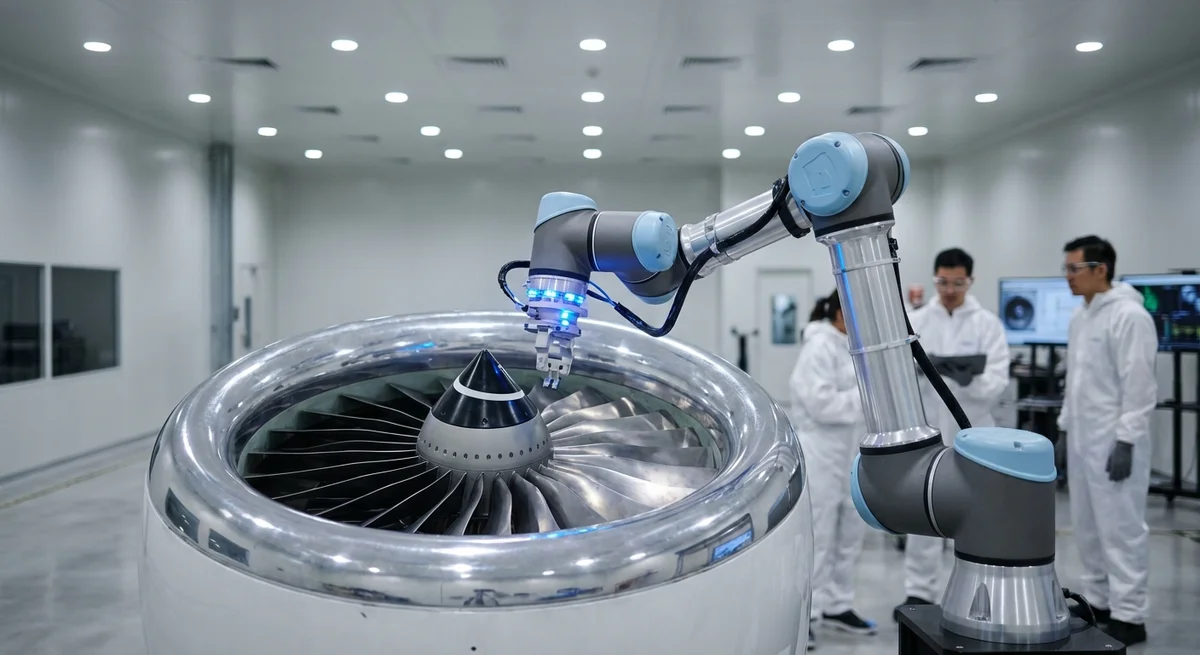
Imagine you're flying over the ocean at ten thousand meters altitude, and the only thing between you and the water is a huge piece of metal spinning at thousands of revolutions per minute. Once upon a time, a human would inspect this metal with a flashlight and mirror, relying on experience and eyesight. But times are changing.
GE Aerospace (GE) has decided that when it comes to safety, it's time to trust the cold logic of algorithms, and has allocated an impressive 300 million dollars for this purpose. Singapore has long established itself as the main "garage" for aircraft in Asia, but these new investments are transforming it from a simple service center into a futuristic testing ground. A five-year plan running through 2029 is aimed at radically modernizing the processes of servicing, repair, and overhaul of engines.
At the center of this transformation is not an expansion of facilities, but the implementation of advanced automation, digitalization, and AI-inspection technologies. This is a logical step: the aviation industry is currently suffering from a shortage of spare parts and qualified engineers, and the downtime of a single aircraft costs airlines a fortune. Why is GE doing this right now?
The answer lies in the increasing complexity of modern aviation engines. New alloys and composite materials require control methods that exceed human capabilities. Instead of an engineer spending hours examining turbine blades under a magnifying glass, a computer vision system will scan parts with micron-level precision.
Algorithms trained on millions of images of real defects can recognize the onset of metal fatigue long before it becomes critical. This is the transition from reactive maintenance to predictive maintenance, where problems are prevented before they occur in reality. It's interesting to observe how GE Aerospace is restructuring its entire philosophy of work.
They are implementing the concept of "digital twins," where each engine has its own virtual copy, updated in real-time based on sensor data. Investments of 300 million will allow integrating these data with physical processes in Singapore's workshops. This creates a closed ecosystem where AI doesn't just "advise," but manages spare parts logistics and work schedules, minimizing the human factor.
The irony of the situation is that we often fear machine uprisings, but in aviation, human error remains the primary risk. AI doesn't get tired at the end of a twelve-hour shift and its eye doesn't get "lazy" after inspecting the hundredth turbine of the day. For Singapore, this news is another confirmation of its technological dominance in the region.
The city-state skillfully creates an environment where giants like GE are willing to spend hundreds of millions on experiments. While other countries are mired in bureaucracy, here a standard is being set for what heavy industry will look like in ten years. This is a clear signal to the entire market: the future of aviation depends not only on engine power or wing aerodynamics, but also on how deeply neural networks have penetrated the quality control system.
Ultimately, we are seeing artificial intelligence leave the comfortable offices of software companies and venture into the noisy, oily workshops. This is an important stage in the technology's maturation. We are transitioning from generating amusing pictures and texts to ensuring the safety of hundreds of millions of passengers at the level of software code.
If GE Aerospace's Singapore experiment proves successful, the profession of aviation engineer will change forever — they will now have to work more with data and model training than with a wrench and micrometer. The bottom line: GE Aerospace is transforming engine maintenance into a high-tech IT process. Will competitors like Rolls-Royce and Pratt & Whitney be able to respond with something equally large-scale, or will Singapore become an exclusive domain of GE's AI?
Want to stop reading about AI and start using it?
AI News is a curated feed of AI/tech news. Hamidun Academy teaches you to use AI systematically in your work.