Hong Kong Paradox: Why MiniMax and Zhipu Grow While Tech Giants Fall
В Гонконге сложилась уникальная ситуация: общий технологический индекс просел на 1.07%, но акции, связанные с генеративным ИИ (GEO), внезапно взлетели. Пока кла
AI-processed from 36Kr (36氪); edited by Hamidun News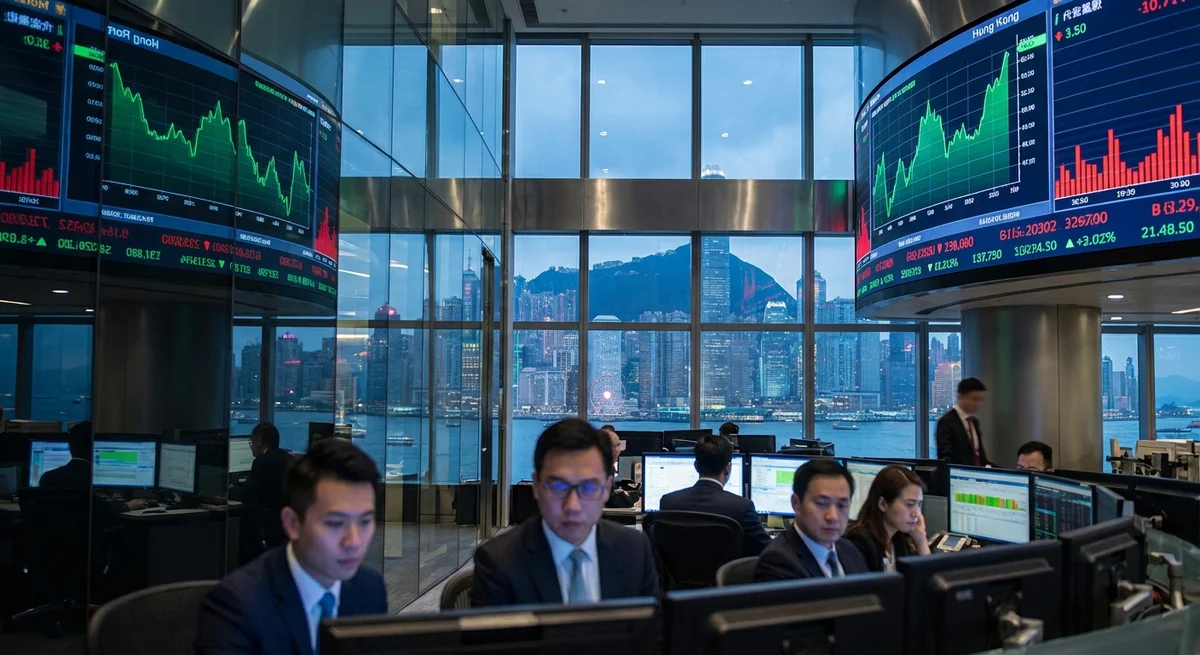
Imagine you're at a party where everyone suddenly got sad, but in the corner a couple of guys open champagne and celebrate a triumph. That's roughly what Hong Kong's stock exchange looks like right now. While the main tech index Hang Seng Tech glumly slides downward, the generative AI sector (GEO) is throwing a real party of defiance.
This isn't just a statistical error—it's a clear demonstration of where money is actually flowing in 2024. China's market stopped being predictable long ago, but today it delivered the goods: investors no longer believe in abstract "technologies," they believe in concrete brains. MiniMax (MINIMAX-WP) and Zhipu are the two main names in this story.
While media giants like Star CM lose ground, these guys show growth of 8–10%. For those not following the Chinese landscape, let me clarify: these aren't just startups, they're Beijing's answer to OpenAI and Anthropic. Their growth against a backdrop of overall market decline suggests that AI has become a kind of defensive asset for investors.
Ironically, on this same day precious metals and steel were also rising. Investors literally equated neural networks with gold. Why is this happening right now?
After a year of loud promises and endless presentations, Chinese large language models have finally started showing their teeth. We're seeing real implementation in business processes and government contracts. Investors from mainland China, operating through the so-called "southern channel," poured nearly a billion Hong Kong dollars into Hong Kong assets in a single day.
And a significant portion of this optimism settled precisely in companies working with generative models. MiniMax, for example, is now actively storming the video generation market, while Zhipu, a spinoff from Tsinghua University, is building the country's most powerful open ecosystem. It's interesting to observe the transformation of market logic.
Previously, the tech sector grew broadly: if Alibaba rose, the entire index followed. Now we're seeing rigid separation. Old tech, burdened by regulatory risks and slowing growth, drags the index down.
New tech—aggressive, hungry, and focused exclusively on neural networks—breaks ahead. This is a classic example of paradigm shift, when old leaders become dead weight and new ones become locomotives. The market is clearly signaling: having a cloud service or messenger is no longer a guarantee of success.
You need AI, and not as a marketing slogan, but as a working architecture. Of course, skeptics will immediately recall the dotcom bubble. But look at MiniMax's numbers.
Growth above 10% in a single session on a falling market—this isn't just hype, it's institutional faith that these exact companies will become the foundation of China's new digital economy. In conditions where traditional media loses 3%, the GEO sector looks like the only place where you can still profit from the future, rather than exploiting the achievements of the past decade. The main point: Investors have finally divided "just IT" and "AI."
Now market dynamics will be determined not by retailer reports, but by successes in model training. Will MiniMax and Zhipu be able to maintain this pace when the first wave of euphoria subsides?
Want to stop reading about AI and start using it?
AI News is a curated feed of AI/tech news. Hamidun Academy teaches you to use AI systematically in your work.