SpaceX Buys xAI: Why Elon Musk Needs a Rocket with Artificial Intelligence
Илон Маск официально объединил свои самые амбициозные активы: SpaceX поглотила xAI. Это не просто перекладывание денег, а создание вертикальной интеграции, где
AI-processed from 36Kr (36氪); edited by Hamidun News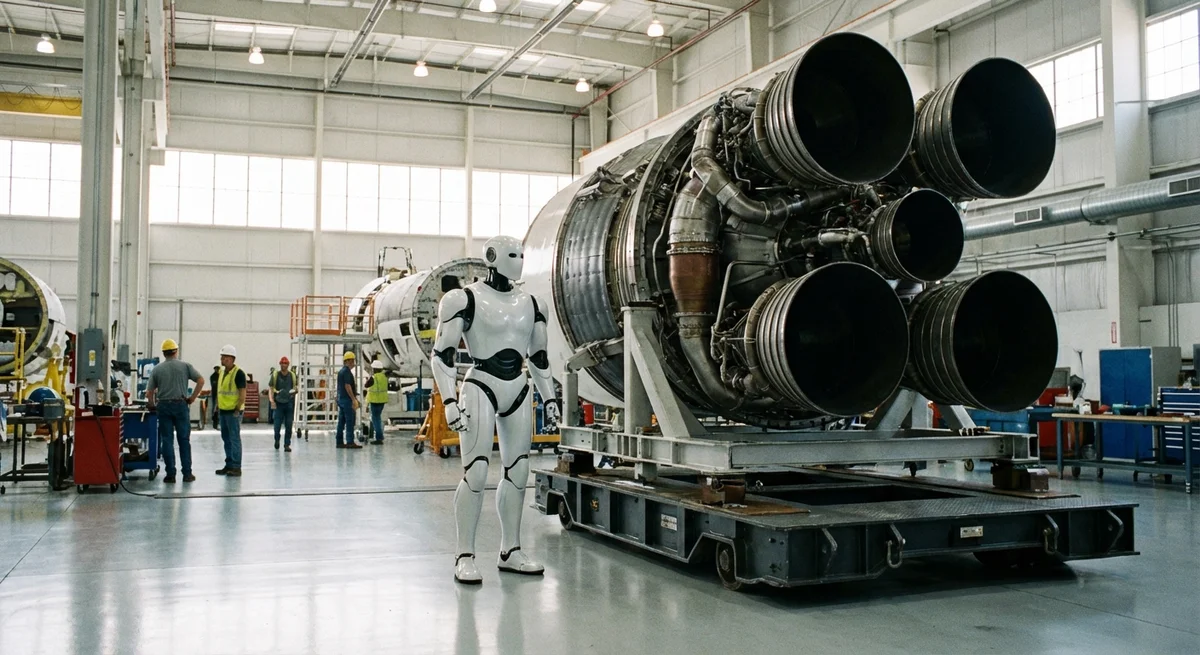
Elon Musk has once again reshuffled the cards in his technology empire, and this time the stakes are higher than ever. SpaceX officially announced the acquisition of xAI — a company that Musk created as a response to OpenAI "waking up". If previously xAI was perceived as Elon's personal project for training Grok on data from the X social network, now it's part of heavy industry.
Why does a rocket-building company need to deal with neural networks? The answer lies on the surface: autonomy. SpaceX needs not just to send hardware into space, but to manage constellations of thousands of Starlink satellites and plan Starship landings on Mars in real time.
Without its own powerful AI that doesn't depend on the whims of third-party vendors, this task becomes a lottery. Musk is effectively building the first vertically integrated company of the future in the world, where software and hardware are fused together at the DNA level.
While SpaceX absorbs intelligence, Tesla is preparing to scale the physical embodiment of that very intelligence. The announcement of the third generation of humanoid robots (Tesla Bot Gen 3) with an ambitious plan to produce a million units per year sounds like a typical Musk promise, but the context has changed. These robots will now learn simply by observing the actions of people.
This is a direct challenge to the labor market and classical automation. If a robot used to be a programmed machine, now it's a student who "peeks" at a worker on the factory floor and repeats his movements. Combined with xAI resources that are now at Musk's doorstep, these iron guys could become Tesla's most massive product, eclipsing vehicle sales.
We are witnessing Elon assembling a puzzle: satellites provide connectivity, xAI provides intelligence, and robots and rockets provide physical presence.
On the other side of the ocean, at OpenAI, they're also not sitting idle, although their strategy looks more grounded and software-oriented. The launch of the Codex application for macOS is an attempt to go beyond the browser tab and become a full-fledged layer between a programmer and his computer. OpenAI understands that simply a "chatbot" is no longer enough.
They need to embed themselves in the workflow, in the file system, in daily routine. The ability to use multiple agents in parallel and create automated chains of tasks — this is exactly what turns AI from a toy into a work tool. While Musk builds the future in metal, Sam Altman is trying to monopolize intelligence inside every laptop.
One cannot ignore what is happening in China. The traditional "red envelope battle" has begun ahead of the Lunar New Year 2026. But if previously Tencent, Baidu and ByteDance fought for users' wallets, now they are fighting for their attention to AI assistants. Tencent's "Yuanbao" application has already emerged as the leader, surpassing ByteDance's "Doubao". This is not just marketing — this is training hundreds of millions of people to think that any question, from vacation planning to money transfers, should be solved through an AI interface. Chinese giants are pouring billions into subsidies to make their neural networks the main entry point to the internet.
Against the backdrop of these titanic shifts, Waymo, a subsidiary of Alphabet, closed an investment round of $16 billion, raising its valuation to astronomical $126 billion. This confirms a simple truth: investors are no longer afraid of autonomous vehicles. The market believes that autonomous driving is already not "if", but "when".
While Apple is happy with tax breaks in India for manufacturing its devices, and TSMC reports full orders for 2-nanometer chips through 2026 inclusive, it becomes clear: a shortage of capacity and intelligence — this is the new oil. Whoever controls chip manufacturing and model training dictates the rules to everyone else.
The bottom line: Musk has definitively moved away from the concept of disparate companies toward a unified "intelligence + hardware" ecosystem. Will anyone be able to compete with this machine when Tesla robots start being programmed through OpenAI's Codex, working on TSMC chips? We will likely see even greater polarization in the market between "Musk's empire" and everyone else.
Want to stop reading about AI and start using it?
AI News is a curated feed of AI/tech news. Hamidun Academy teaches you to use AI systematically in your work.