SpaceX and xAI: Musk Builds a Single Empire to Capture Reality
Илон Маск официально объявил о слиянии SpaceX и xAI (включая соцсеть X). Теперь это единый «двигатель инноваций», объединяющий ракетные технологии, спутниковый
AI-processed from The Verge; edited by Hamidun News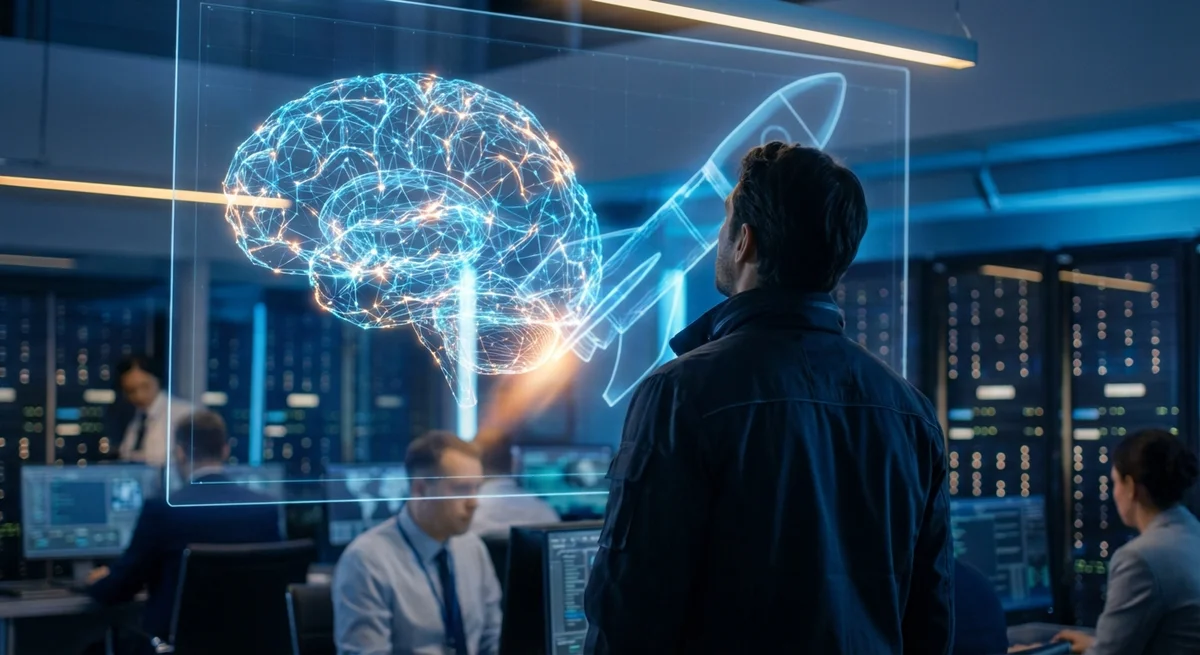
Elon Musk has decided to shuffle his toys again, but this time the scale impresses even those used to his antics. Instead of just exchanging engineers and computing power privately, SpaceX is officially acquiring xAI. If you thought launching giant rockets and creating sarcastic chatbots were fundamentally different businesses, Musk just proved you wrong. Now it's one structure aimed at what Elon himself calls "understanding the Universe" and expanding the light of consciousness.
Let's be honest: this move was long overdue. We've already seen how xAI's computing clusters are being built at breakneck speed, and how data from social network X (formerly Twitter) feeds Grok's algorithms. But why bring space into the mix? The answer lies in the concept of vertical integration, which Musk perfected at Tesla. When you have your own Starlink satellites for data transmission, your own rockets to launch infrastructure into orbit, and your own AI to manage all this chaos, you stop depending on the outside world and its limitations.
The SpaceX-xAI merger is an attempt to create a "brain" for the most complex physical systems of the future. While OpenAI and Google compete over whose chatbot writes better essays or generates better images, Musk is building a system meant to manage autonomous colonies on Mars and fleets of reusable spacecraft. Starship rockets are the body, and xAI neural networks are the nervous system that should make this body truly intelligent. The irony is that while others fear hypothetical machine rebellion, Musk is planning to make these machines humanity's only path to long-term survival.
We can't ignore the pragmatic financial aspect either. SpaceX is an incredibly expensive and successful private company with enormous cash flows and unlimited investor trust. xAI, by contrast, requires billions in chip and electricity investments right now to stay competitive. The merger allows Musk to manage resources more flexibly. Essentially, he's creating a financial and technological monolith where space successes can directly subsidize the AI arms race.
A crucial role in this scheme is played by the social network X. Musk calls it "the leading platform for free speech and real-time information." Within the new structure, X becomes not just media, but a giant sensor collecting data about humanity's current state. This data will be instantly processed by AI and used to adjust the company's global plans—from Starlink logistics to direct connectivity with mobile devices anywhere on the planet. Musk isn't building just a company; he's building a closed ecosystem where information, communication, and transport operate under the control of a single intelligence.
The strangest part of this announcement is the passage about "the intelligent sun." Musk has always loved grand phrases, but here he outdid himself. The idea of creating some kind of intelligent energy center for understanding the Universe's structure sounds like a sci-fi novel script that mistakenly made its way into a press release. However, behind this rhetoric stands a very concrete goal: creating artificial general intelligence (AGI) that understands not just human language, but the fundamental laws of physics. Without this, space exploration will remain just a dream.
What does this mean for the industry? First, competitors like Blue Origin or Google will now have to account for the fact that they're facing a united front of heavy machinery, software, and global satellite communications. Second, the boundaries between "IT people" and "mechanical engineers" are finally erased. Musk is building a world where your smartphone, your car, and your rocket to Mars are all controlled from one center. This is either the greatest engineering achievement in history or the most ambitious attempt to centralize power in one person's hands.
The bottom line: Will this "engine of innovation" be humanity's salvation or just a convenient way to burn billions in one huge furnace? For now, one thing is clear: Musk is no longer playing with separate products—he's building a single operating system for our reality.
Want to stop reading about AI and start using it?
AI News is a curated feed of AI/tech news. Hamidun Academy teaches you to use AI systematically in your work.