xAI appetite: how Elon Musk burned through $9.5 billion in nine months
Компания Илона Маска xAI раскрыла инвесторам свои расходы: за первые девять месяцев прошлого года «сожжено» около 9.5 миллиардов долларов. Основная часть средст
AI-processed from 36Kr (36氪); edited by Hamidun News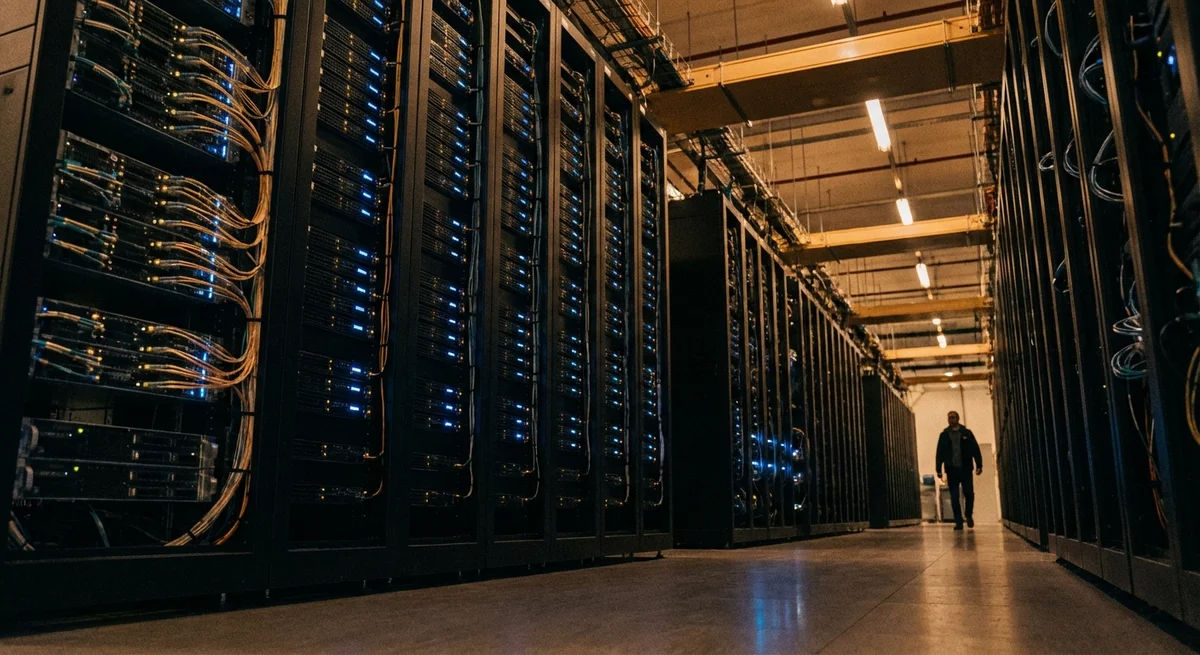
If you thought your electricity bills this winter were high, take a look at xAI's financial statements. According to data the company provided to its investors and that leaked through Chinese financial media, including Sina Finance, Elon Musk's startup managed to spend around $9.5 billion in just nine months of last year.
To put that in perspective: that's over a billion dollars per month. This cash burn rate turns xAI into one of the most expensive startups in human history, even by Silicon Valley standards. Let's figure out where that money went, because you can't spend that much on free employee lunches.
The main expense is, of course, silicon. Musk doesn't hide his obsession with capacity and is actively building the Colossus supercomputer in Memphis. It required tens of thousands of Nvidia H100 chips, each costing as much as a decent SUV.
In the modern AI world, there's a simple rule: if you don't have your own "iron fist" of hundreds of thousands of graphics processors, you're simply not in the race to create strong artificial intelligence. Musk decided not just to participate, but to immediately claim a seat at the head of the table, whatever it costs his investors. Context matters more than ever here.
xAI was launched as an answer to OpenAI, which Musk now considers too closed and "woke." But ideological disputes are expensive. While OpenAI spent years building infrastructure with Microsoft's support, Musk had to do it in blitzkrieg mode.
This explains why xAI's spending pace looks so aggressive compared to competitors. The company needed not only to hire the best engineers, luring them from Google and Tesla with huge stock options, but also to build infrastructure in the shortest possible time—something that took others years. Investors seem unbothered for now.
Last year xAI raised $6 billion in a Series B round, and apparently those funds have already been largely converted into heat from servers. The market believes in the "Musk factor" and that Grok-3 will deliver results surpassing GPT-4. However, this financial strategy raises the question of how long this hypercapitalism party can last.
We're witnessing a unique moment in tech history when a product's success directly depends on how many billions you're willing to convert into computing power in a single quarter. What does this mean for the industry as a whole? First, the barrier to entry for new players is now practically insurmountable without support from sovereign wealth funds or tech giants.
Second, we're seeing the formation of a new economic model where net profit takes a back seat in the face of potential AGI dominance. Musk is betting that whoever creates truly intelligent machines first will be able to recoup any billion-dollar spending in weeks. So far his strategy looks like an attempt to break through a wall with a golden battering ram.
The bottom line: xAI is spending money faster than any other AI company at startup. Will investors have the patience if Grok-3 doesn't become an instant sensation?
Want to stop reading about AI and start using it?
AI News is a curated feed of AI/tech news. Hamidun Academy teaches you to use AI systematically in your work.