1.2 Billion Faces in Your Pocket: How DHS Turned the USA into a Digital Panopticon
Imagine you're standing in line at passport control. You've committed no crimes, your biography is clean, and you have a fresh visa. But in that moment, an…
AI-processed from Bloomberg Tech; edited by Hamidun News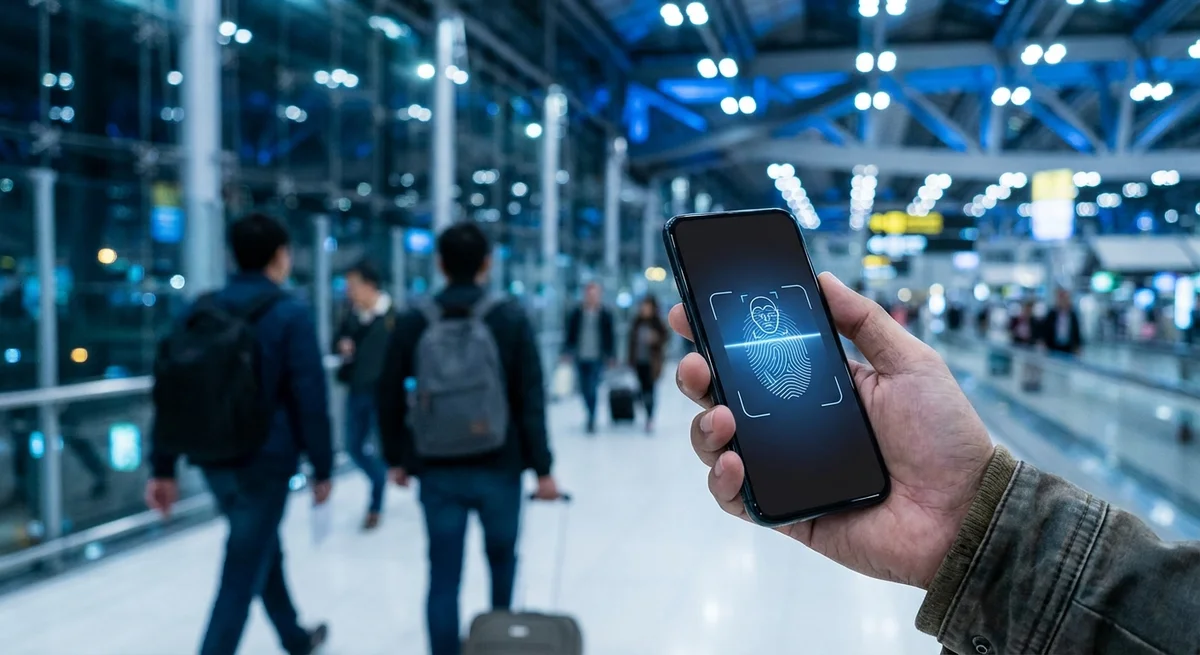
Imagine you're standing in line at passport control. You've committed no crimes, your biography is clean, and you have a fresh visa. But in that moment, an officer points an ordinary-looking smartphone at you, and in a second an algorithm matches your facial features against a database whose size exceeds the population of most countries in the world. This is not a scenario from a new season of "Black Mirror," but the everyday reality of the U.S. Department of Homeland Security (DHS). According to documents reviewed by Bloomberg journalists, the department actively exploits a facial recognition system with access to 1.2 billion images. This is perhaps the most massive implementation of AI surveillance we've learned about in recent times.
The figure of 1.2 billion is impressive, but what's far more important is understanding where this data came from. These are not just photographs from police stations or Interpol databases. Into this digital cauldron, the feds have dumped everything they could reach their hands to: biometrics from visa applications, border crossing data, immigration service archives, and partner databases of other agencies. If you've ever crossed the US border or submitted documents for a green card, your face has already become part of this colossal training dataset. In essence, the state has created a giant photo album of humanity without asking permission from those in it.
Why is this happening right now? The answer is simple: technology has finally caught up with the appetites of the security services. Previously, quality identification required stationary equipment, special lighting conditions, and a lot of time to process a request. Today DHS distributes mobile applications to its agents that does all this in fractions of a second. Now the camera in every border agent's pocket is not just a gadget, but a full-fledged access terminal to a global surveillance system. This radically changes the balance of power. Anonymity in public space ceases to be a right and becomes a technical error that the government is hurrying to correct.
The problem here is not only the fact of surveillance itself, but how these algorithms work. We all know that facial recognition systems often make mistakes, especially when it comes to people with dark skin tones or specific camera angles. When a mistake is made by a picture generator on your phone, it's a cause for a joke. When a mistake is made by an agent executing orders based on an AI "suggestion," it can end in deportation or arrest. Meanwhile, DHS is in no hurry to reveal the details of the accuracy of its systems, hiding behind questions of national security. We're dealing with a "black box" that makes decisions affecting people's fates.
It's interesting to observe how government structures skillfully bypass the ethical discussions that are now tearing Silicon Valley apart. While Google and Microsoft release pompous manifestos about "responsible AI" and publicly restrict the sale of facial recognition technologies to police, the state simply builds its own closed ecosystems. This creates a dangerous precedent: business can play at ethics as much as it wants, but law enforcement structures will always have their own parallel AI world living by the laws of expediency, not morality. And this world does not need public approval.
What does this mean for us? First, the market for surveillance technologies will only grow, despite any protests from human rights advocates. Second, we see the formation of a new type of digital sovereignty where citizens' biometric data becomes the most valuable asset of the state. Third, it puts a fat cross through the illusions that AI can be completely regulated. If the regulator itself is the main user and beneficiary of the technology, then who will control the controllers? It seems we are entering an era where our face is an eternal and unchanging ID that is scanned without our consent every hundred meters.
The main point: Privacy has finally become a luxury affordable only to those willing to go offline forever. Are you ready for the fact that any appearance in public is automatically recorded in a database that never forgets anything?
Want to stop reading about AI and start using it?
AI News is a curated feed of AI/tech news. Hamidun Academy teaches you to use AI systematically in your work.