SpaceX and xAI: Musk Assembles Trillion-Dollar Constructor Before IPO
Elon Musk has decided to turn the board upside down again, just as everyone else was beginning to get used to the rules of the game. Rumors of a SpaceX and…
AI-processed from Bloomberg Tech; edited by Hamidun News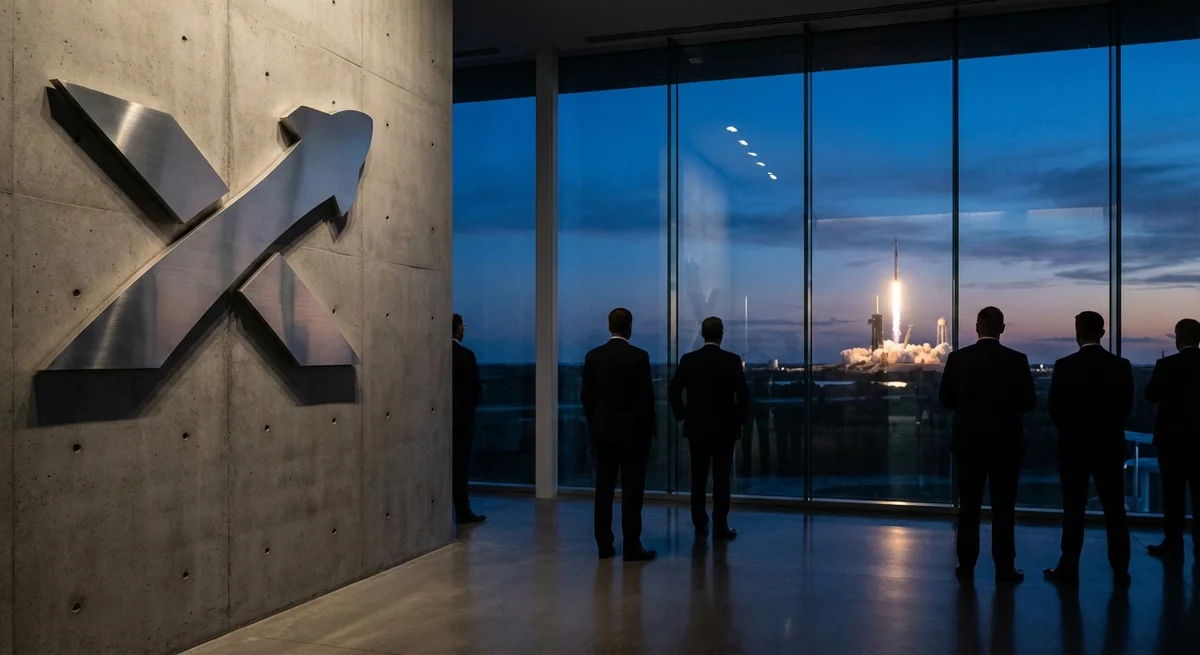
Elon Musk has decided to turn the board upside down again, just as everyone else was beginning to get used to the rules of the game. Rumors of a SpaceX and xAI merger are not just another attempt to optimize taxes or shuffle money between pockets. We are witnessing the birth of a structure with a potential valuation of $1.25 trillion. To put this in perspective: this is larger than the market value of most tech giants, with the exception perhaps of the "Big Four." Musk clearly intends to create a vertically integrated empire where SpaceX's physical world meets xAI's digital intelligence.
Let's understand why this is happening right now. SpaceX stopped being just a company that launches rockets long ago. It's a massive Starlink network, plans for Starship, and ultimately Mars. But to manage such a machine requires not just programmers, but advanced AI. On the other hand, we have xAI, which jumped into the arms race with Grok, but is still lagging behind OpenAI in resources and access to hardware. The merger gives xAI access to Starlink's colossal data volumes and SpaceX's engineering capabilities, while SpaceX gets a brain capable of automating the most complex processes in space.
Context matters more than the number itself. After Musk bought Twitter (now X), many doubted whether he could maintain focus. However, xAI has shown phenomenal development speed, building the Colossus supercomputer in just a few months. Now Musk wants to consolidate this success. A merger before IPO is a classic move to maximize valuation. Investors are more willing to put money into a company that owns both "transportation" and "intelligence" than in just another neural network in the cloud. This makes the future company practically invulnerable to market fluctuations in any single sector.
Of course, questions remain for Tesla shareholders. They have repeatedly expressed discontent with how Musk's resources are distributed among his numerous projects. But Elon seems unfazed. He is building a unified ecosystem where X data trains the AI, xAI manages SpaceX systems, and SpaceX launches the infrastructure for all of this into space. This is a closed loop that competitors like Google or Meta can only dream of. They have data and algorithms, but they don't have their own rockets.
What does this mean for the industry? First, the barrier to entry into the top tier of AI becomes even higher. It's no longer enough to have talented engineers; you need planetary-scale physical infrastructure. Second, it's a direct challenge to Sam Altman and Microsoft. Musk is showing that his ambitions extend far beyond chatbots. He is building the foundation for a new type of civilization, where AI is not just a toy but an operating system.
The bottom line: Musk is creating the world's first player uniting space and AI in a single financial structure. Will any of his competitors be able to counter with something comparable in scale, or are we witnessing the birth of an absolute monopolist of the future?
Want to stop reading about AI and start using it?
AI News is a curated feed of AI/tech news. Hamidun Academy teaches you to use AI systematically in your work.