Picasso in Your Pocket: How Doubao Rewrites Museum Rules
In the Shanghai Pudong Art Museum, it's unusually loud these days, but the sounds don't come from tourist groups. Visitors have stopped in front of Picasso…
AI-processed from 36Kr (36氪); edited by Hamidun News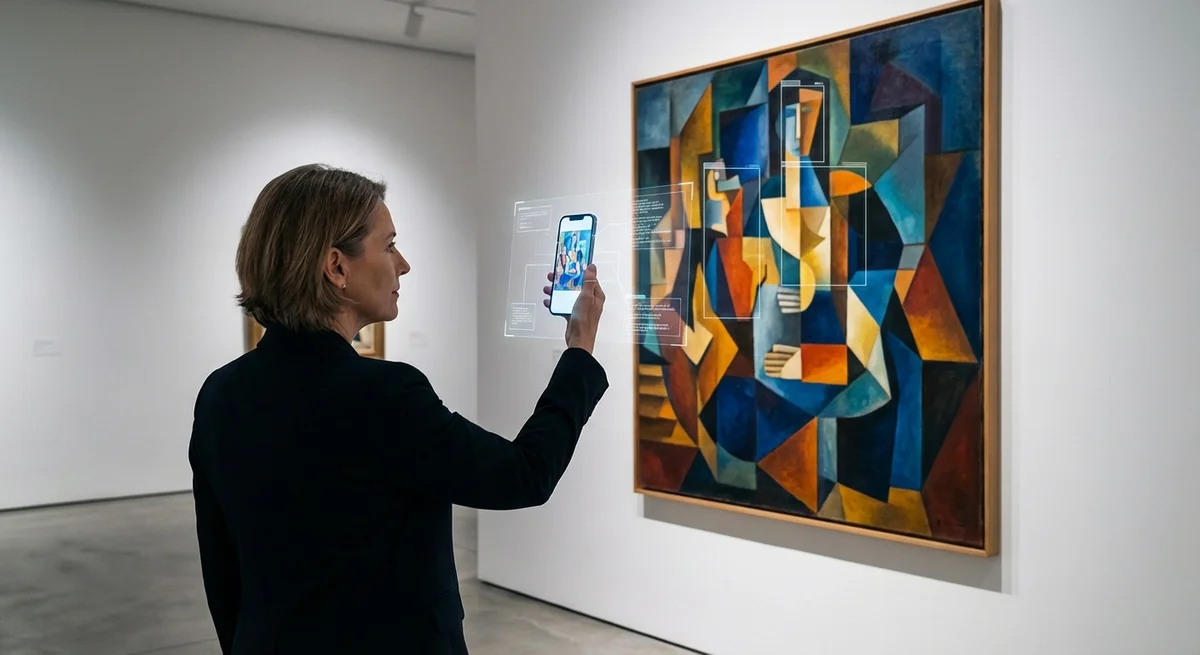
In the Shanghai Pudong Art Museum, it's unusually loud these days, but the sounds don't come from tourist groups. Visitors have stopped in front of Picasso masterpieces, pointing their smartphones at them, and engaging in quiet dialogue. On the other end of the line is Doubao, the main AI asset of ByteDance's empire.
While Western corporations polish their models in laboratories, the Chinese tech giant has brought its product with an audience of 100 million daily active users (DAU) directly into museum halls. The project has become the official digital guide for two large-scale exhibitions: the Louvre collection and Pablo Picasso's retrospective. The situation in the art industry has long needed a shake-up.
The problem has always been the same — a shortage of quality interpretation. Professional guides are few, their services are expensive, and audio guides from the past century inspire only boredom with their monotonous droning. ByteDance saw in this an ideal niche to demonstrate the power of its algorithms.
Now AI doesn't just provide information from a database; it enters into "empathetic dialogue," helping the viewer connect personal experience with brushstrokes on canvas. This is an attempt to transform elite knowledge into a digital product accessible to everyone. The technical core of this transformation is the Seed1.
8 model (Seed1.8). The developers claim it has achieved State-of-the-Art (SOTA) in video stream perception and understanding.
Unlike older systems that required taking a photo and waiting for an answer, Doubao works in real-time interaction mode. It understands what you see, even if your hands are shaking and the light in the hall is dimmed. The AI recognizes the finest distinctions between 15th-century Iranian ceramics and Ming dynasty Chinese porcelain, relying on visual nuances that often escape the untrained eye.
ByteDance Vice President Zhu Jun emphasizes that interaction with AI is, first and foremost, a conversation. In the museum, Doubao doesn't just deliver a lecture; it asks leading questions. For example, looking at Picasso's painting "Reading," a user might ask how the atmosphere of silence is created.
The AI won't limit itself to the date it was painted but will analyze the soft curves and color blocks, connecting them to the artist's muse Marie-Thérèse Walter. This is a level of analysis that previously required at least an art history degree in your pocket. Earlier, Doubao had already trained on objects at the National Museum of China and seven other major venues in the country.
But the Pudong museum case is a move to the international level. ByteDance optimized the algorithms specifically for 300 artifacts from the Louvre and 80 Picasso works, even considering the architecture of the exhibition space. This creates a precedent: AI stops being just a "smart search" and becomes a full-fledged mediator between complex culture and mass consumption.
For the industry, this is a clear signal. Multimodal language models (LMM) have finally moved beyond the chatbot stage and begun to explore the physical world. If before we asked AI "what can I cook with these ingredients," now we ask "why did this artist choose this particular shade of blue."
ByteDance is betting that in the future our primary contact with reality will be mediated through a layer of artificial intelligence that will explain, supplement, and interpret everything we point the camera at. The main thing: ByteDance has successfully turned an AI assistant into a cultural mediator, solving the problem of a shortage of live experts. Will this be the end of the museum guide profession or the beginning of a new era of enlightenment?
Want to stop reading about AI and start using it?
AI News is a curated feed of AI/tech news. Hamidun Academy teaches you to use AI systematically in your work.