Shanghai Bets on "AI+": 50 New Smart Factories and Army of Digital Agents
While we entertain ourselves generating pictures and debate whether ChatGPT will replace copywriters, Shanghai has decided it's time to make neural networks…
AI-processed from 36Kr (36氪); edited by Hamidun News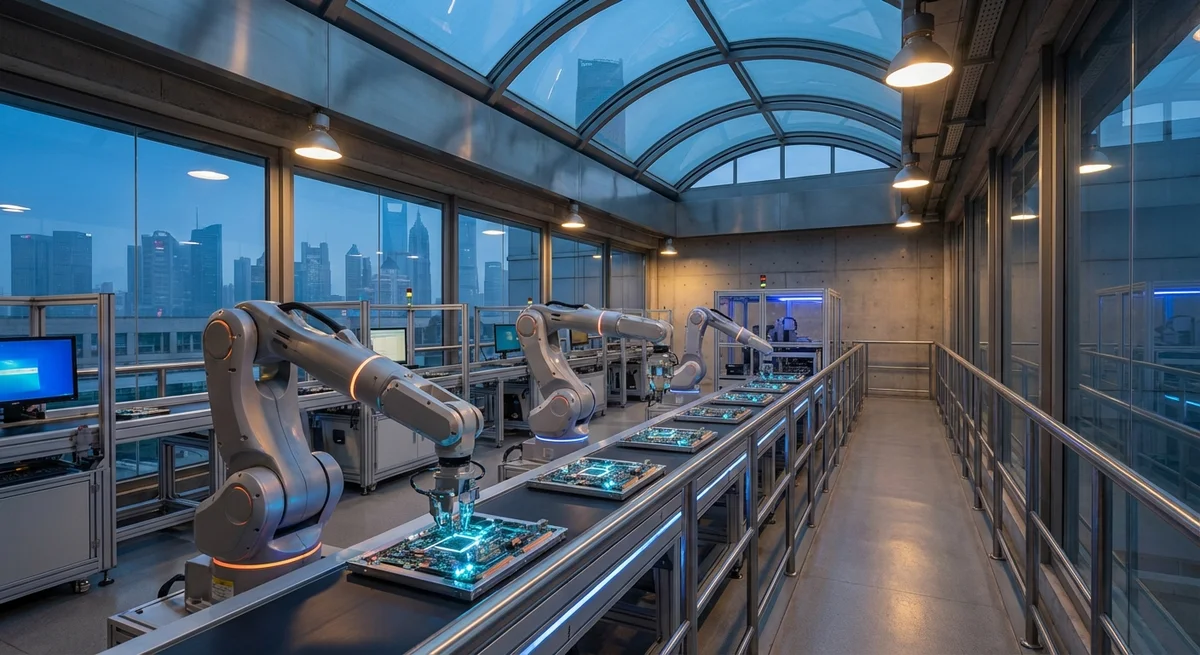
While we entertain ourselves generating pictures and debate whether ChatGPT will replace copywriters, Shanghai has decided it's time to make neural networks work at actual factory equipment. During the opening of the Shanghai Municipal People's Congress session, Shanghai Mayor Gong Zheng presented a report that resembles a plan to seize the technological future more than a boring bureaucratic document. The city officially charts a course toward deep implementation of the "AI+" strategy. This means artificial intelligence stops being a "gimmick" for IT professionals and becomes the foundation for the entire megacity's economy. Let's understand what lies behind these numbers.
The plan for the current year is to launch more than 50 advanced smart factories. But don't think this is simply production lines with a couple of robotic manipulators. We're talking about creating a complete infrastructure. Shanghai plans to invest aggressively in computational capacity and, more interestingly, in industry-specific data corpora or "linguistic environments" for industries. China understands perfectly well: for a neural network to understand how to smelt steel or assemble microchips, it needs not general knowledge from the internet, but specific data from actual production facilities. This is where their main competitive advantage lies.
The report paid special attention to so-called vertical models. Unlike universal models that know a little about everything, these solutions are tailored to specific tasks—from logistics to fine chemistry. Along with them comes intelligent agents. These are no longer just algorithms, but autonomous entities capable of making decisions in real time. Shanghai wants such agents to manage terminals, warehouses, and supply chains with minimal human involvement. In essence, the city is building a giant living organism where AI is both the brain and the nervous system.
Why is this important right now? China is clearly trying to leap directly from simple automation to the era of "smart manufacturing." After several years of pressure on tech giants, the government seems to have found the perfect application for their technologies. Now innovations must serve not just food delivery or selling advertisements, but improving the efficiency of heavy industry. This is an attempt to create so-called "new productive forces," which are now discussed in every Beijing office.
If the plan works, Shanghai will become not just a financial hub, but the world's leading exporter of ready-made solutions for autonomous industry. Interestingly, city authorities are betting on AI-native business formats. This means they expect companies that build their processes around artificial intelligence capabilities from the start, rather than trying to bolt AI onto old methods. The mayor directly stated support for new types of terminals and devices that will operate on the basis of AI. This opens a huge market for hardware and software developers.
While Western regulators increasingly think about how to restrict AI, Shanghai creates conditions where neural networks are given the keys to factory gates and told: "Go ahead." Of course, ambitious plans come with serious challenges. Building 50 factories is half the battle. Much harder is ensuring they have sufficient chips amid sanctions and finding specialists capable of combining classic manufacturing with deep learning. However, Shanghai has always been the showcase of Chinese capitalism, and if this experiment can succeed anywhere, it's here.
We're left to observe how quickly the "AI+" slogan turns from a line in a government report into the actual roar of autonomous assembly lines. The bottom line: China is moving from "software for entertainment" to "software for factories." Can the rest of the world compete with industry managed by self-learning algorithms, or will we remain stuck in the era of manual control?
Want to stop reading about AI and start using it?
AI News is a curated feed of AI/tech news. Hamidun Academy teaches you to use AI systematically in your work.