SpaceX and xAI Unite: Elon Musk Carries Artificial Intelligence to Space
Илон Маск решил, что ресурсов Земли для его амбиций уже недостаточно. Слияние SpaceX и xAI — это не просто бюрократическая рокировка, а попытка решить проблему
AI-processed from 36Kr (36氪); edited by Hamidun News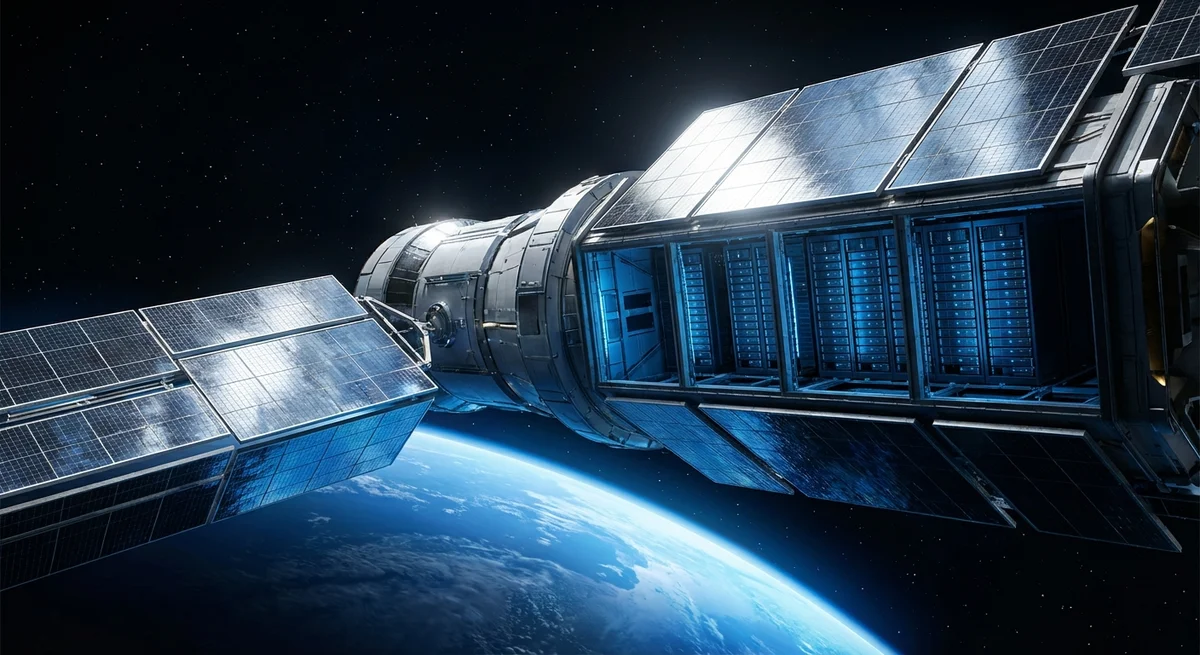
Elon Musk is doing what he does best again — making us wonder whether he's a genius or just playing an extremely expensive real-time strategy game. This time the stakes have risen to orbital heights. The merger of SpaceX and xAI looks like a logical, albeit insane move in a world where computational power has become the new oil and electricity has become a scarce resource.
Musk officially confirmed the merger of the companies to create what he calls the most ambitious engine of vertical integration in history. An internal memo to SpaceX employees leaves no room for ambiguity. Musk bluntly states there's no more room for AI on Earth.
More precisely, the planet lacks the necessary amount of cheap energy and free space to feed the growing appetites of models like Grok 3 and beyond. While OpenAI and Microsoft discuss building ground-based data centers worth hundreds of billions of dollars, Musk decided it's easier to go where there's plenty of sun and few neighbors complaining about noise and environmental impact. The idea of "space data centers" has long remained the province of science fiction, but for business it's becoming a hard logistics necessity.
Musk has a trump card that no competitor has — the reusable Starship transportation system. If the cost of launching a kilogram of payload drops to the promised levels, delivering server racks to orbit will stop being gold. The combination of Starlink satellite communications and xAI compute nodes transforms SpaceX from just a transportation company into a global cloud that literally hangs over our heads.
Musk calls this initiative an attempt to create a "conscious sun" that will help understand the Universe. It sounds grandiose and typical of his presentations, but behind it lies a sober calculation. The AI industry is currently in an "arms race" phase, where the winner is the one with more chips and more stable power supply.
Moving computing into space potentially solves the server cooling problem and provides round-the-clock access to solar energy without intermediaries in the form of state power grids. Of course, questions remain about radiation protection for electronics and signal latency, but for Musk these are just more engineering tasks. This merger also signals that xAI is ceasing to be a "side project" in the shadow of Tesla.
Now it's the core of a new empire where AI manages everything: from Optimus robots to entire orbital clusters. Musk is building a closed ecosystem where his own rockets launch his own servers to train his own intelligence. The key point: Musk has finally stopped playing by Silicon Valley rules.
While others build fences around ground-based data centers, he's building a new reality where intelligence is not tied to soil. How technically feasible this is in the next five years is a big question, but strategically it's an attempt to bypass any terrestrial regulations and physical limits of power grids.
Want to stop reading about AI and start using it?
AI News is a curated feed of AI/tech news. Hamidun Academy teaches you to use AI systematically in your work.