Digital Noah's Ark: why AI is digitizing the DNA of all living creatures
Биологи замахнулись на проект планетарного масштаба: секвенировать геном каждого известного вида на Земле. Это не просто научное любопытство, а попытка создать
AI-processed from Google AI Blog; edited by Hamidun News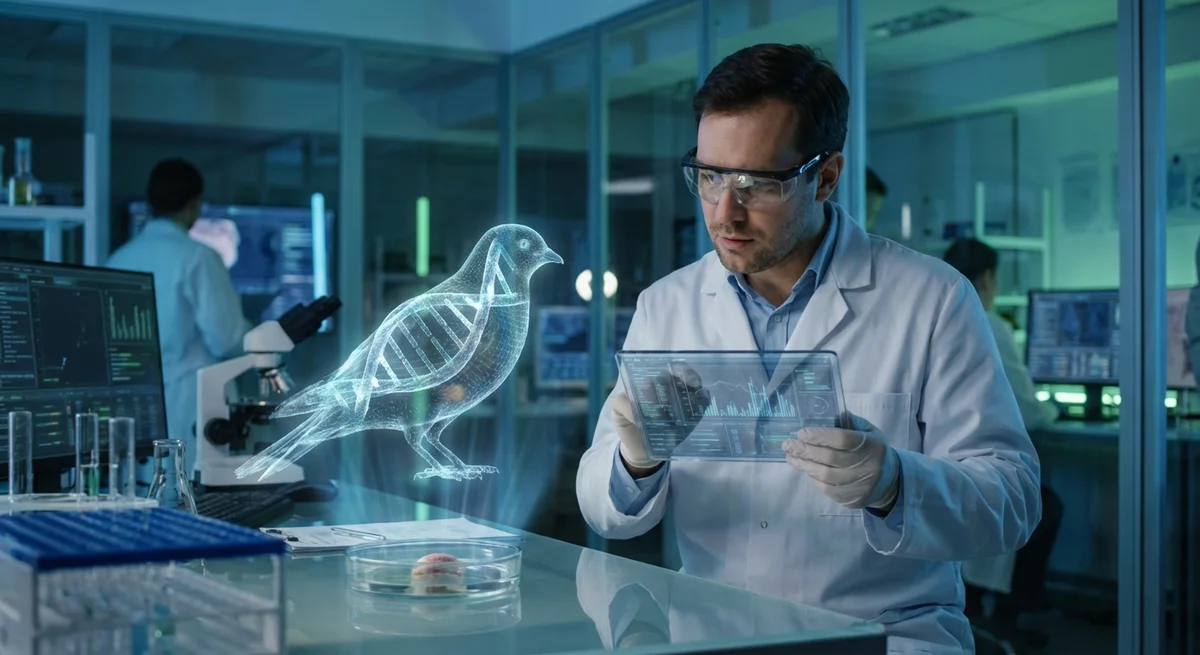
Imagine a vast ancient library where several unique books, never read by anyone, burn down every day. That's what the situation with biodiversity on our planet looks like right now. We are losing species faster than we can understand how they were structured. But humanity has acquired a new tool capable of, if not stopping the fire, at least digitizing the contents of these books. The global scientific community has united around an ambitious goal: to sequence the genomes of all 1.8 million known eukaryotic species. And without artificial intelligence, this endeavor would have been doomed to failure even at the planning stage.
Context is critically important here. Remember the Human Genome Project, which took thirteen years and cost billions of dollars. Today, we want to do the same thing with almost two million creatures — from blue whales to microscopic fungi. The problem is not only in reading the DNA sequence, but in assembling this gigantic puzzle from billions of fragments. Previously, this was a bottleneck: scientists manually matched segments, spending months of work on a single species. Now neural networks handle this task in hours, finding patterns in data chaos that the human eye simply cannot perceive.
AI in this process is not just a calculator, but a highly skilled linguist. Genetic code is a language, and machine learning algorithms have learned to understand its syntax. They help correct sequencing errors, predict gene functions, and most importantly, compare them with each other. Why do we need to know the genome of some rare frog from the Amazon? The answer often lies in the practical plane. By studying how different species adapted to extreme conditions, diseases, or toxins, we find keys to creating new medicines and technologies. AI allows us to search for these keys not blindly, but with the help of directed data analysis.
Why is this happening right now? Sequencing technologies have become cheaper, and computational power more accessible. We have reached a point where biology is finally transforming into an information discipline. The Earth BioGenome Project is, in essence, creating a backup of all life on Earth. If a species disappears from the face of the Earth, we will have its complete "blueprint." Of course, this does not mean that we will be able to print a new mammoth or rare bird on a 3D printer tomorrow, but it gives us a chance to preserve information that has been accumulating for millions of years of evolution.
However, behind the technological enthusiasm lurk serious questions. Who will own this gigantic database? How can we ensure access to this knowledge for countries where these species live, but which do not have their own supercomputers? Are we entering an era of digital colonialism or building a common good? While scientists debate ethics, algorithms continue to grind through petabytes of data, turning living nature into structured code. This is a race against time, in which AI is our only chance not to be left in an empty library with bare shelves.
Main point: We are building a digital infrastructure of life that will outlive us. Will this archive become the foundation for resurrecting species or remain merely an epitaph to a lost world?
Want to stop reading about AI and start using it?
AI News is a curated feed of AI/tech news. Hamidun Academy teaches you to use AI systematically in your work.