OpenClaw: Why an Experienced Developer No Longer Reads Their Own Code
История OpenClaw — это не просто очередной ИИ-агент, а хроника личной трансформации Питера Штайнбергера. Разработчик с 15-летним стажем, привыкший оптимизироват
AI-processed from Habr AI; edited by Hamidun News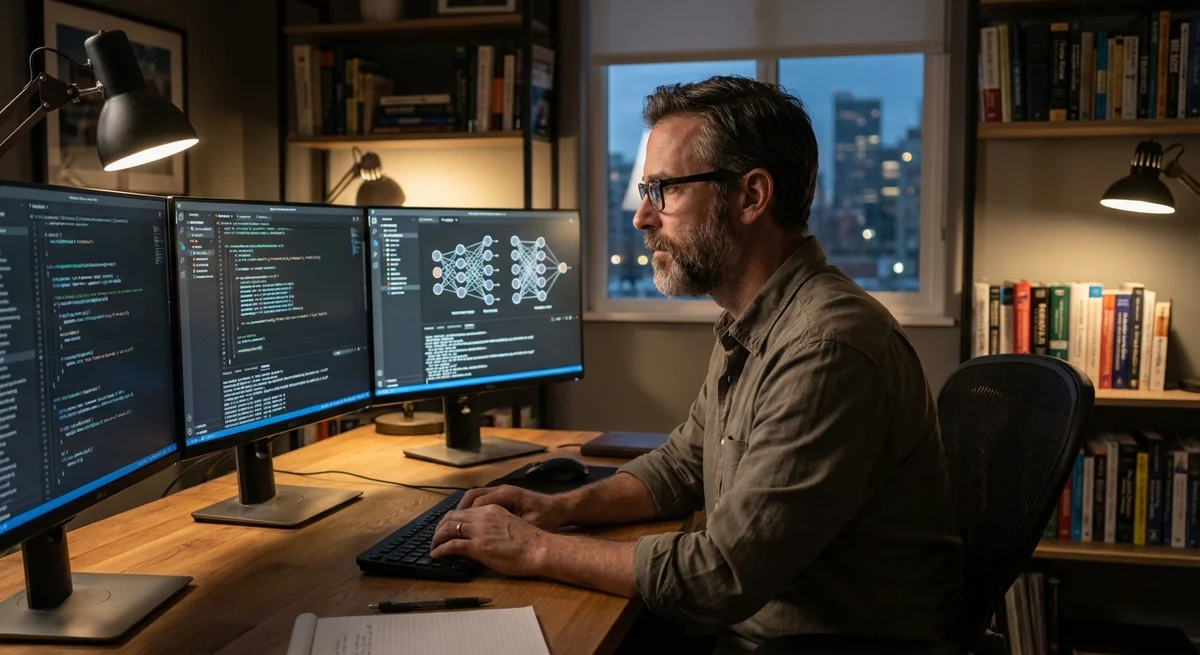
Imagine an old-school programmer who spent decades polishing every line of C++ or Objective-C code, fighting for each extra processor cycle. Now imagine that same person pressing a button and letting an AI agent generate thousands of lines of code that he doesn't even plan to open for review. This is not a dystopian scenario about lazy novices, but the reality of Peter Steinberger and his OpenClaw project. His journey from fanatical optimization of megabytes to wasteful burning of billions of tokens is perhaps the most honest illustration of what's happening in the industry right now.
The OpenClaw project, which previously answered to the names Clawdbot and Moltbot, instantly acquired myths in narrow circles. Skeptics grimace and call it a typical example of vibe coding — when the result stands on honest word and lucky prompts. However, those who follow the details see the hand of a master in this project. The irony is that Steinberger himself admits: he often has no idea what his agents are sending to the repository. For a man who built a career on creating ultra-precise tools for working with PDFs, where any mistake costs millions, such carelessness looks like professional heresy. But this is precisely where the major paradigm shift lies.
Why should we care about this right now? Because through OpenClaw we see the death of the craftsman and the birth of the systems architect of agents. Steinberger didn't just create a code-writing assistant. He built a system that manages his work schedule and household tasks. When an industry veteran of his caliber claims that manual code review becomes economically unfeasible, it sounds like a verdict on traditional Computer Science education. We're transitioning from an era of algorithm creation to an era of conducting black boxes.
The story with the project's names — OpenClaw is already the fifth iteration — perfectly reflects the chaos and speed of the modern AI market. While you're coming up with a logo and buying a domain, the base model updates, and the tool's capabilities expand so much that the old name feels tight. In this world there is no place for finished products in the classical sense. There is only a continuous process of iteration, where the human acts only in the role of goal setter. Steinberger doesn't just use GPT-4 or Claude, he makes them work together, spending enormous sums on APIs to achieve a level of automation that once required a team of ten middle-level developers.
This transition highlights a deep rift in the community. On one side remain purists who believe in code purity and complete control over each variable. On the other — pragmatists like Steinberger who understood that the volume of work performed by AI is more important than the risks associated with model hallucinations. If a developer of his caliber is willing to let go of the reins, then the barrier to entry into the profession will soon disappear completely. Programming is transforming from writing instructions to managing intentions. And if you're still spending hours on manual debugging, perhaps you're simply too expensive for yourself.
The bottom line: OpenClaw is an acknowledgment that the era of manual labor in IT is ending even for those who created this industry. Are you ready to stop reading your own code and trust an algorithm that makes mistakes but does it a thousand times faster than you?
Want to stop reading about AI and start using it?
AI News is a curated feed of AI/tech news. Hamidun Academy teaches you to use AI systematically in your work.