Neural Networks at the Gate: How Telematics Replaces the Guard With a Journal
Телематика и нейросети наконец-то встретились на проходной. Кейс Exzotron AI показывает, как автоматизировать въезд транспорта на предприятие без участия челове
AI-processed from Habr AI; edited by Hamidun News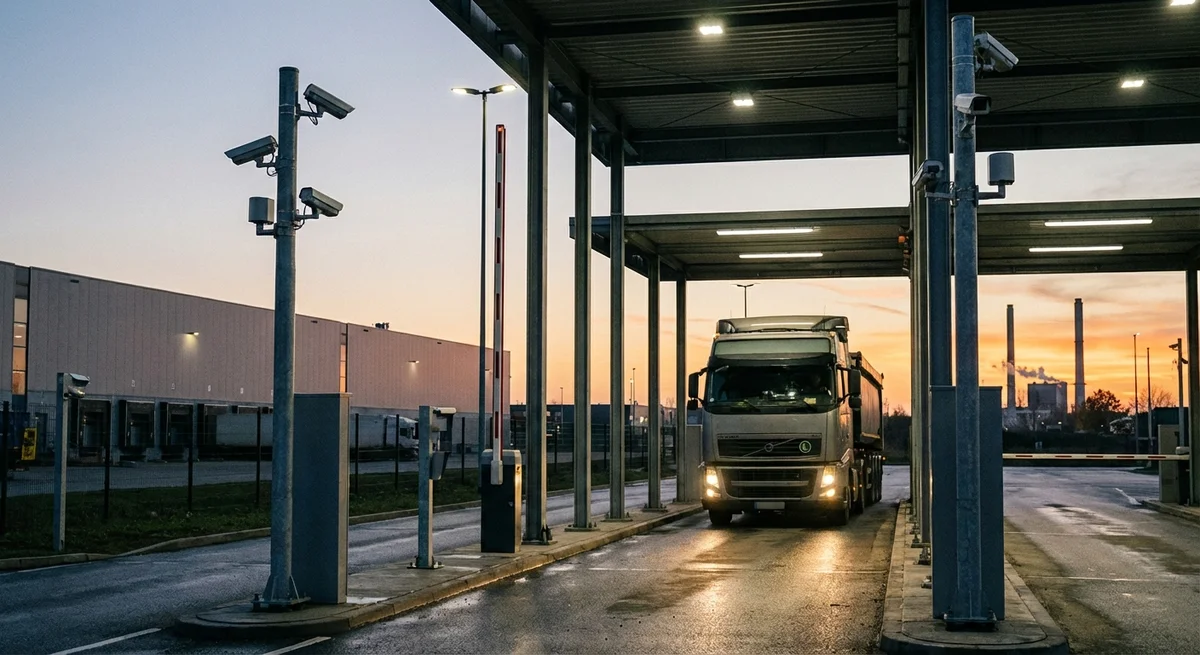
Imagine a typical scene at the entrance to a large agro-complex or construction site: a line of trucks, a grim-faced man in camouflage with a greasy journal, and attempts to decipher the handwriting on a waybill. This bottleneck is where businesses lose time, money, and patience. But it seems the era of paperwork at toll gates is coming to an end. While we entertain ourselves with picture generation, neural networks are quietly taking over the most mundane and dusty work. Telematics and artificial intelligence—this is a union that was long overdue, as both fields deal with the same thing: collecting and analyzing data to optimize chaos.
Developers at Exzotron Telematics decided it was time to stop burdening people with routine work and rolled out a neural network-based solution for automatic access control. The logic is simple: why force a security guard to scrutinize license plates if a camera with the right software can do it faster and more accurately? The system doesn't just record the fact of passage; it transforms the image into structured data. The neural network is trained to recognize not only pristine state license plates on a perfect sunny day, but also those covered with a layer of native chernozem, and can also read information from documents that the driver presents to the camera.
Why does this matter right now? Because "the human factor" has become too expensive a luxury. A person can get distracted, make a mistake in a single digit, or, let's be honest, let a "friend" slip through in violation of regulations. A neural network is impartial. It instantly checks the vehicle's number against the list of authorized ones, verifies the validity of the pass, and only then gives the command to the controller to open the barrier. All of this is integrated into the overall telematics system, transforming scattered data into a unified stream of management reporting.
The connection between telematics and AI is not just a trendy upgrade, but a transition from passive observation to active management. Previously, we simply knew where a vehicle was. Now the system understands whether it has the right to be there and whether all the driver's documents are in order. This saves dozens of minutes on each trip. On a fleet of a hundred vehicles, over a month this adds up to hundreds of hours of saved time that previously was simply wasted in lines at checkpoints. For business, this is a direct benefit that can be calculated in rubles, not in abstract "innovations."
Of course, implementing such systems is not always a walk in the park. You need to account for lighting, camera angles, and the specifics of the documents themselves. But the case of Exzotron shows that the technology is already mature enough to move out of the laboratory and into real fields. We often expect AI to do something magical, like machines rising up or solving the universe's mysteries, when it's actually just learning to recognize digits on metal plates better than we do. And, frankly, for the economy that's much more useful.
In the end, we're seeing how neural networks are becoming an invisible layer of infrastructure. Soon we'll stop noticing their work, just as we stopped noticing GPS working. Cameras at entrances will simply do their job, and security guards will finally be able to do something more intellectually demanding than copying numbers into a notebook. Or at least drink tea without the risk of missing an important fuel truck.
The bottom line: the real sector has finally recognized AI as a working tool. Will neural networks be able to completely eradicate corruption and errors on the ground, or will human ingenuity find a way to fool even the smartest algorithm?
Want to stop reading about AI and start using it?
AI News is a curated feed of AI/tech news. Hamidun Academy teaches you to use AI systematically in your work.