India Buys the Future: 20 Years Tax-Free for Your Servers
Индия решила, что суверенитет данных стоит дороже, чем налоговые поступления. Правительство предлагает международным облачным провайдерам беспрецедентный оффер:
AI-processed from CNews AI; edited by Hamidun News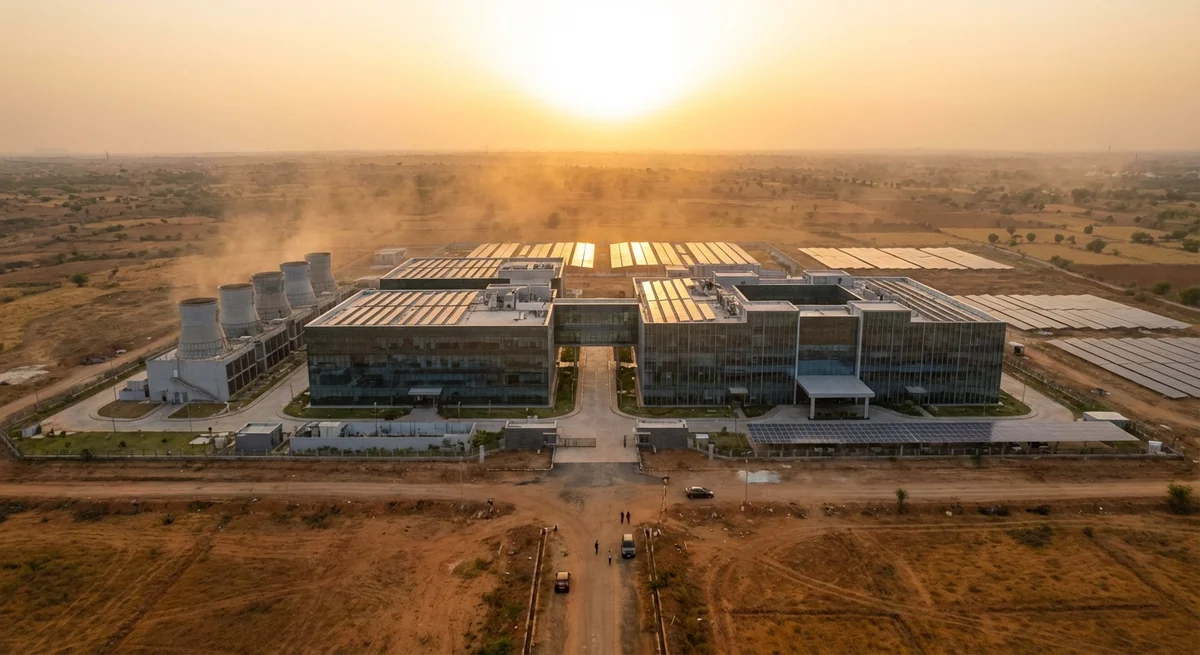
Twenty years in the world of technology is almost an eternity. Two decades ago, we were only getting used to the idea that the internet could fit in your pocket, and today we discuss whether an algorithm might replace us. The Indian government seems to have decided to think in precisely these terms, offering international cloud providers a tax deal that is extremely difficult to refuse.
This is about twenty-year tax breaks for those willing to build data centers within the country. This is not simply a gesture of good will or an attempt to replenish the budget in the long term, it is an aggressive bet that data and computational power will become the new oil of the twenty-first century.
Let's look at the context. While Europe is busy with endless regulation and GDPR compliance checks, and the US and China are in a state of permanent technological cold war, India is seeking its own path. The country has long stopped being merely the "world's back office" with cheap programmers. Now Delhi wants to become the world's server room. The problem has always been infrastructure: unstable power supply, bureaucracy, and complex logistics have often deterred giants like Amazon Web Services or Microsoft Azure. An offer to forget about taxes for two decades is a powerful antidote to any investor concerns.
India understands one simple thing: artificial intelligence does not exist in a vacuum. It needs physical servers, terawatts of energy, and cooling. If model training happens within the country, India gains not only jobs, but also control over its citizens' data, as well as technological sovereignty. In a context where "data sovereignty" becomes not just a term from textbooks, but a question of national security, having its own capacity is a critical factor. The Narendra Modi government is clearly making it clear that it is willing to sacrifice short-term gains in order to become an indispensable link in the global AI supply chain in ten years.
Of course, there are pitfalls here. Building a data center is only half the battle. It needs to be provided with uninterrupted power, which under India's climate challenges is not an easy task. Moreover, such benefits will inevitably raise questions from local players. Might it not turn out that foreign giants simply squeeze out domestic startups, taking advantage of preferences unavailable to others? However, the scale of the game is such that these risks seem justified to the government. India wants to jump on the departing AI revolution train not as a passenger, but as the owner of the entire train.
What does this mean for the market? We will see an acceleration of capacity migration to South Asia. If Nvidia continues to dominate the chip market, and India provides these chips with "free" tax-wise houses, then the balance of power in Big Tech could change significantly. Microsoft, Google, and Amazon are already actively investing in the region, but such an incentive could force them to reconsider their global roadmaps. It's a kind of invitation to a party where admission is free and the music will play for the next twenty years.
The bottom line: India is transitioning from exporting brains to importing hardware, using tax dumping as a geopolitical weapon. Will other countries be able to offer something comparable, or has Delhi already booked itself a place as the AI hub of the decade?
Want to stop reading about AI and start using it?
AI News is a curated feed of AI/tech news. Hamidun Academy teaches you to use AI systematically in your work.