DiffSyn from MIT: Generative AI Writes a "Recipe Book" for New Materials
В материаловедении сложилась парадоксальная ситуация: благодаря моделям вроде GNoME от Google мы знаем о существовании миллионов потенциальных материалов, но по
AI-processed from MIT News; edited by Hamidun News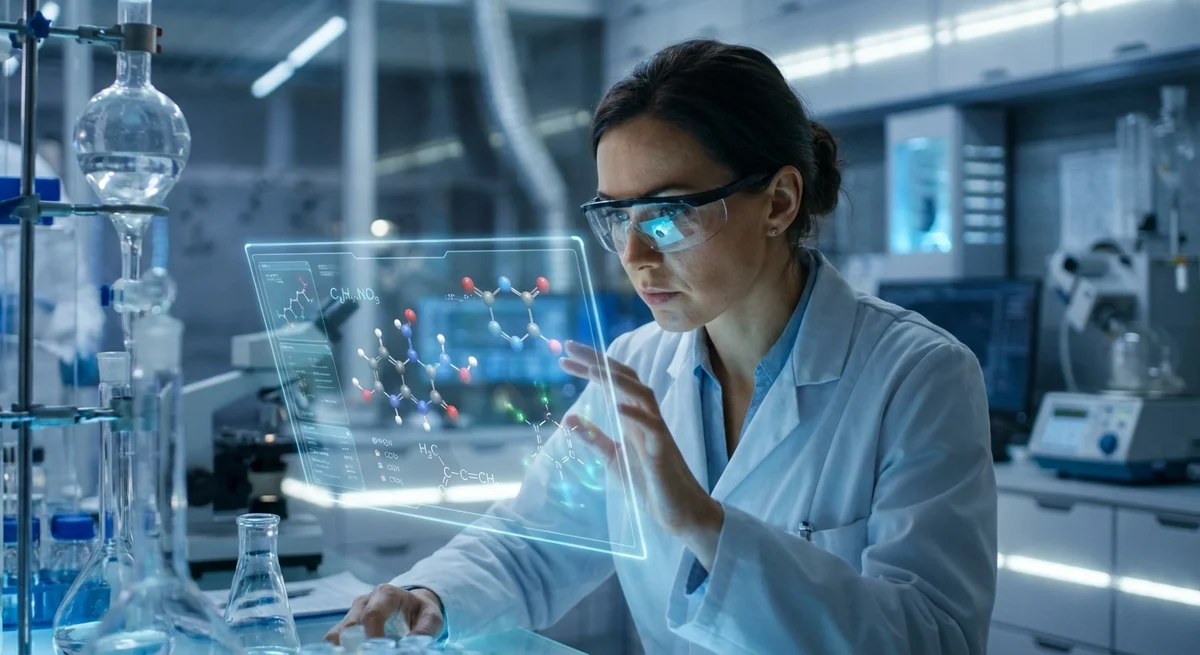
Let's be honest: modern materials science has developed a strange imbalance. Over the past couple of years, we've seen DeepMind and Microsoft grandiosely announce the discovery of millions of new crystals and compounds. Databases are overflowing with theoretical materials that could change everything—from batteries to solar panels. But here's the catch: they exist only on servers. In reality, we simply don't know how to "cook" them.
It's precisely this painful gap between theory and practice that MIT researchers decided to attack. Their new development, the DiffSyn model, doesn't try to discover another million hypothetical structures. It does the dirty work—it writes instructions for synthesizing them.
The problem that DiffSyn solves is as old as the hills. Imagine someone shows you a photo of a perfect cake and says: "Bake one just like it." Without a recipe, you'd spend years mixing flour with eggs in different proportions and changing the oven temperature. The same thing happens in laboratories: scientists spend months selecting precursors and reaction conditions. DiffSyn works like an experienced chef who, glancing at a "photo" (the material's structure), immediately sketches out the process flowchart.
Technically, it's an elegant application of generative AI. The model is trained on massive arrays of data about chemical reactions and successful syntheses from the past. When fed a target material, it generates the sequence of steps needed to obtain it. This isn't just a database search—it's actual generation of a new synthesis route for compounds that no one has ever held in their hands before.
Why is this critical right now? Because the innovation "bottleneck" has shifted. We've learned to predict material properties using AI faster than we can physically verify those predictions. Laboratories are drowning in hypotheses. If DiffSyn can cut recipe development time even in half, it will accelerate the market entry of new technologies not by percentages, but by multiples.
Of course, this doesn't mean chemists will be out of a job tomorrow. AI can still make mistakes, suggesting explosive combinations or physically impossible conditions. But as a tool for screening out obviously dead-end synthesis paths—that's a game changer. Instead of a hundred experiments, a scientist will need to conduct five, and one of them will work.
The key point: AI in science is transitioning from the phase of "look what I found" to the phase of "look how to do this." DiffSyn is a signal that the era of theoretical discoveries is giving way to the era of practical implementation.
Want to stop reading about AI and start using it?
AI News is a curated feed of AI/tech news. Hamidun Academy teaches you to use AI systematically in your work.