Samsung and SK Hynix: Why Your AI Server Will Soon Run Out of Space
Samsung и SK Hynix решили, что пора завязывать с обычным железом и переходить на «тяжелое» вооружение. Во втором квартале компании начинают масштабную конверсию
AI-processed from 36Kr (36氪); edited by Hamidun News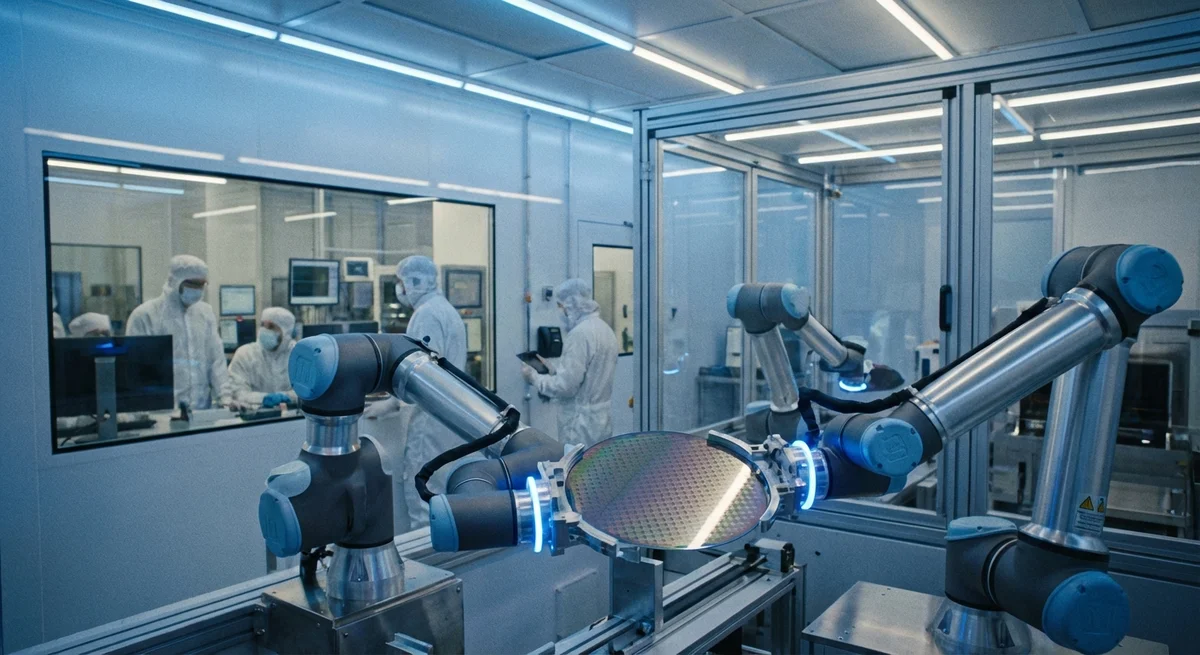
While the whole world is going crazy over NVIDIA graphics processors and HBM RAM, Korean giants Samsung and SK Hynix decided to remind everyone that without fast "brains" for long-term data storage, any neural network is just a fast calculator without memory. The industry has finally realized: to train giant models, you need not only to calculate quickly, but also to instantly read terabytes of data. That's why in the second quarter of this year, market leaders are beginning massive restructuring of their factories.
This is about transitioning to the production of so-called "NAND" — advanced flash memory that will become the foundation for the next generation of server SSDs. Samsung is playing big here: the company is discussing converting capacities of 40 to 50 thousand silicon wafers per month. This is not just cosmetic repair of production lines, but a full-fledged bet that in 2025, when these capacities go into mass production, demand for storage for AI data centers will skyrocket.
Why is this needed right now? Let's recall last year. The memory market was in turmoil, warehouses were filled with old chips, and prices fell below reasonable levels.
But the sudden boom in generative AI threw everything into chaos. It turned out that the old reliable SSDs for home laptops were of no interest to anyone, but corporate storage drives capable of withstanding extreme loads when training LLMs became a scarce commodity. Samsung and SK Hynix are simply following the money, converting their factories from producing consumer goods to high-margin products.
Technically, this means transitioning to a larger number of layers in 3D NAND. If we used to celebrate 128 layers, now the industry is aiming for 236 layers and higher. For AI, this is critical: the higher the recording density, the less rack space is occupied by a petabyte of data, and the less energy it consumes.
In a situation where data centers consume electricity like small cities, the energy efficiency of memory becomes a matter of survival.
Interestingly, Samsung plans to launch mass production of the updated memory as early as the beginning of next year. This suggests that the Koreans don't see signs of an AI bubble in the near future. Rather, they are preparing for infrastructure hunger to only intensify. If you thought that server assembly is only about finding a GPU, you'll soon understand that finding a fast storage drive of 30 or 60 terabytes will be no less difficult a task.
The connection to previous events here is obvious. After SK Hynix actually pulled ahead in the race for HBM memory, Samsung found itself in the role of a follower. Aggressive conversion of NAND lines is an attempt not just to maintain market share, but also to seize the initiative in an adjacent segment. After all, if you can't sell a graphics card, sell the fastest disk in the world for it. The Enterprise SSD market is growing faster than ever right now, and the Koreans have no intention of giving this slice of the pie to American or Chinese competitors.
Main point: Koreans are betting on a long-term deficit in AI infrastructure. Will the market be able to digest such volumes by 2025, or will we face another crisis of overproduction and collapse in memory prices?
Want to stop reading about AI and start using it?
AI News is a curated feed of AI/tech news. Hamidun Academy teaches you to use AI systematically in your work.