Musk's Energy Gambit: While Microsoft Waits for the Atom, Memphis is Already Humming
Илон Маск снова доказывает, что скорость решает всё. В Мемфисе за рекордные 19 дней развернули кластер xAI на 55 000 GPU с инвестициями в 18 миллиардов долларов
AI-processed from Habr AI; edited by Hamidun News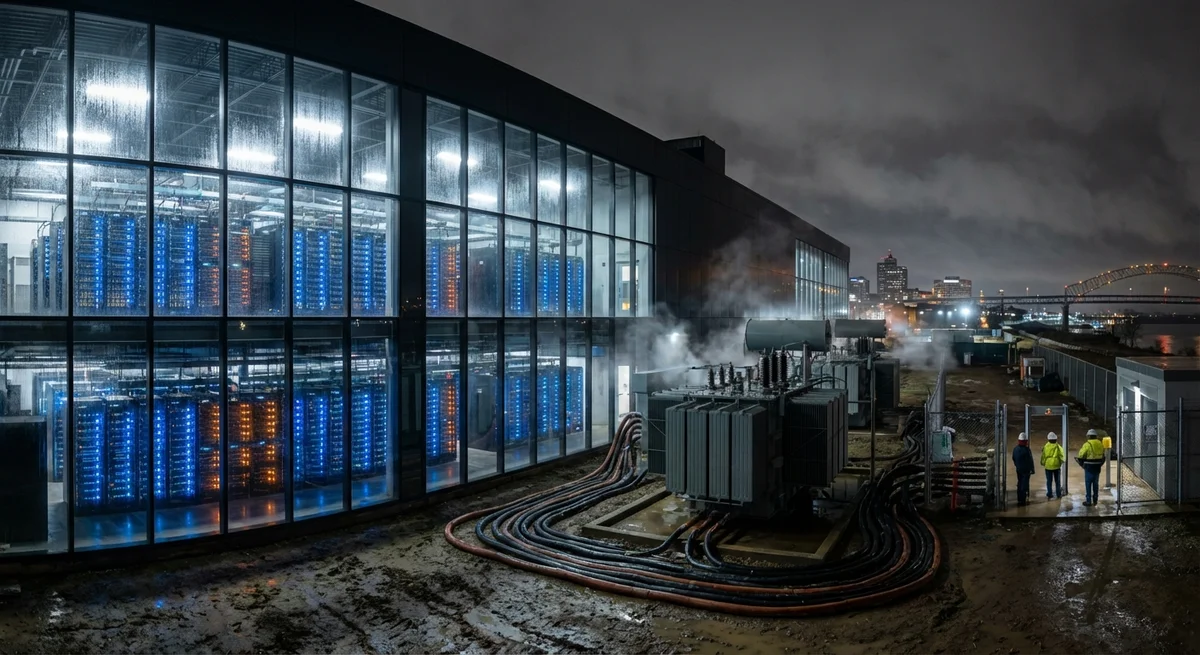
The world is accustomed to Big Tech's grandiose promises, but Elon Musk has just shown the difference between "planning for the next decade" and "done yesterday." While Microsoft seeks salvation in reviving old nuclear reactors and promises carbon neutrality by 2030, in Memphis 55,000 graphics processors are already humming away at full capacity. The xAI project was executed in an incredible 19 days. This is not just another speed record—this is a strategic blow to an entire industry accustomed to leisurely corporate cycles, endless approvals, and five-year plans.
Behind these numbers lies something far more grandiose than simply training Grok 3 faster than OpenAI's competitors. We're talking about $18 billion in investments in a single facility and an appetite for 2 gigawatts of power capacity. To give you a sense of scale: this is the energy consumption of a small city or a couple of modern nuclear power plants. Musk isn't simply building another data center; he's laying the foundation for a new form of monopoly that could easily eclipse John D. Rockefeller's Standard Oil. Except instead of oil flowing through the veins of this empire, it's pure electricity and computational cycles.
Why is this happening in Memphis and why now? The answer lies in global infrastructure hunger. Throughout last year, the industry complained about H100 chip shortages and the impossibility of obtaining them. Now the chips exist, but a new problem has emerged—there's simply nowhere to plug them in. Old-school power grids simply aren't designed for such enormous loads. Microsoft chose the "white collar" path: negotiate with the government, revive the Three Mile Island nuclear power plant, wait five to six years, and obtain clean energy. Musk, on the other hand, chose the pirate's path: arrive where there's excess capacity and deploy equipment faster than local lawyers can draft the first environmental impact report.
This arms race fundamentally changes the rules of the game. If previously victory went to whoever had the most elegant algorithm or the most talented research team, now it goes to whoever has thicker cables and more transformers in their backyard. Musk's strategy unites everything: Starlink satellites for instant connectivity, Tesla industrial batteries for load balancing, and thousands of Nvidia chips for computation. This is vertical integration on steroids. While Google and Amazon are trying to fit their AI ambitions within the constraints of strict ESG reports, xAI simply seizes the physical resources necessary for training next-generation models.
The most ironic part of this situation is the reaction from the market and competitors. Traditional players look like cumbersome dinosaurs against the backdrop of this construction. Yes, nuclear energy is clean, correct, and very promising in the long term. But in the world of AI, six years is an eternity—enough time for technologies to change three times over. By 2030, when Microsoft receives its first "nuclear" power for its servers, Musk's models could be generations ahead simply because they had something to train on all this time.
We are entering an era where control over energy infrastructure becomes the primary geopolitical and economic lever. Whoever solves the power supply problem for millions of GPUs first will dictate terms to everyone else. And judging by the pace of work in Memphis, this someone has no intention of waiting for official approval from nuclear energy commissions. Infrastructure deployment speed becomes a critical advantage that cannot be compensated for with any amount of money in the future.
Key takeaway: Musk is transforming the AI race into a battle for physical infrastructure, where Big Tech bureaucracy becomes its primary weakness. Will traditional giants be able to restructure their processes to not lose the race for energy?
Want to stop reading about AI and start using it?
AI News is a curated feed of AI/tech news. Hamidun Academy teaches you to use AI systematically in your work.