Tax Haven in Delhi: India Gives 20 Years of Peace for Data Centers
Индия переходит в наступление. Чтобы стать главным хабом для облачных вычислений и AI, правительство вводит беспрецедентные налоговые каникулы на 20 лет для зар
AI-processed from Bloomberg Tech; edited by Hamidun News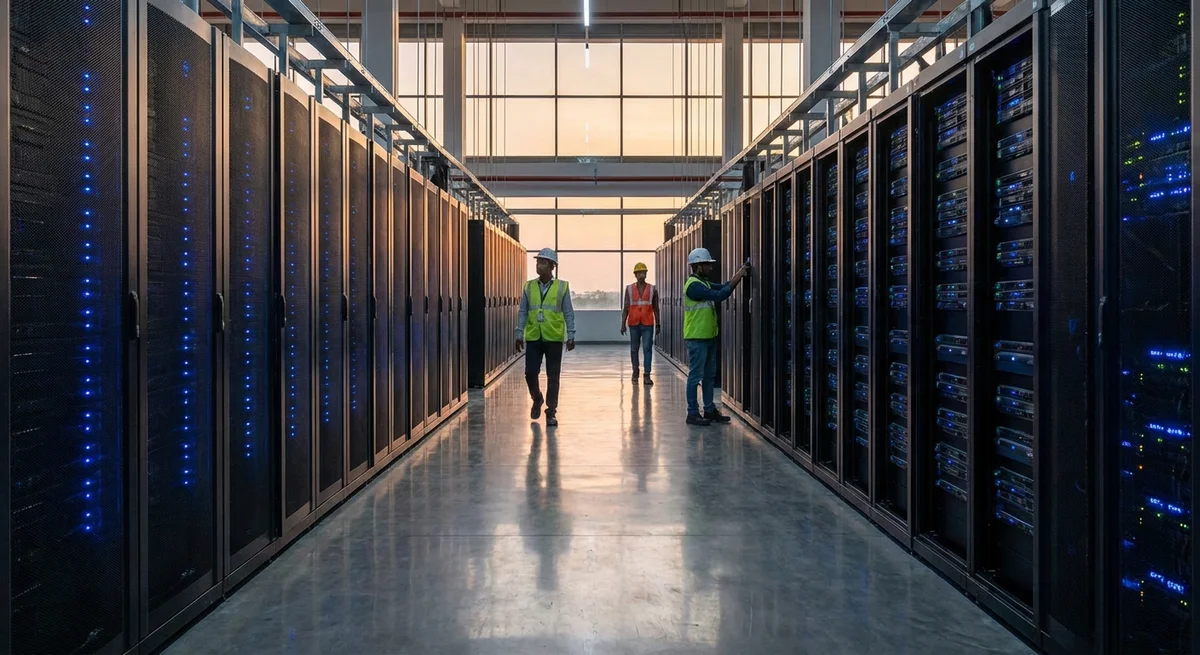
Imagine you're building a business, and the government says: "Don't pay us taxes until your children finish university." That's essentially the offer India has laid out. The government has decided that the best way to become a digital superpower is to turn its lands into one gigantic server farm. Twenty years of tax holidays for foreign companies building data centers—this isn't just generosity, it's an aggressive attempt to seize leadership from Singapore and the UAE. In a world where every second startup is trying to train its neural network, the question "where do we put the servers" has become more important than "what code do we write."
India understands that this is the perfect moment. The entire world is obsessed with generative artificial intelligence, which requires colossal computing power. Training models and running them in production consume electricity and budgets at an incredible pace. At a time when energy prices in Europe remain unpredictable and infrastructure in the US sometimes just can't handle peak loads, Delhi's offer looks like the ideal haven for big tech. This isn't just tax savings; it's the opportunity to scale where land and human resources seem almost infinite.
Of course, this decision didn't emerge in a vacuum. Over the past few years, India has systematically simplified the rules for technology giants, but bureaucracy and the complex tax system remained a barrier. The problem was that even with cheap labor, taxes on equipment and operations ate up all the benefits. Now the rules are changing radically: if you bring technology and build physical infrastructure, the state literally steps aside for two decades. This is a direct signal to giants like Microsoft, Google, and AWS. They're already investing billions in the region, but now they can triple their capacity without looking over their shoulders at fiscal reports.
Why does India itself need this? The answer is simple: data is the new oil, and data centers are the oil refineries of the future. By having on its territory the physical servers where global neural networks run, the country gains not only thousands of jobs for engineers but also colossal geopolitical influence. In a world where questions of digital sovereignty are becoming increasingly acute, India wants to be the place where this data is not just stored but processed. This transforms the country from a "global back-office" into a "global processor."
However, this medal has a flip side. Critics and skeptics rightfully point out problems with electrical grids and water supply stability, which is critical for cooling vast server halls. India is a land of contrasts, where state-of-the-art tech parks can sit next to areas experiencing shortages of basic resources. Nevertheless, a tax incentive of this scale allows corporations to build their own energy solutions into their business plans. We'll likely see massive solar panel fields and wind generators sprouting up next to data centers, completely independent of the general grid.
In essence, India is offering corporations the opportunity to build their own technological enclaves, as long as they secure the country's status as a key node in the global network. For the AI industry, this means a possible reduction in cloud computing prices in the long term. If providers' operational costs drop due to the absence of taxes, this could trigger a new wave of price dumping in the API and GPU rental markets. Everyone wins: from developers in San Francisco to end users in Tokyo.
The bottom line: India is officially entering the major leagues of the fight for AI infrastructure. Will other regions be able to offer something comparable, or will we witness the great server migration to the east?
Want to stop reading about AI and start using it?
AI News is a curated feed of AI/tech news. Hamidun Academy teaches you to use AI systematically in your work.